

Hair loss is not a sudden event in most cases. For most people, it is a slow, cumulative process that starts with thinning at the crown, a hairline that recedes by a few millimetres year by year, and density that quietly falls until the thinning becomes apparent. Topical products barely help when the hair loss has progressed to noticeable stages, which leads to one permanent solution: a hair transplant. A hair transplant is a permanent surgical procedure, which means choosing the right clinic is one of the most important decisions before starting the treatment. Make the wrong choice for convenience or a lower price, and pay double for a repair procedure later. The steady rise in corrective and repair procedures across the country is a direct consequence of patients selecting on cost alone and discovering, too late, that a poorly planned transplant cannot simply be undone. Before committing, evaluate any clinic against four fundamentals: who performs the surgery, which techniques are used, whether pricing is transparent, and how aftercare is managed. Surgeon Involvement and Expertise: Ask directly who actually carries out the extraction and implantation. In a well-run clinic, a qualified surgeon plans and executes the entire surgery and does not delegate to technicians. The surgeon assesses facial proportion and age to design the hairline, manages donor extraction to preserve future capacity, and controls graft handling at every step. Techniques Offered: Advanced methods such as FUE and QHT minimise scarring and significantly shorten the recovery compared with older strip-only approaches. A clinic built around a single dated technique is not the one to rely on.
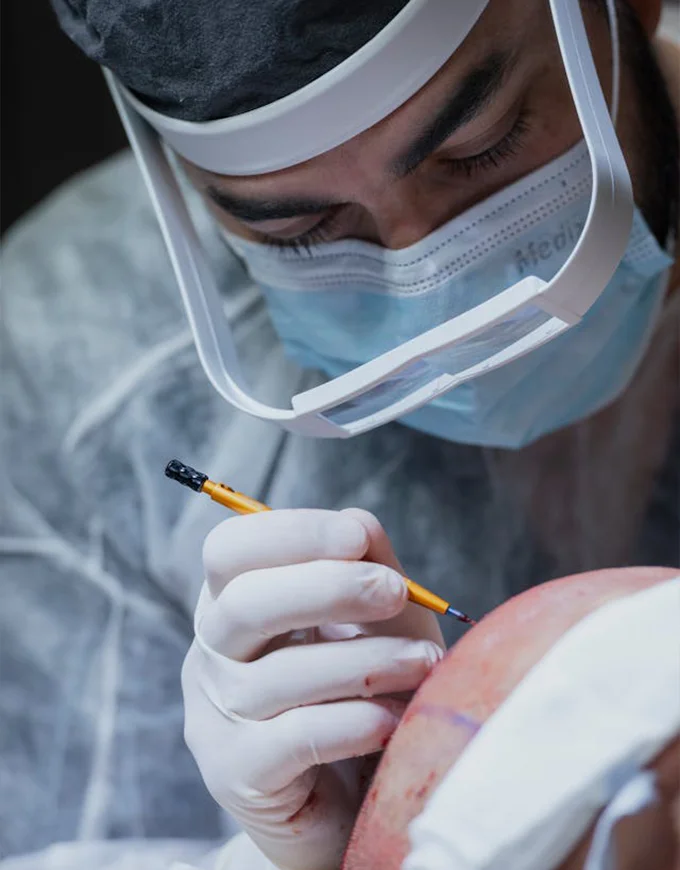
Surgeon Involvement and Expertise: Ask directly who actually carries out the extraction and implantation. In a well-run clinic, a qualified surgeon plans and executes the entire surgery and does not delegate to technicians. The surgeon assesses facial proportion and age to design the hairline, manages donor extraction to preserve future capacity, and controls graft handling at every step.
Techniques Offered: Advanced methods such as FUE and QHT minimise scarring and significantly shorten the recovery compared with older strip-only approaches. A clinic built around a single dated technique is not the one to rely on.
Transparent Pricing: A quotation that does not provide a clear, itemised list of services included warrants caution. Transparent clinical billing lists every service provided and gives a written breakdown before any commitment is made.
Post-Surgery Care: The surgical hours are only part of the outcome. A clinic that discharges a patient without a structured recovery plan, prescribed medication, and a defined follow-up schedule has left the most fragile phase of the process to chance.
Prioritise Skill Over Proximity: After price, distance is the factor most patients overweigh. A “hair transplant near me” search will list all clinics operating in Meerut, but convenience does not produce natural density, an age-appropriate hairline, or disciplined donor management. A clinic with a proven track record, even a short drive away, will reliably outperform a closer one that applies the same treatment plan to every case.
Focus on Natural Results: The primary objective is coverage that blends seamlessly with existing hair, which can be achieved through precise graft placement and a hairline designed to suit the individual, rather than one taken from a standard design.
Match the Plan to Your Stage of Loss: Every pattern of hair loss is distinct. A well-constructed plan is built on your Norwood grade, donor evaluation, scalp health, and the likely progression of your loss.
Request Documented Outcomes: A clinic confident in its work will present results at grades comparable to your own, with graft counts and recovery timelines attached, rather than relying on a single filter-based before-and-after image.
Delaying Assessment: Hair loss does not pause. It advances with age, and the longer it is left, the more the donor reserve is depleted as the Norwood stage progresses. Addressing androgenetic alopecia while donor capacity remains adequate keeps a wider range of options open.
Clinics Without Specialist Oversight: A significant proportion of the repair cases seen by experienced surgeons are performed cheaply and without qualified supervision. Correcting such work costs considerably more than the initial money that was saved.
Neglecting Aftercare: Surgery accounts for only half of the final result. Disregarding the prescribed recovery protocol jeopardises grafts that would otherwise have survived and grown.
Early Consultation: A timely professional assessment, conducted in person or remotely, preserves donor supply and allows for more precise planning.
A Dedicated In-House Surgical Team: A clinic with its own operating theatre and an in-house surgical team delivers more predictable quality and safety than one that relies on outsourced staff.
Realistic, Clearly Set Expectations: Understanding what your current stage of loss can achieve before surgery prevents disappointment afterwards. Two patients at an identical Norwood grade rarely finish with the same result, since age, density, and personal goals all differ.
NABH-Accredited Facilities: Modern equipment, a dedicated theatre, and strict sterilisation protocols are non-negotiable requirements of surgery. An accredited facility materially reduces the risk of complications.
The result of a transplant is governed by a small set of variables established before the procedure begins. Understanding them is the clearest route to expectations that align with reality.
A larger area of loss requires a greater number of grafts for even coverage, and it also shapes the technique selected and the complexity of the session.
The hair at the back and sides of the scalp is the limited reserve on which the entire procedure is planned. Its density and health set the bar for the coverage that can be achieved at the current stage of hair loss.
FUE, FUT, and QHT each demand different levels of precision and have different advantages. Advanced methods improve graft handling and survival, but the appropriate choice is always dictated by the individual pattern of loss.
Experience across a wide spectrum of cases improves the clinical judgement that reflects in the surgical precision and results. That judgement is what distinguishes a natural result from a visibly artificial one.


The storage protocols followed between extraction and placement determine the survival rate, and the survival rate in turn determines final density. Superior handling means fewer wasted grafts and fuller coverage.

The recovery weeks carry nearly the same weight as the surgery. Strict adherence to the prescribed routine supports stronger regrowth and protects the density secured during the procedure.

Real transformations, delivered through QHT’s patented technique. Every result reflects precise graft handling, careful density planning, and hairlines designed by surgeons, not technicians.
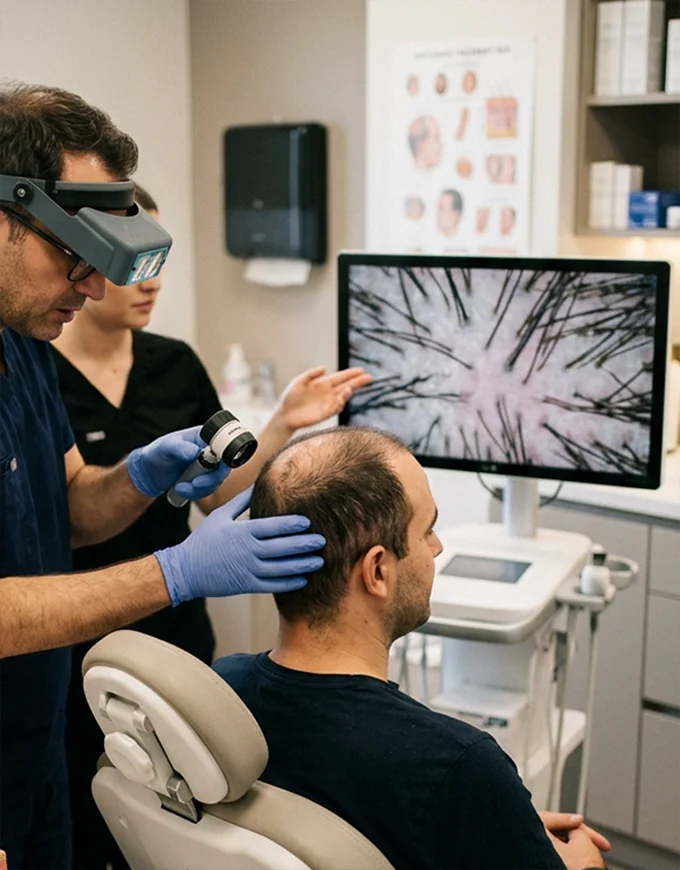
Candidacy is determined after detailed consultation, a physical scalp examination, and a review of general health. A remote consultation provides a valuable initial reading, but the definitive assessment is made in person, once scalp condition, donor supply, age, and overall health have been evaluated together. In the earliest stages of loss, medical therapy is frequently the first recommendation, and non-surgical interventions such as PRP, GFC, or LLLT may be considered before surgery is contemplated.
As one of western Uttar Pradesh’s largest commercial and educational centres, Meerut sees a broad cross-section of patients, from students and early-career professionals presenting with the first signs of recession to older patients with established, stable loss. This range makes an honest, individualised assessment particularly important. For a younger patient whose pattern is still evolving, the responsible clinical answer is sometimes not yet, precisely to preserve donor capacity for a procedure that will hold up over decades.
You are likely a suitable candidate if you:
Every QHT procedure follows a defined pathway, so at each stage you know the graft plan, the reason for the chosen technique, and the density that is realistically within reach.
Step 1: Detailed Consultation. For a Meerut patient, it starts from home. Clear scalp photographs and a brief history are enough for an initial read. The in-person examination that confirms your Norwood grade, donor supply, and overall candidacy takes place at the Delhi or Gurugram centre.
Step 2: Pre-Operative Planning. Once the plan is agreed, preparation follows: a complete blood panel, a hormonal profile where indicated, hairline design, and written day-of instructions. A full itemised quotation is issued before the date is fixed, so the cost is settled in advance.
Step 3: Surgery Day. The procedure is performed under local anaesthesia, allowing you to remain fully awake without pain. The surgeon harvests the grafts and implants them along the natural direction of growth and the pre-approved hairline. You go home the same day with post-procedure instructions and prescribed medication.
Step 4: Recovery and Follow-Ups. A dedicated post-surgical team monitors healing from day 1. Because both NCR centres lie within a short drive, an in-person review can be arranged whenever a physical check is warranted, while remote consultations cover the stages in between. Recovery stays fully supported without repeated long journeys.
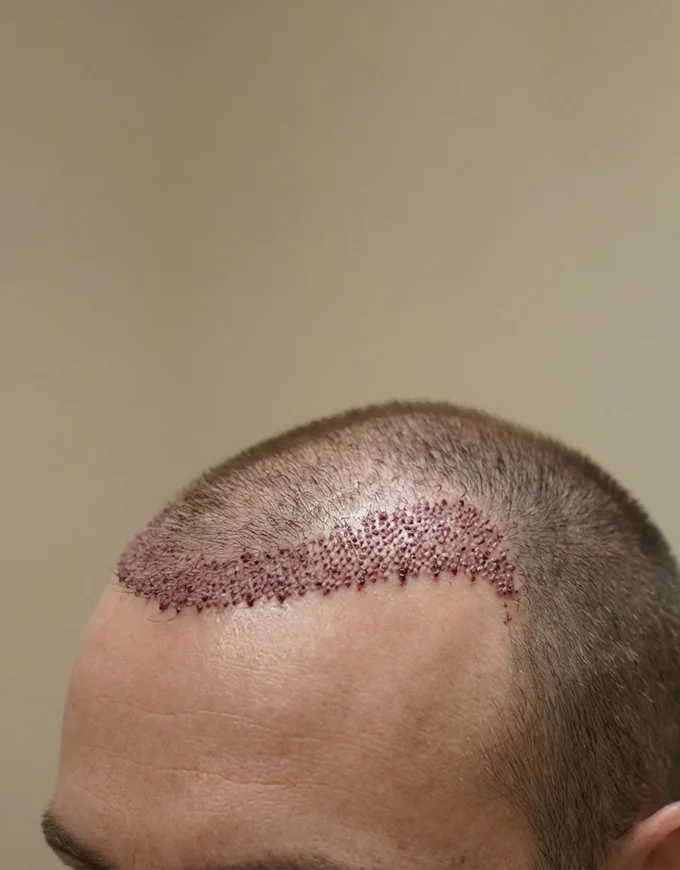
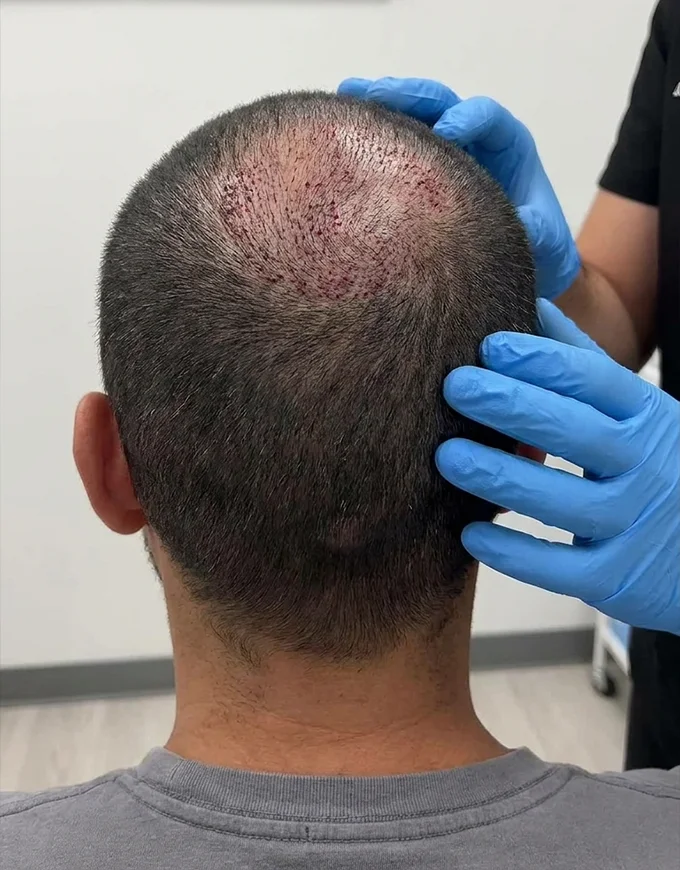
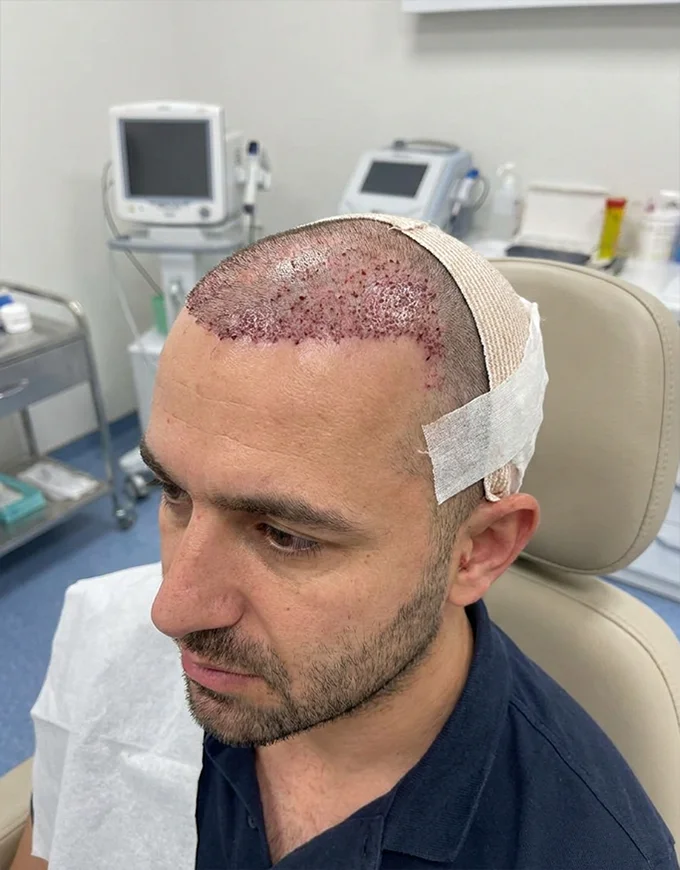
The quality of recovery has a direct and measurable effect on the final result. For the majority of patients, the timeline is predictable, and modern techniques have reduced the early healing phase considerably compared with older methods. Throughout this period, strict adherence to post-operative instructions is what protects the newly placed grafts.
During this early recovery window, sleep with the head slightly elevated, avoid touching or scratching the grafts, take medication exactly as prescribed, and refrain from strenuous activity, including heavy lifting, running, contact sports, and swimming. Maintain a balanced diet, stay well hydrated, and keep the scalp shielded from direct sun for the first few weeks.
One regional consideration is worth planning around. Meerut and the surrounding western Uttar Pradesh belt experience hot, dust-laden summers and a humid monsoon period from roughly June through September. Neither affects the surgery itself, but the first phase of healing is more comfortable when scalp hygiene is maintained and is kept cool, dry, protected from dust and heavy perspiration. Some patients therefore prefer to schedule surgery for the cooler months.
QHT provides both internationally established hair restoration techniques, alongside its own proprietary QHT method. The technique recommended for a given patient depends on the extent of loss, the density sought, and personal preference. Each, when performed to a high standard, produces permanent, natural-looking results with a manageable recovery.
FUE is the internationally recognised gold standard technique. Individual follicles are extracted from the donor zone with a motorised micro-punch under 10x magnification and implanted into the recipient area. Because no strip incision is made, only faint, dot-like marks remain at the donor site, generally imperceptible once healed, which makes the technique well suited to those who wear their hair short. An FUE hair transplant in Meerut is appropriate across a broad span of Norwood grades, from an early receding hairline to more advanced loss. As a minimally invasive method, it also limits trauma to the scalp and to the extracted grafts, supporting faster healing.
Best suited for: Patients seeking a minimally invasive approach with negligible visible scarring; ideal for short hairstyles and active routines.
Recovery: Most patients return to work within 5 to 7 days.
FUT is the older strip-harvest method and remains the most economical of the three. A thin strip of scalp is taken from the donor zone and micro-dissected under magnification into individual grafts, which are placed into pre-planned recipient slits at the correct angle and depth. It yields the highest number of grafts in a single session, which is why it continues to serve advanced cases effectively. The trade-off is a fine linear scar at the donor site that heals more gradually than with FUE or QHT; it can be easily concealed beneath longer hair, one reason it is often favoured by women with long hair.
Best suited for: Advanced baldness (Norwood 5 to 7) requiring the maximum number of grafts in a single session.
Recovery: Approximately 10 to 14 days for donor-site healing, with sutures removed in the same window.
QHT is QHT Clinic’s own refinement of FUE, developed to extract and implant grafts simultaneously using the SAVA implanter pen, keeping out-of-body time under two hours. Each follicle is examined under 10x magnification before extraction, so that only intact, viable units are selected, and transection rate is minimised. They are stored briefly in cold PRP saline to reduce oxidative stress before placement. The result is a graft survival rate of up to 95%, denser final coverage, and donor-site marks small enough to become undetectable once healed. Downtime is minimal, and most patients resume light desk work within days.
Best suited for: Patients seeking the highest graft survival, denser coverage, and minimal visible scarring.
Recovery: 5 to 7 days, broadly in line with FUE.
A search for hair transplant services in Meerut on Google lists a wide field of local clinics, competing chiefly on discount, while operating with limited surgical infrastructure. To be direct: QHT does not operate a clinic in Meerut. What QHT offers instead is access to a fully staffed, NABH-accredited surgical network at two NCR centres, in Delhi and Gurugram, both roughly 70 to 80 km from Meerut, reachable in around one and a half to two hours.
A qualified hair transplant surgeon is directly engaged at every stage, from initial consultation through to recovery. No element of the surgical work is delegated to technicians or untrained personnel.
A remote review of your scalp photographs and history provides a working plan before any in-person visit is required.
Clear, written packages with no charges emerging after a quote is agreed, and pricing that remains well below that of comparable metropolitan clinics.
The QHT method, with its documented 95% graft survival rate and minimal scarring, is available at both centres for patients seeking denser, more natural-looking results.
Both the Delhi and Gurugram centres operate to NABH safety standards, with US-FDA-approved technology, dedicated operating theatres, and stringent sterilisation protocols.
Discover other solutions at a QHT clinic that complement your hair restoration journey.
Reach out anytime or visit us directly for personalized assistance, expert guidance, and seamless support experience.
QHT does not run a centre in Meerut. The nearest QHT clinic is in Delhi (Rohini), where the licensed operating theatre and the surgical team are based. Meerut patients plan the whole procedure online first and travel to the centre only for the surgery itself.
Qht Clinic, Chandra Rekha Tower, Chandra Rekha Lane Next to HP Jagat Petrol Pump, Delhi-Haridwar Highway, Jwalapur, Haridwar, Uttarakhand - 249407
D -15, Outer Ring Rd, above Federal Bank, Prashant Vihar, Sector 14, Rohini, New Delhi, Delhi, 110085
Plot No. 3, Sector 46, Opposite Huda Market, Gurugram, Haryana โ 122022
Hair transplant in Meerut, answered plainly by the surgeons who treat Meerut patients at our Delhi (Rohini) centre.
No, and we prefer to state that plainly rather than allow a search listing to suggest otherwise. QHT’s nearest centres are in Delhi (Rohini) and Gurugram, both roughly 70 to 80 km from Meerut, about one and a half to two hours by road. For most patients, this is comfortably within reach for consultation, surgery, and follow-ups without an overnight stay, and the initial consultation can begin remotely from home.
No. Local anaesthesia fully numbs the scalp before the procedure begins. You remain awake but experience no cutting or pulling sensation. Mild soreness for a day or two afterwards is expected and is managed effectively with the prescribed medication.
This depends on the area requiring coverage, your donor density, your current Norwood grade, and the technique selected. A precise, written graft count and cost estimate is provided only after an in-person scalp assessment, as these figures vary considerably between patients.
The transplanted hair sheds within the first few weeks, a normal phase known as shock loss. New growth begins to appear from around month 3, with noticeably fuller coverage by months 6 to 8. Final density typically settles by around month 12.
Yes. Women with stable female pattern hair loss, traction alopecia, or certain scarring forms of hair loss may be suitable candidates. Suitability depends on donor availability and the underlying cause, both of which are determined during the clinical evaluation.