Roughly one in fourteen hair transplants worldwide ends up back on the table for repair, and the share is climbing. The ISHRS, the global body for hair restoration surgeons, recorded 5.4% of cases in 2021 and 6.9% by 2024. Hold that in mind before you book a hair transplant in Mumbai. A transplant is permanent. Choose well and the result lasts for life. Choose badly and you pay twice, once for the surgery and once to fix it. The cheapest quote in the city tells you nothing about how your hairline will look a year on. Here is how to read a clinic before you sign anything.
Ask who actually holds the tools on surgery day. The person selling the clinic is rarely the person operating. A hair transplant specialist in Mumbai with real case experience plans your hairline and handles each graft with care, and that skill shows in the mirror long after the discount is forgotten.
Ask which methods the clinic runs. FUE leaves no linear scar and heals faster than the older strip method, and the QHT technique is an advanced form of FUE. A clinic still relying on one outdated method is a clinic to walk past.
A quote that jumps after the scalp check has told you something. Honest billing lists every charge up front, with the package set before you pay a rupee.
Aftercare is the part people forget to ask about. A serious clinic guides recovery with scalp care and medication, and it schedules your follow-ups instead of leaving healing to chance.
Distance is the one thing patients weigh too heavily. Skill decides how your hairline looks. A well-run clinic a flight away beats a convenient one down the road.
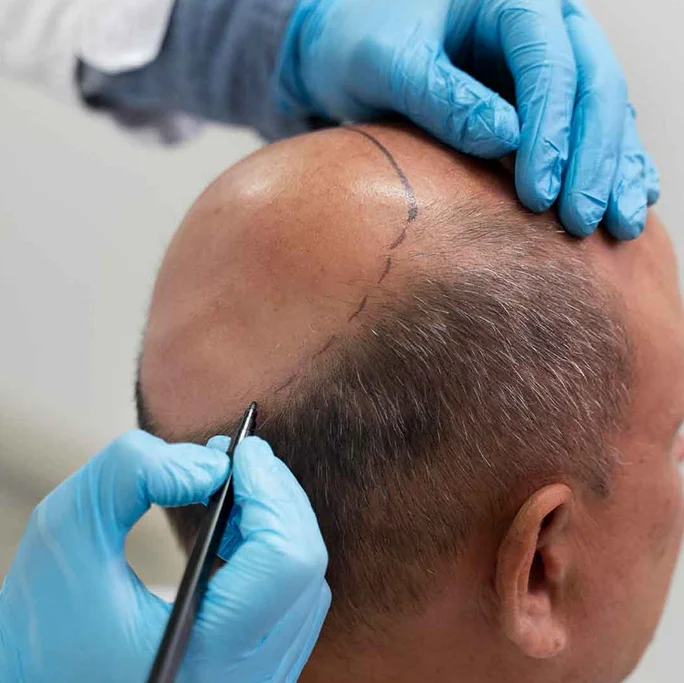
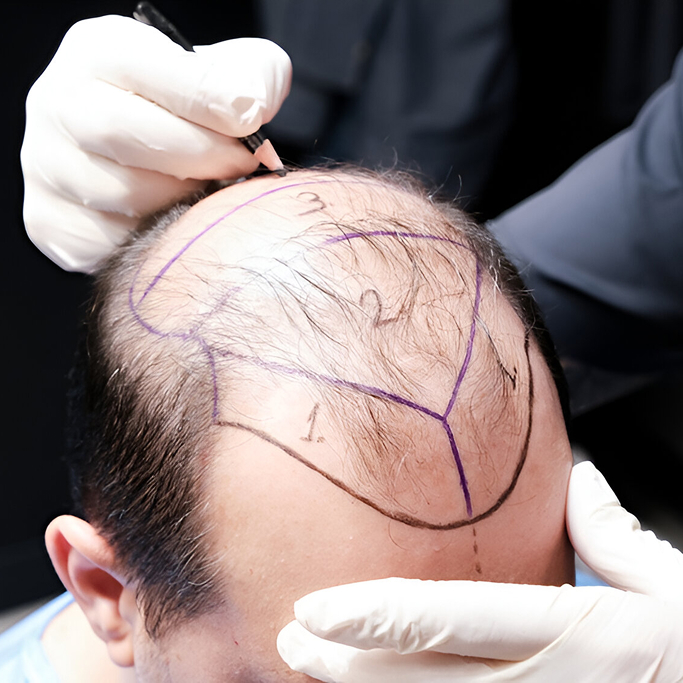
A natural result is designed, not bought by the graft. Hair placed to a template reads as fake from the front. A hairline mapped to your face and age disappears into what you already have.
No two scalps take the same plan. Your grade of baldness sets the direction, and the density you want back shapes the rest, so be wary of a fixed package sold to everyone the same way.
A clinic's best photo is often its easiest case. Ask to see outcomes for someone at your grade of baldness, because that is the result you can actually expect.
Hair loss does not pause while you decide. Male pattern loss, or androgenetic alopecia, keeps spreading once it starts, so more of your scalp needs covering the longer you wait, and the donor supply you draw from cannot be renewed. Start looking into androgenetic alopecia treatment in Mumbai early, while more paths are still open to you.
The repair cases that reach QHT often trace back to a bargain elsewhere. A procedure run in a casual setup, with no trained surgeon supervising, is a red flag, and correcting it costs far more than the discount ever did.
Surgery is one part of the job. The clinic hands you a recovery routine for a reason, and skipping it puts grafts at risk that would otherwise have taken.
An early scalp check costs little and decides a lot, and for a Mumbai patient, it starts on your phone, not on a train. You share photos and your hair-loss history, a surgeon reads the grade and the donor supply, and a dermatologist checks scalp health from that first review. Most of the plan is settled, and the target agreed, before you commit to a single trip.
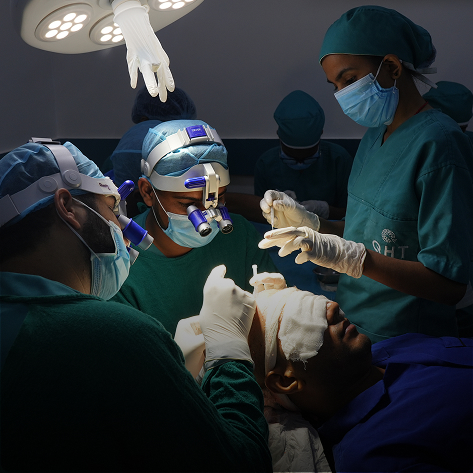
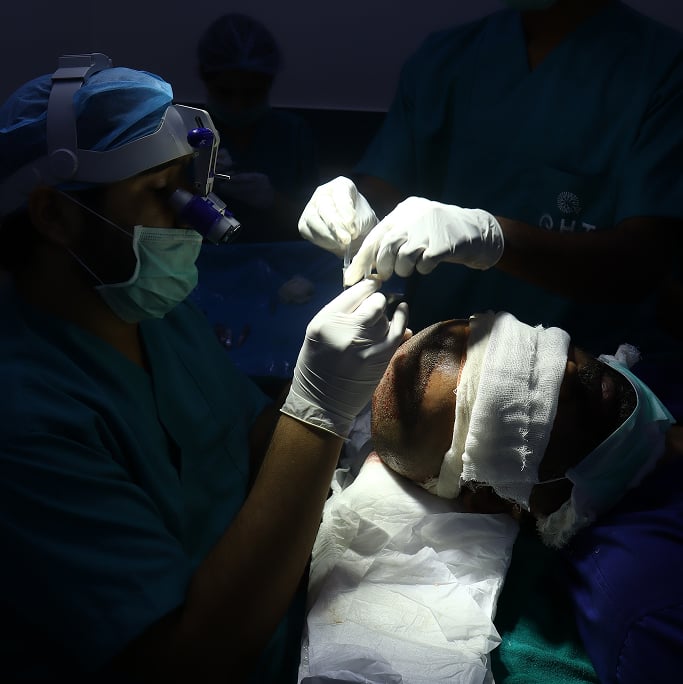
You travel once, to a proper operating theatre where the same trained team runs every case the same way. Hygiene and safety hold steady when the people don't change with the booking. The procedure and same-day discharge happen on that visit, so the journey is planned around one date.
Know what your stage can give before you book the travel. Results follow your grade of baldness, so a target agreed honestly in the online review saves you from disappointment after clean surgery, and from a wasted trip built on the wrong expectation.
After the procedure, your recovery checks move online. The team tracks healing over photos and calls, so the one journey you make is for the surgery itself.
In a city with a clinic on every high street, the question was never who is nearest. It is who you would trust with something permanent.
Same surgery, same clinic, different result. It happens, and it is rarely bad luck. The outcome of a transplant rests on a few factors set before the procedure starts, and knowing them tells you what to check.
A wider bald area needs more grafts, and they come from a donor zone you can't refill. The higher your grade, the tighter that budget, so the plan has to spend it well.
The method matters as much as the map. FUE suits many cases, and QHT is built for density. A surgeon reading your scalp should make that call.
Your donor area is the account the whole procedure draws on. What sits there caps how much any surgeon can move, whatever the quote says.
QHT places each graft almost as soon as it's lifted. That one habit is why survival runs above 95%.
Experience matters twice over. The judgement that plans your case is the same judgement that carries it through surgery.
Mumbai, the dream city is also a medical tourism destination in that it has some of the finest clinics in its city that provide the best hair restoration treatment. The medical facility in the city is very strong and is equipped with the most experienced surgeons in hair transplanting in India. By making the choice of a Hair Transplant in Mumbai, you are picking the city that not only offers the best of medicine but also accessibility and quality.
To enjoy an effortless experience, QHT clinic is one of the safe places to visit. It provides an excellent Hair Transplant in Mumbai with a focus on patient satisfaction, state-of-the-art technology, and a team of experts.
The clinic is a specialist in the latest techniques such as the QHT Hair Transplant in Mumbai to deliver natural and dense outcomes.
Each patient will be provided with an individualised plan that suits their hair loss pattern and beauty objectives.
The clinics have been furnished with state-of-the-art technology and the hygiene of the procedure is of the highest standards.
The team offers full support to the patient, starting with the first visit and up to the post-surgery period.
Mumbai has no shortage of hair clinics. That is the problem. Between the celebrity endorsements and the ads promising the lowest price per graft, it is hard to tell who is a surgeon and who is a sales desk, and a transplant is permanent, so the wrong pick follows you for life. Plenty of men from the city reach the same decision: for something that stays on your head for good, a proven clinic a short flight away is worth more than convenience. QHT treats those patients at its clinics, part of a network that has restored hair for more than 15,000 patients across India. The nearest is in Hyderabad, under 2 hours from Mumbai by air, and every case there is led by a trained surgeon and planned around a hairline built for your face.
A qualified surgeon handles both the planning and the graft placement. No technician works your case unsupervised.
Your graft count and target are agreed from the online review, so you commit to the trip already knowing the plan you signed off on.
The consultation happens remotely and the surgery fits into a single visit, so you are booking one trip around a fixed date.
You have the graft count and the final cost up front, so the price is settled before you book travel, and nothing is added after you land.
Before comparing hair transplant quotes across Mumbai, it helps to understand what you’re actually paying for. A per-graft rate means very little until you know which procedure is being used. While price is often the first thing patients look at, the treatment method should always come first.
There are three main hair transplant procedures, each designed for different types and stages of hair loss. The cost varies because each method differs in how the hair grafts are extracted, handled, and transplanted.
Whichever procedure you choose, a hair graft surgery provides a permanent hair transplant, as the transplanted follicles continue to grow naturally once they have settled. Your final treatment cost depends on the number of grafts required and the procedure selected, both of which are determined during your consultation before you make any commitment.
The best thing a hair clinic can tell you is that you don’t need it yet. Some scalps aren’t ready, some never will be, and a surgeon who books every walk-in isn’t screening anyone. Whether you qualify comes down to one reading, and it isn’t the one you’re worried about.
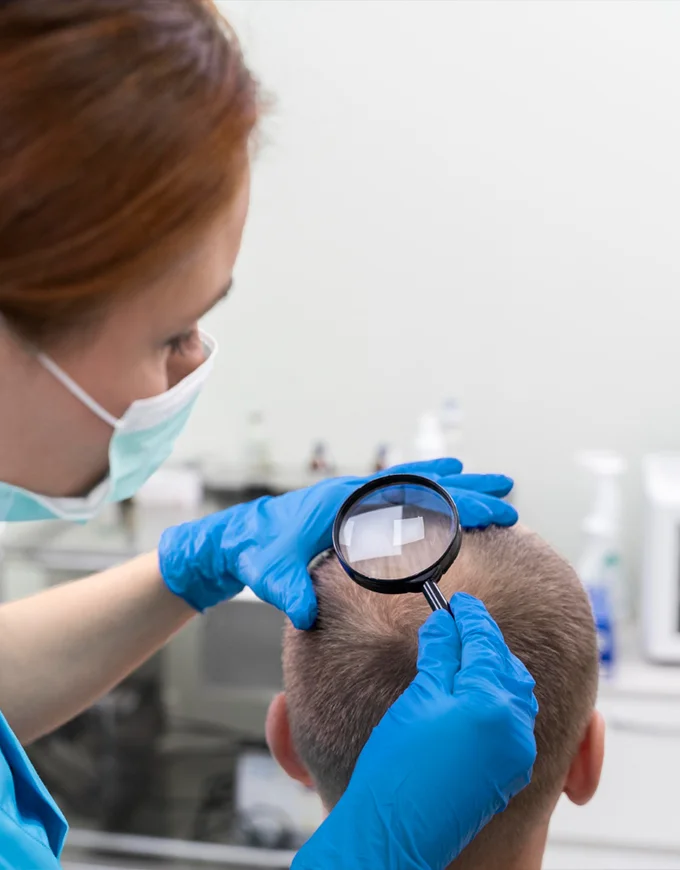
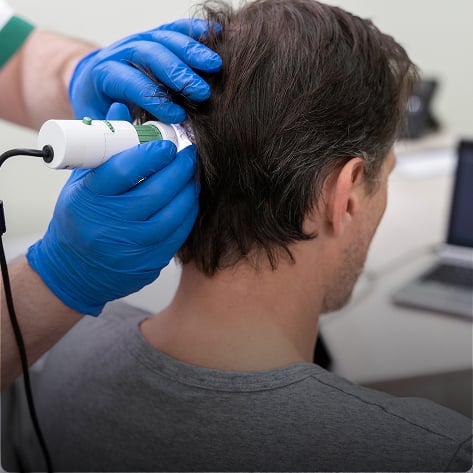
At QHT, the answer is not given from a photo alone. A surgeon assesses your grade of baldness and donor supply, a scalp analysis checks the health underneath, and only then does anyone tell you whether surgery is your step.
You are likely a good candidate if:
Surgery may wait if:
Being a candidate was never a yes waiting behind a booking form. It is a question the assessment answers straight, and sometimes the honest answer is not yet.
No single person runs your whole surgery, and that is deliberate. The work splits across four stages, each handled by the part of the team trained for it, so nobody is improvising a step they don’t own. Here is what the day actually looks like, from the first message you send to the last follow-up call.
For a Mumbai patient, it begins with photos from home. You send those and your hair-loss history, and a surgeon reads your grade of baldness and donor supply while a scalp analysis checks the health underneath. You leave that review knowing whether surgery suits you and what the plan would be, so the trip you book later is one you have already agreed to.
Once you commit, the graft count is fixed against your grade and your goal, and a short set of medical checks clears you for surgery. Your pre-op instructions come to you before you travel, so nothing about the day is a surprise you meet in the chair.
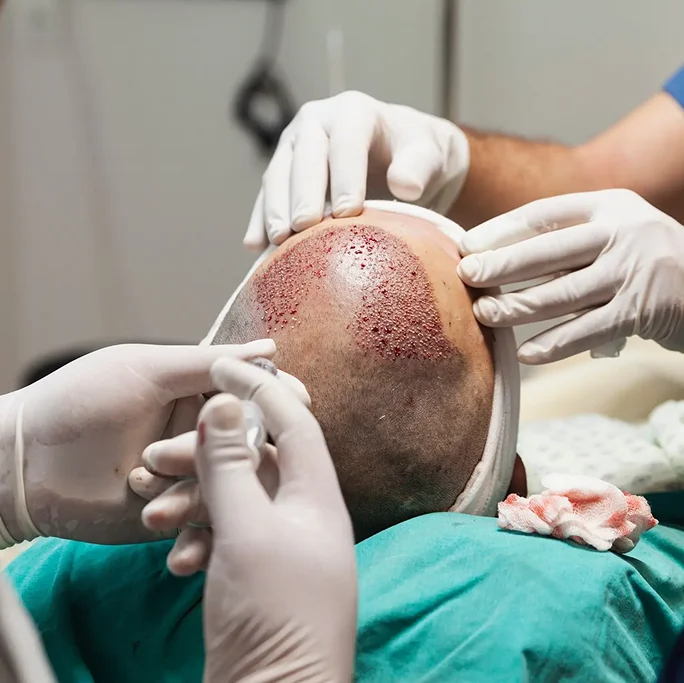
This is the one visit you make, and it runs under local anaesthesia. Your scalp is numbed while you stay awake, so for most people a painless hair transplant in Mumbai is a fair description of the day. The surgeon draws your hairline first, a natural hairline restoration mapped to your face and age, and starts only once you approve it in the mirror. Grafts are lifted next, then placed almost as soon as they come out. You go home the same day with a printed aftercare kit.
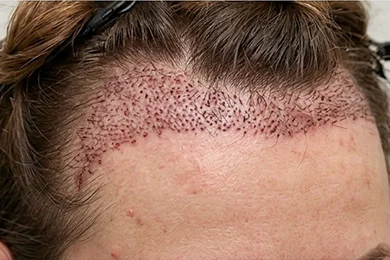
Healing is tracked at set points. Your checks fall at Day 1, Week 1, then Month 1, 3, 6 and 12, and for an out-of-station patient those move online after the early ones, so the single journey you made was for the surgery itself.
Four stages, one trip, and a hairline you approved before any graft moved.

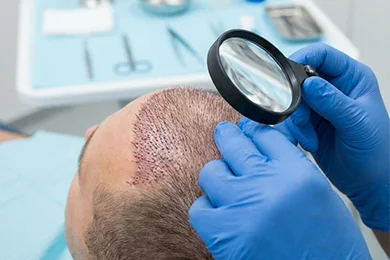
The hard part of a transplant isn’t the surgery. It’s the three weeks after, when the new hair sheds and every patient quietly wonders if the whole thing failed. It didn’t. Shedding is the transplant working to schedule, and knowing the map ahead keeps you off the internet at 2 am comparing scabs. Most people are back at a desk inside 7 to 10 days. Full density takes longer, and it is worth the wait.
| Phase | What’s happening |
| Day 1–2 | Mild swelling and redness. Sleep with your head raised. Painkillers are prescribed, and the scalp stays unwashed. |
| Day 3–7 | The first wash is done to the clinic’s guidance. Scabs start to lift. Many people return to desk work. |
| Weeks 2–4 | The transplanted hair sheds. This is expected, not a setback. |
| Months 3–6 | New hair starts to push through. |
| Months 9–12 | Final density settles in, with a clean hairline. |
Recovery do’s
Recovery don’ts
The checks that have to be done by hand are sequenced before you fly home. Your Day-1 review and your first wash happen at the clinic, so you leave already knowing your scalp is settling the way it should. After that, the follow-ups move online, and the shedding that lands in weeks 2 to 4 reaches you at home, on the calendar you were shown, not as a shock you drive back for. One trip out, the rest handled over a screen.
By now you have the how and the how-much. Why do Mumbai patients pick QHT over a nearer clinic? It comes down to what survives a year later, and who you trusted to get you there.
The technique is the difference you can’t see on surgery day but will see in the mirror at month 12: grafts placed almost as soon as they’re lifted, the same habit that keeps QHT’s survival rate high. A surgeon runs your case start to finish. The price is fixed and upfront, so nothing lands on the bill after you arrive. And the 15,000-patient record behind the clinic is the sample size your own result joins.
For a Mumbai patient, one more thing matters: the follow-up doesn’t ask you to keep travelling. The 12-month plan is run remotely once the hands-on checks are done, and the team stays reachable between them.
That’s the case. The next step is small: a free scalp check that starts online, from wherever you are in Mumbai. Send your photos, get a straight read on whether surgery is even your answer, and decide from there.
Mumbai will provide the best mix of the best medical services, trained surgeons, and a competitive market, which makes it an ideal destination to get a QHT Hair Transplant In Mumbai.
QHT clinic is the right one to choose when starting your QHT Hair Transplant journey.
Our surgeons are also specialists in the most advanced QHT Hair Transplant in Mumbai procedure.
We are more focused on making a hairline that is attractive and appears to be entirely natural.
We are concerned about your comfort and satisfaction throughout the process.
Our packages cover the journey from consultation to after-care.
The cost of a QHT Hair transplant in Mumbai at our clinic is straightforward and comprehensive.
The decision to invest in the QHT clinic to have a hair transplant is a lifetime payoff.
The QHT Hair Transplant in Mumbai is permanent.
A full head of hair will make your self-esteem and lifestyle much better.
Our highly experienced staff and sterile conditions will provide a safe and successful operation.
Hair transplant in Mumbai in our clinic is a valuable experience that cannot be matched anywhere based on the quality of outcome and treatment.
Discover other solutions at a QHT clinic that complement your hair restoration journey when you opt for a Hair Transplant In Mumbai.
Reach out anytime or visit us directly for personalized assistance, expert guidance, and seamless support experience.
QHT Clinic, 521, Model Colony, Ranipur More, Haridwar, Uttarakhand.
D -15, Outer Ring Rd, above Federal Bank, Prashant Vihar, Sector 14, Rohini, New Delhi, Delhi, 110085
QHT Clinic Opposite Hotel Park HyattRoad No. 2 Banjara Hills, Hyderabad, Telangana
Nursing Home Bearing plot No 3, Sector 46, Gurugram, Haryana 122022
No, and we’d rather say so plainly than imply otherwise. QHT treats Mumbai patients at its existing clinics, with the nearest in Hyderabad. Your consultation starts online, so the only trip you make is for the surgery itself.
The procedure runs under local anaesthesia, so your scalp is numb while you stay awake. Most patients call the day boring rather than painful. Mild soreness for a day or two after is normal and settles with the medication you’re given.
Yes. The hair is taken from the back and sides, which is DHT-resistant, meaning it ignores the hormone that drives pattern baldness. Moved to the top, it keeps growing for life. Hair you didn’t transplant can still thin with age, which is why the plan is drawn with that in mind.
Most people are back at a desk in 7 to 10 days. The transplanted hair sheds in the first few weeks, then new growth comes through from around month 3 and final density settles by 9 to 12 months.
Ask one question first: does a qualified surgeon perform the procedure, or a technician? Then check that the price is fixed upfront with nothing added later, and that the clinic plans your hairline to your face rather than stamping a template. A rate that looks too cheap usually shows up again later as a repair.
Yes. Women usually lose hair as diffuse thinning rather than a bald patch, so the plan and sometimes the method differ. QHT treats female patients with FUE and QHT techniques, often paired with medical therapy.