

A hair transplant is a permanent procedure. Get it right once, and the result lasts for life. Get it wrong, and you may end up paying twice: once for the surgery, and again for the repair. That second bill is not rare. Most of the repair cases that reach our surgeons start with a lower upfront package, followed by a large bill after surgery. The lowest quote tells you nothing about who will hold the instruments or what your hairline will look like a year on. So before you book anything, in Roorkee or anywhere, put every clinic through the same four checks.
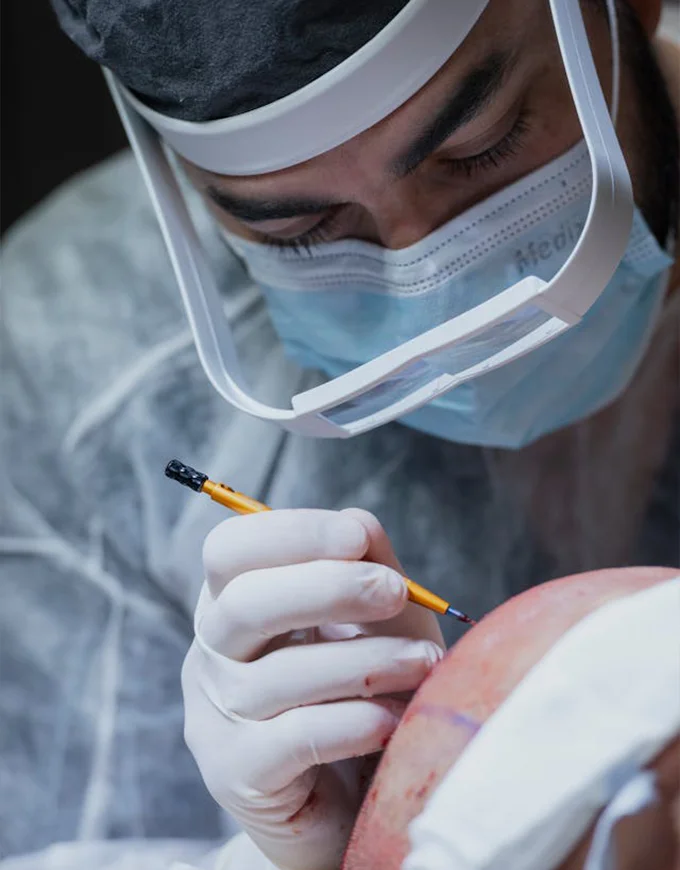
Ask who actually performs the procedure. The surgeon designs the hairline that suits your face and age, preserves the donor area, and performs both extraction and implantation. Direct surgeon involvement is the single thing that saves you from repair procedures later.
FUE and QHT are minimally invasive, leave no linear scar, and heal faster than the older strip method. A clinic relying solely on outdated techniques is one you should walk past.
A quote without an itemised list of what it covers is a warning, not a discount. Honest billing names every service and hands you the full breakdown before you commit to surgery.
Aftercare matters as much as the surgery does. A clinic that sends you home without a recovery plan, medication, and scheduled follow-ups is a red flag.
While looking for hair transplant near me, weigh your options carefully. Compromising on a surgeon’s availability for proximity will leave you with unsatisfactory results. Proximity does not buy you natural density; an age-appropriate hairline and a proven surgeon half an hour away beat a convenient one who treats your case as routine.
Natural density comes from where each graft is placed and how the hairline is drawn. Prioritise natural density that blends seamlessly with your existing hair.
Your plan should be built around your Norwood grade, your donor evaluation, your scalp health, and long-term progression, not a fixed template.
Before you agree to anything, ask to see documented cases at your own grade, with graft counts and recovery timelines attached directly. The before and after results show consistency and the possible results that can be achieved at every stage of hair loss.
Hair loss does not pause while you delay your decision to get a hair transplant. With each Norwood stage, the same donor supply has to stretch across more scalp. Early treatment keeps more options open, and that is a shrinking window rather than a permanent one.
A procedure performed without a qualified surgeon supervising is the origin story of most repair cases. Correcting one costs far more than the discount ever saved, and it limits your future donor supply.
Surgery is half the job. The recovery routine exists because grafts are still settling, and ignoring it puts follicles at risk, leaving you with unsatisfactory results later on.
A professional opinion at the right time is worth more than most people expect. A professional read improves coverage possibilities while donor supply is still adequate.
A dedicated in-house surgical team with a dedicated operating theatre ensures quality control and patient safety. Outsourced staff introduce variables nobody needed.
Knowing what your current stage can realistically achieve helps prevent disappointment afterwards. Results differ from one person to the next, shaped by pattern, age and personal goals.
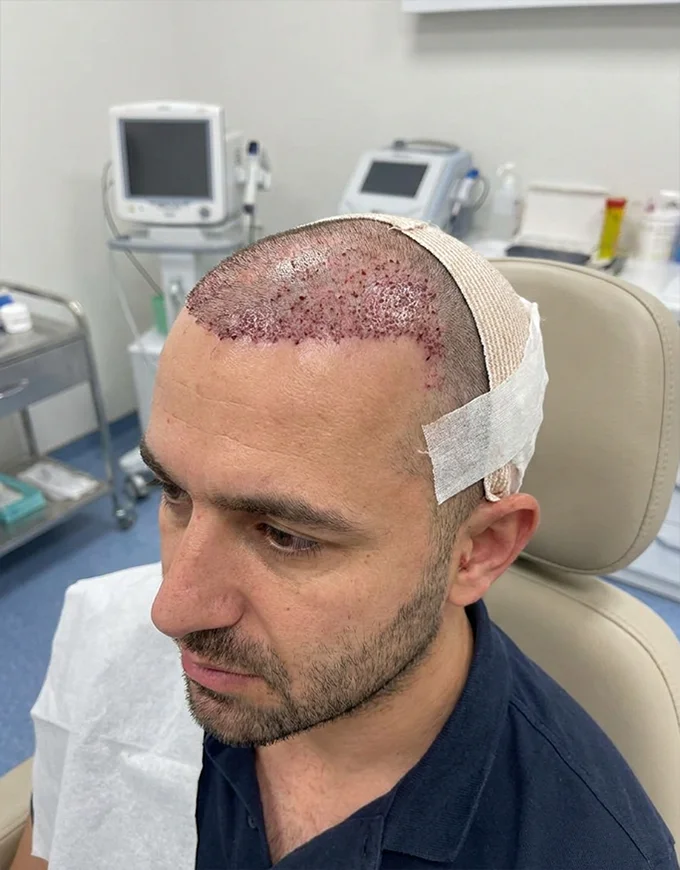
A dedicated operating theatre, modern equipment, and strict hygiene protocols are non-negotiable for a hair transplant surgery. Choosing an accredited clinic ensures patient safety and lowers the risk of complications.
Your result is largely decided before the first graft moves. Six things set it.
A wider bald area needs more grafts, and it determines the technique, the complexity, and whether one session is enough.
The hair at the back and sides is the reserve the entire procedure draws on. What sits there sets the ceiling on coverage, whatever any quote promises.
Methods differ in precision and in how gently grafts are handled. FUE and QHT protect graft survival, and survival is what turns a plan into density.
Clinical judgement across a wide range of cases is what produces consistent, natural results rather than occasional ones.

How grafts are handled between extraction and implantation determines how many grafts survive. A higher graft survival means more transplanted grafts produce hair successfully, ultimately translating into better final density.
Recovery has a direct bearing on final density. Following the plan closely protects the grafts and supports optimal density and regrowth.
Suitability is confirmed through clinical assessment and a review of your general health, never from a photograph alone. A remote consultation provides a useful initial opinion, but candidacy is determined by an in-person scalp examination that checks scalp health, donor availability, age, health, and goals. In early-stage loss, medical therapy is often the first recommendation, with non-surgical options like PRP, GFC and LLLT used to support existing hair before surgery is on the table.
Roorkee is a university town, and our surgeons see many younger patients, students and early-career professionals arriving at the first sign of thinning. For this group especially, an honest assessment matters. A pattern still forming is difficult to plan around, and treating too early can deplete donor supply that will be needed later.

You are likely a suitable candidate if you:
Four stages, and you know the graft count, the technique, and the price before the first one ends. At QHT Clinic, every step of the process is clearly communicated and explained, along with the density that can realistically be achieved.
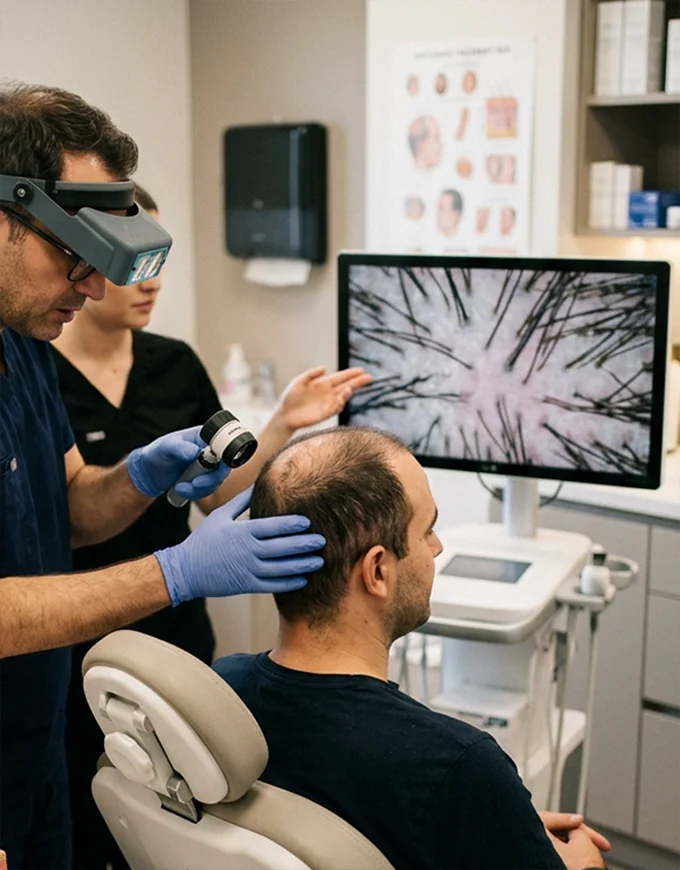
Step 1: Detailed consultation. For a Roorkee patient, an option of initial teleconsultation is available. Your history, Norwood grade, loss pattern and donor area are then assessed in person at Haridwar, a short drive away. A consultation confirms candidacy and gives you a firm estimate of grafts and cost.
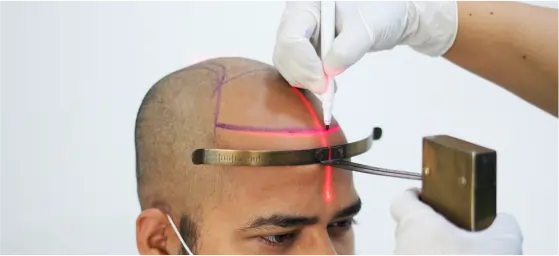
Step 2: Pre-operative planning. A complete blood panel, hormonal profile, hairline design, and written pre-surgery instructions for the day. You also receive an itemised written quotation, so you don’t have to worry about the hidden charges. You pay exactly what’s quoted, no extra payments.
Step 3: Surgery day. The procedure is performed under local anaesthesia. Your scalp is numb, and you stay awake throughout. The surgeon harvests the grafts and places them along the natural direction of growth, following the hairline you approved. Detailed post-procedure instructions and prescription medication are provided before you leave.
Step 4: Recovery and follow-ups. Healing is monitored from day one. A dedicated post-surgical team schedules follow-ups around your routine, and because Haridwar is close, in-person checks are easy to arrange, and remote reviews cover everything in between, so you don’t have to travel again and again.
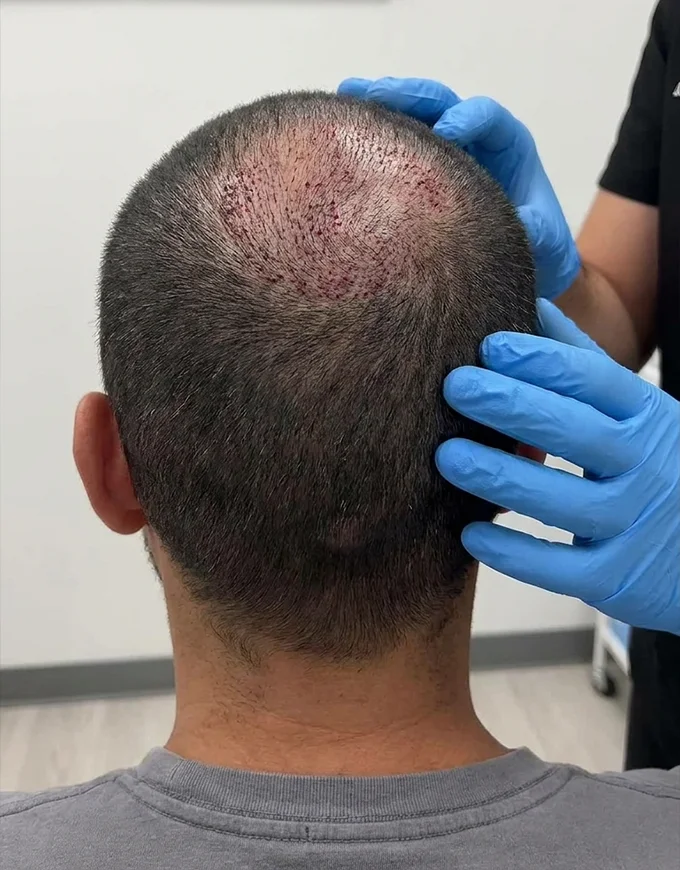
Recovery plays a decisive role in outcomes. For most patients, the timeline is straightforward, planned to suit your schedule. The early phase is short with modern techniques. What decides the outcome in those first weeks is how closely you follow the instructions.
Desk work is usually possible from around day 5. During early healing, sleep with your head elevated, keep your hands off the grafts, take the prescribed medication, and avoid heavy lifting, running, contact sports and swimming. Eat properly, drink enough water, and keep the scalp out of direct sun for the first few weeks.
QHT offers the three main hair restoration techniques used worldwide, plus its own proprietary method. Which one suits you depends on the extent of your loss, the density you want, and how you wear your hair. All three give permanent, natural-looking results.
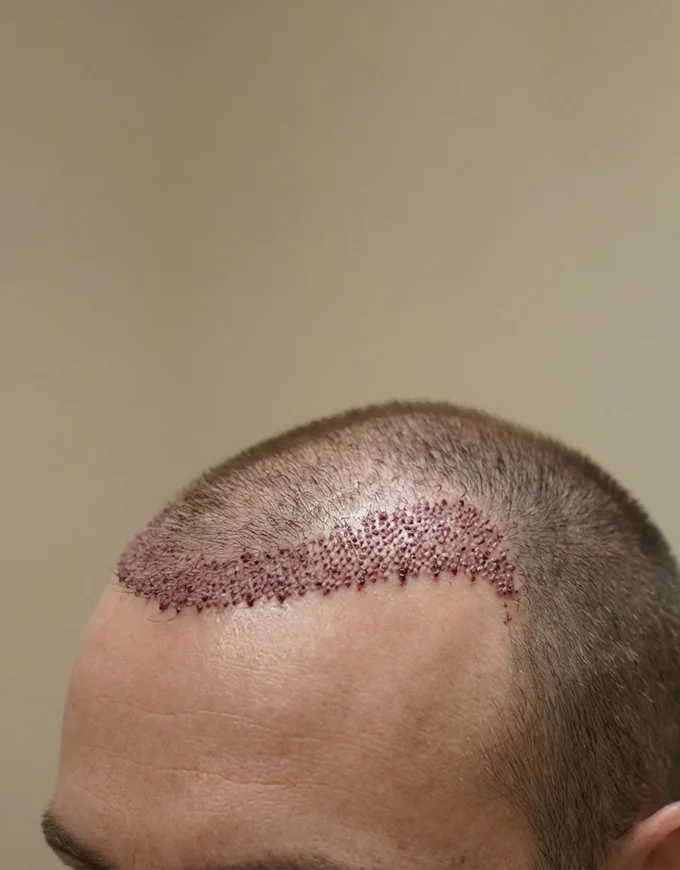
The globally recognised standard. Follicles are extracted individually from the donor zone under 10x magnification, then implanted into the recipient area. With no linear incision, only tiny dot-like marks remain, which is why FUE suits anyone who keeps their hair short. It is suitable across a broad range of Norwood grades, from an early receding hairline to advanced loss, and because it is minimally invasive, it reduces trauma to the scalp and speeds up healing.
Best suited for: patients wanting a minimally invasive approach with no visible scar after healing, and anyone with short hair or an active lifestyle.
Recovery: desk work within 5 to 7 days.
The older strip method, and the lowest cost per graft. A thin strip of scalp is taken from the donor zone and micro-dissected under magnification into individual grafts, which are placed into pre-made slits at the correct angle and depth. It yields the most grafts in a single session, which is why it is preferred in advanced loss. The trade-off is a fine linear scar that heals more slowly than FUE or QHT, which is easily concealed under longer hair; that is why women often prefer it. The scar can also be corrected with future FUE or scalp micropigmentation.
Best suited for: advanced baldness at Norwood 5 to 7, where maximum grafts in one session give the coverage needed.
Recovery: around 10 to 14 days for donor-site healing, with suture removal at 10 to 14 days.
QHT is the clinic’s own advanced form of FUE, developed by its surgeons. Extraction and implantation are done almost simultaneously using the SAVA implanter pen, which reduces graft out-of-body time to under two hours. Grafts are selected under 10x magnification, so only viable, intact follicles are implanted, then stored in cold PRP saline to reduce oxidative stress before placement. That reduced out-of-body time contributes to a documented graft survival rate of 95% and denser coverage. This advanced technique leaves tiny dot-like marks that become undetectable once healed.
Best suited for: patients wanting the highest graft survival, denser coverage, and minimal scarring.
Recovery: 5 to 7 days for desk work, in line with FUE.
Graft counts and prices are indicative ranges. Your confirmed figure is set only after an in-person scalp assessment, since donor supply and coverage goals differ from patient to patient.
Roorkee has clinics advertising transplants at every price point, and between sponsored ads and aggressive marketing, it is hard to tell which of them puts a surgeon in the room. QHT does not run a centre in Roorkee. What Roorkee patients get instead of a local address is access to an experienced surgical team just 31 km away in Haridwar: a 40-minute to one-hour drive, or a short train ride along the Roorkee–Haridwar route.
A qualified hair transplant surgeon is involved from consultation through recovery. No case is handed to technicians.
Start remotely with a review of your scalp photographs, then plan the in-person assessment at Haridwar.
Clear packages with post-transplant support, and nothing added to the bill after you have agreed the quote.
The clinic’s proprietary technique, with 95%+ graft survival and minimal scarring.
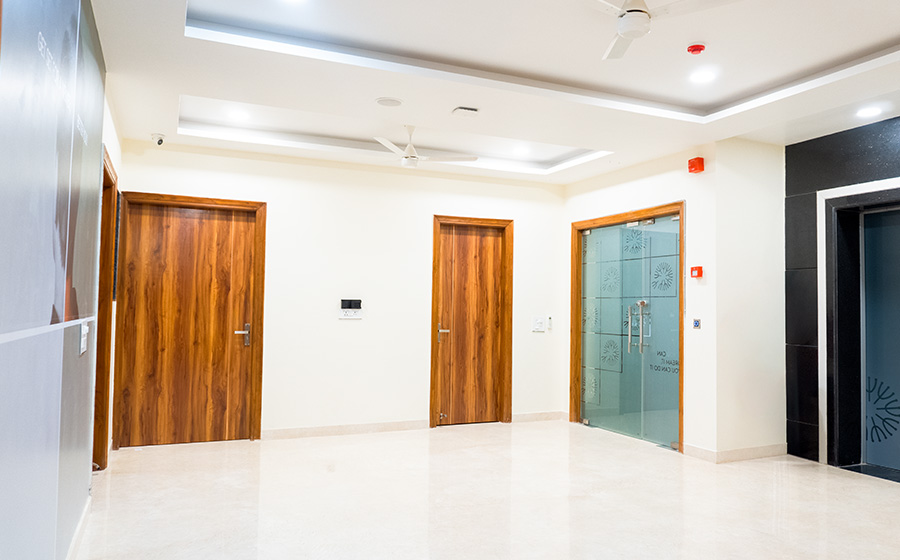
The Haridwar centre operates to NABH safety standards, with a dedicated operating theatre and strict hygiene protocols.
Discover other solutions at a QHT clinic that complement your hair restoration journey when you opt for a hair transplant in Roorkee.
Reach out anytime or visit us directly for personalized assistance, expert guidance, and seamless support experience.
QHT does not run a centre in Roorkee. The nearest QHT clinic is in Haridwar, about 31 km away, roughly a 40-minute to one-hour drive, with a dedicated operating theatre and strict hygiene and sterilisation protocols.
Qht Clinic, Chandra Rekha Tower, Chandra Rekha Lane Next to HP Jagat Petrol Pump, Delhi-Haridwar Highway, Jwalapur, Haridwar, Uttarakhand - 249407
D -15, Outer Ring Rd, above Federal Bank, Prashant Vihar, Sector 14, Rohini, New Delhi, Delhi, 110085
Plot No. 3, Sector 46, Opposite Huda Market, Gurugram, Haryana – 122022
Hair transplant in Roorkee, answered plainly by the surgeons who treat Roorkee patients at our Haridwar centre.
No. QHT does not run a centre in Roorkee, and we would rather state that plainly than imply otherwise. The nearest QHT clinic is in Haridwar, about 31 km away, roughly a 40-minute to one-hour drive. For most Roorkee patients, that is close enough to attend consultation, surgery and follow-up appointments without an overnight stay. Your first consultation can also begin remotely from home.
For a permanent procedure, surgical expertise and safety standards matter far more than picking the nearest clinic. Since Haridwar is barely half an hour to an hour from Roorkee, you get surgeon-led care with almost none of the travel burden patients from farther cities take on.
No. The scalp is fully numbed with local anaesthesia before the procedure begins. You stay awake but feel no cuts or pulls. Mild soreness for a few days afterwards is normal and settles with the prescribed medication.
That depends on the area to be covered, your donor density, your stage of loss, and the technique used. You get a specific written graft count and cost estimate at the consultation, once a clinical assessment has been done, since requirements vary considerably between patients.
Transplanted hair sheds within the first few weeks, which is normal. New growth becomes visible from around month 3, fuller coverage appears by months 6 to 8, and final density settles by roughly 12 months.
Yes. Women with stable female pattern hair loss, traction alopecia, or certain scarring types of hair loss may be suitable candidates. Suitability depends on donor availability and the underlying cause, both assessed during clinical evaluation.