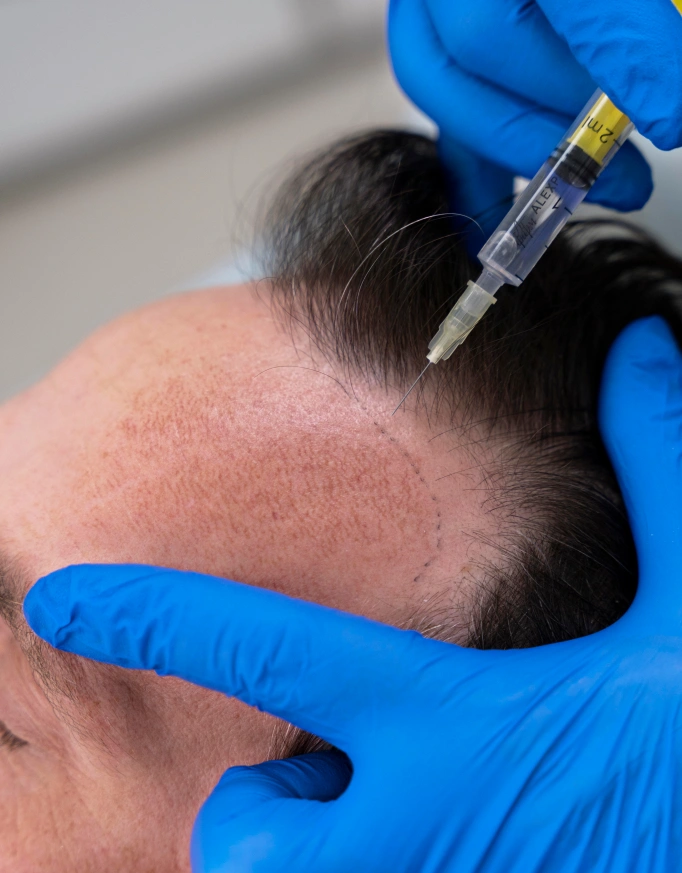
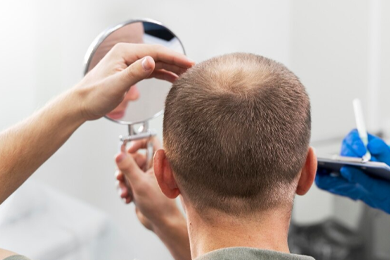
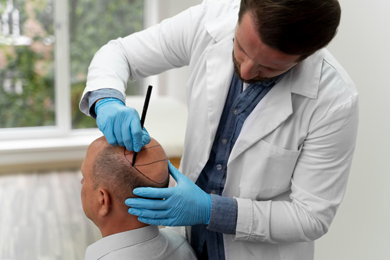
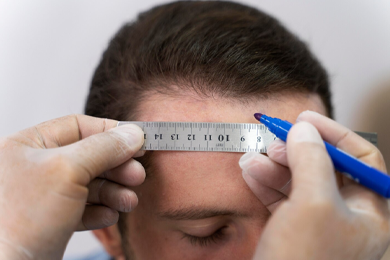
Growth occurs in a circular pattern and requires planning.
Treatment plan varies from patient to patient.
Slow growth with final results seen in 9 to 12 months.
Careful extraction and implantation for avoiding overharvesting.
Crown baldness, or vertex thinning is the type of hair loss that usually occurs at the top back part of the head. It occurs gradually and progressively instead of being sudden. People do not experience a sudden bald patch, it occurs over time. Often people take time to notice crown baldness, as it is less visible than frontal hair loss.
Genetic or male pattern baldness is the leading cause for crown hair loss. The hair follicles weaken with age and hormonal changes cause unpredictable and significant loss of the hair at the crown region. Other causes of crown baldness may also include stress, trauma, nutritional deficiencies, skin conditions and more. If left untreated, crown hair loss may continue to progress over time.
There are various cities in India that are rapidly gaining name for the medical treatments they offer. Among these Indian cities, Delhi is widely standing out. Many individuals today are selecting Delhi for treatments like hair transplants.
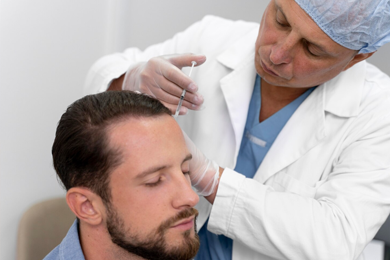
If you are someone who is looking for crown baldness treatment, then you can opt for Delhi city. The plan for crown baldness treatment Delhi, varies from patient to patient depending upon the severity and underlying cause of hair loss. Medications are often recommended to patients who are at their early levels of hair thinning, as it can slow down the progression of hair loss and also improve hair quality. However, in severe cases with prolonged hair loss, patients may be recommended to undergo a crown hair transplant. Before undergoing a crown hair transplant, a thorough scalp evaluation is crucial to enjoy long-term results.

It’s essential to conduct a detailed evaluation prior to conducting a crown hair transplant in Delhi. A proper evaluation will help in determining the crown’s unique features and characteristics when planning.
Crown baldness has both diffuse and localised patterns of thinning which impacts the number of grafts required for the procedure.
Accurate mapping will help in determining the natural direction of the hair swirls which will result in natural looking results.
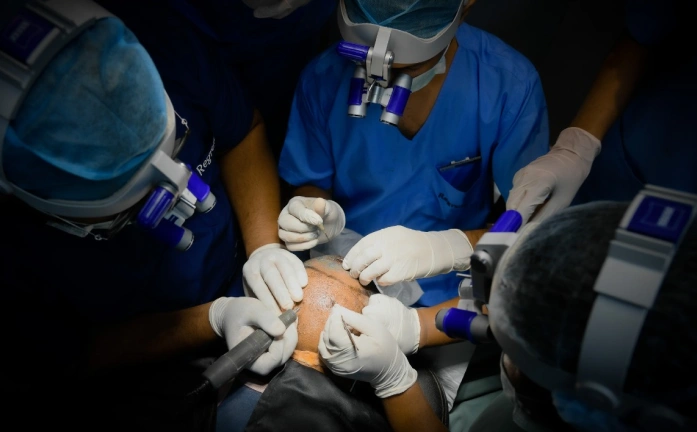
Because of the high number of grafts needed in the crown area, donor safety should be the priority of the surgeons when performing the procedure.
For crown baldness treatment Delhi, surgeons also assess whether the hair will be transplanted immediately or in stages to reduce the risk of prematurely depleting the donor area hair.
Crown restoration is different from frontal procedures due to hair swirl patterns as well as light reflection. For this reason, crown hair transplants in Delhi are focused more on strategic placement of grafts than on how much visual density is achieved immediately.
In contrast to a frontal hairline, the crown area requires carefully designed, spaced circular grafts. If a doctor tries to achieve a very high density in the area of the crown, donor hair will likely be depleted before achieving a natural-looking final result.
Surgeons take a conservative approach in vertex hair transplant Delhi cases, by restoring a portion of hair density initially. This is done to create a seamless integration with the existing hair, and in most cases also allows for future treatment options if required.
To keep the natural swirl patterns intact and the long-term density distribution balanced, precise placement of the grafts during the procedure is extremely important.
For a successful crown hair transplant, proper assessment of grafts needed, degree of hair thinning, strength of existing hair and an individualized plan is crucial.
The majority of density will be near the centre of the crown, with gradual tapering towards the outwards, to create a natural look.
The grafts should be placed in a circular manner to match the natural swirl. Precise placement of grafts at proper angles and directions will result in natural looking results and also allow the transplanted hair to blend in naturally with existing hair.
Balanced extraction of grafts from the donor area, protects the donor hair from being exhausted and aid in future procedures.
In the graft planning phase, patients often look for advanced hair transplant services in Delhi to ensure a high level of experience with respect to crown hair transplants. This is crucial, as incorrect placement of grafts for crowns will often lead to unsatisfactory results.

Restore your hair with confidence at QHT. With medical precision, modern technologies, and state-of-the-art clinics across India, we offer advanced, personalised, doctor-led hair restoration procedures. From consultation, treatment, results to post-op care QHT team is here to guide. Start your dream hair journey with QHT.
D-15, Outer Ring Rd, above Federal Bank, Prashant Vihar, Sector 14, Rohini, New Delhi, Delhi, 110085.
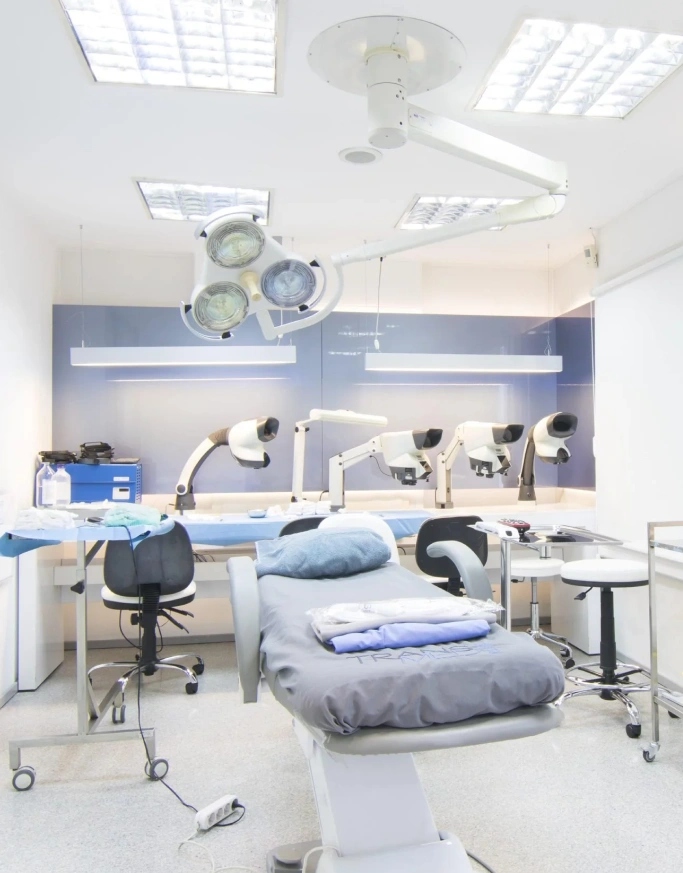
Experience world-class hair transplant care in Delhi. At QHT Delhi, we bring together advanced technology, experienced surgeons, and a highly personalised approach to help you achieve natural, lasting results.

Plot No. 3, opposite Huda Market, Sector 46, Gurugram, Haryana 122022
Experience modern hair transplantation in Gurugram at QHT Clinic, where we provide natural-looking, lasting results at best packages. QHT Clinic Gurugram offers personalised hair transplant solutions with expert care to help you achieve your dream hair.


The cost of hair transplant in India varies depending on various factors such as:
The factors affecting hair transplant costs include:
The number of hair grafts required will determine the final cost of the procedure and how complicated the procedure will be.
The technique used like FUE or DHI has an effect on the surgical process and pricing as well.
An experienced hair transplant doctor in Delhi guarantees accurate and precise results but the cost of the procedure will also be high.
Follow-up visits, medications, and recovery monitoring after the hair transplant also adds up to the final cost of the procedure.
A crown hair transplant is a highly successful procedure when performed by a professional under ethical protocols.
Yes, crown hair can be regrown. In mild cases of hair loss, medications can be effective, however in case of advanced hair loss, hair transplants can be suggested.
You can regrow your crown hair fast through a combination of treatments including medications, nutritional supplements and in extreme cases through hair transplant.
Yes, transplanted hair is permanent, but patients can lose surrounding native hair.
No, crown hair transplants are not painful. The procedures are performed under local anesthesia, making the whole process painless.
Doctors often recommend sleeping with the head elevated at a 45 degree for a few days after undergoing a crown hair transplant.
You can speed up your transplant results by strictly adhering to the post-operative care instructions given by the doctor, eating a balanced diet, maintaining sleep cycle and scalp care routines.