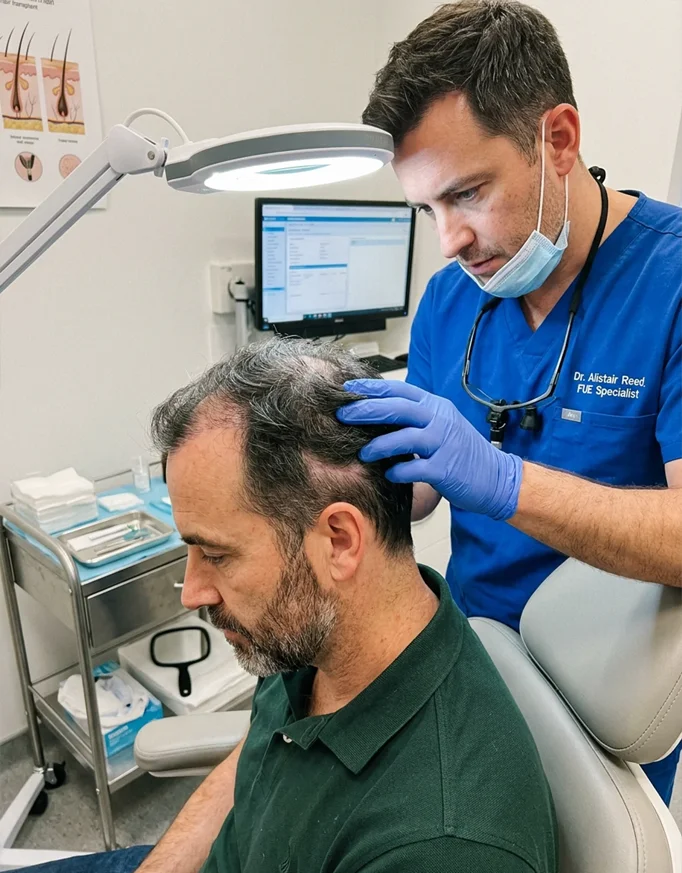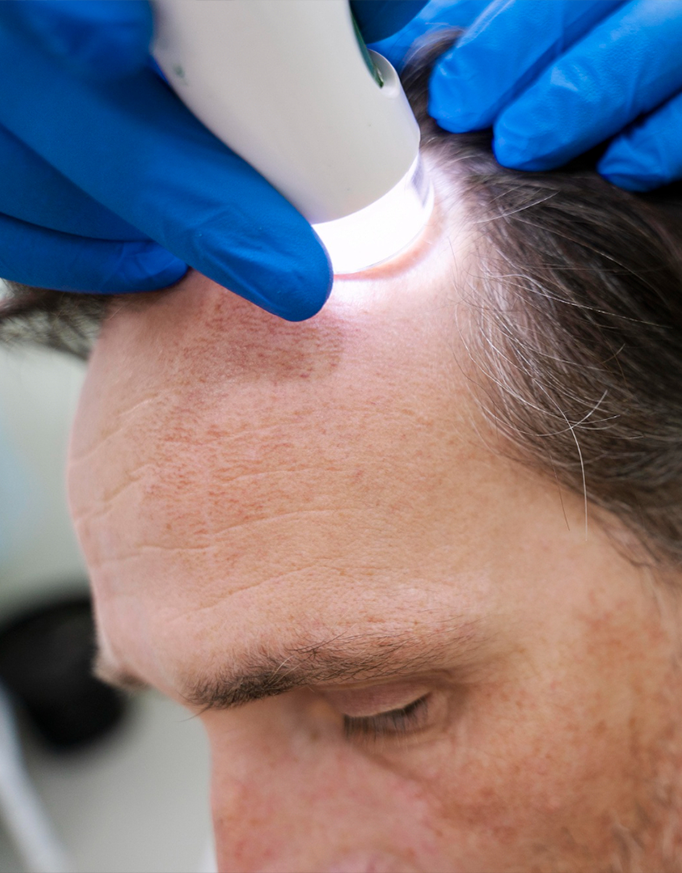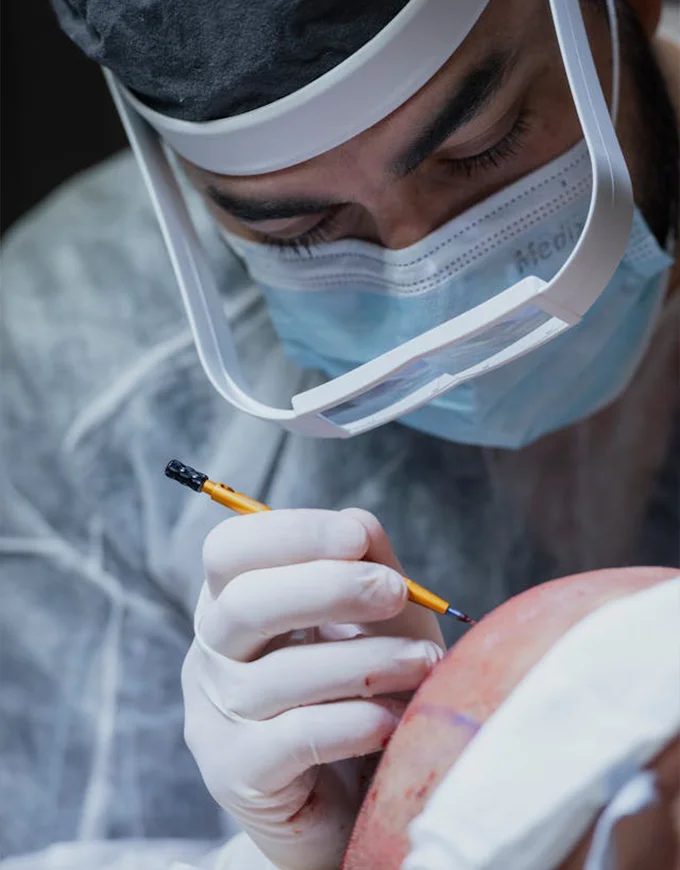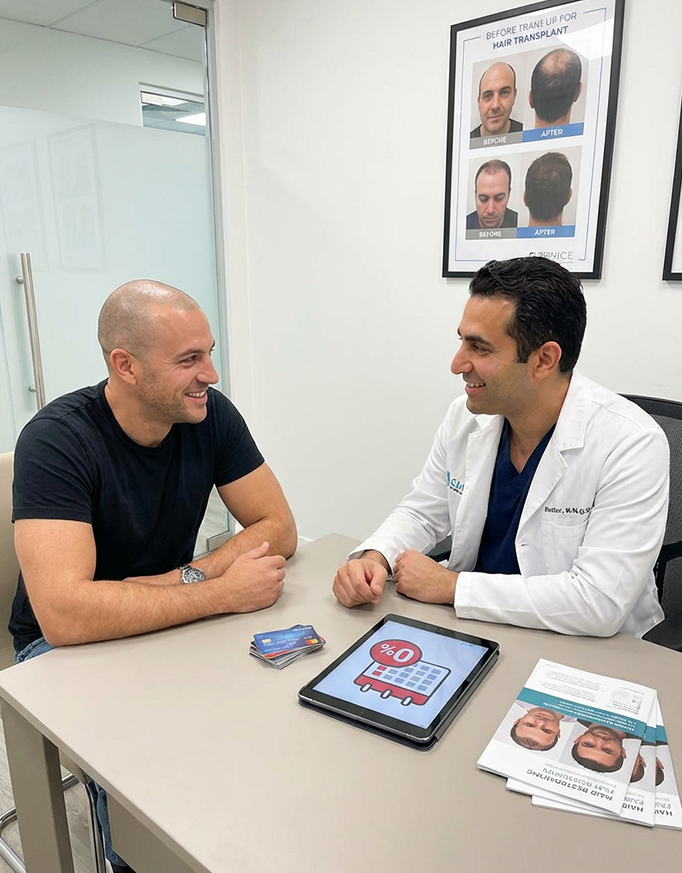


Planning and execution
by trained hair transplant
surgeons.
FUE and other established techniques that are appropriate for a patient's scalp condition.
Transparent consultation, realistic expectations and long-term planning for future hair growth.
Strict sterilisation practices, standard operating procedures and follow-up care
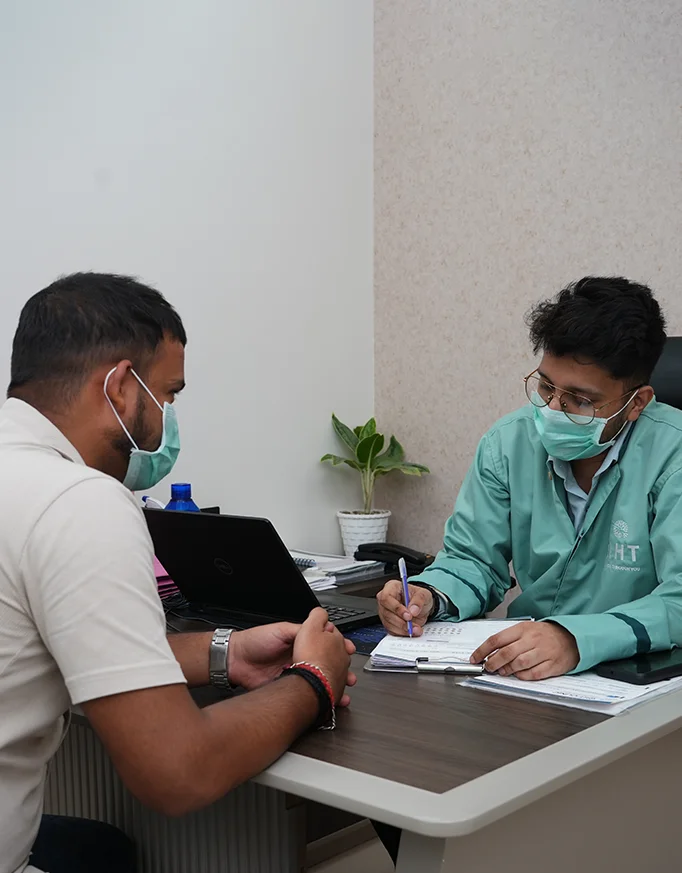
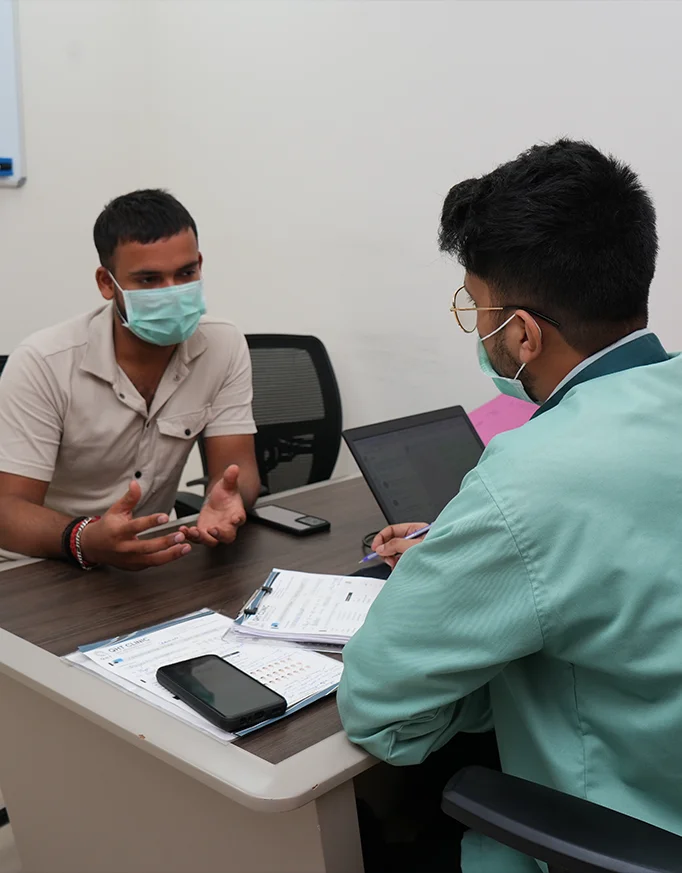
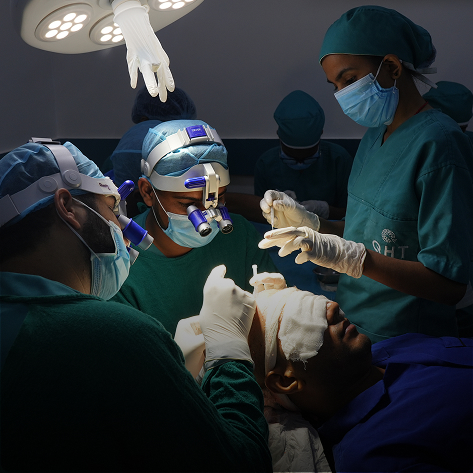
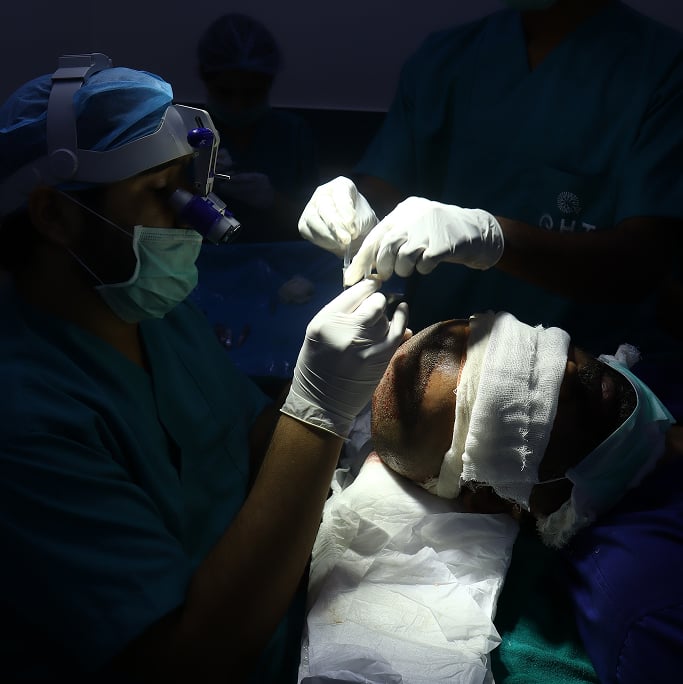
Unlike many clinics that delegate the most critical steps to technicians, our process is defined by direct surgeon involvement at every phase.
Tailored Surgical Planning: We avoid the “one-size-fits-all” approach. Every patient undergoes a comprehensive scalp assessment, considering donor hair density, caliber, and future hair loss patterns to ensure a result that looks natural for a lifetime.
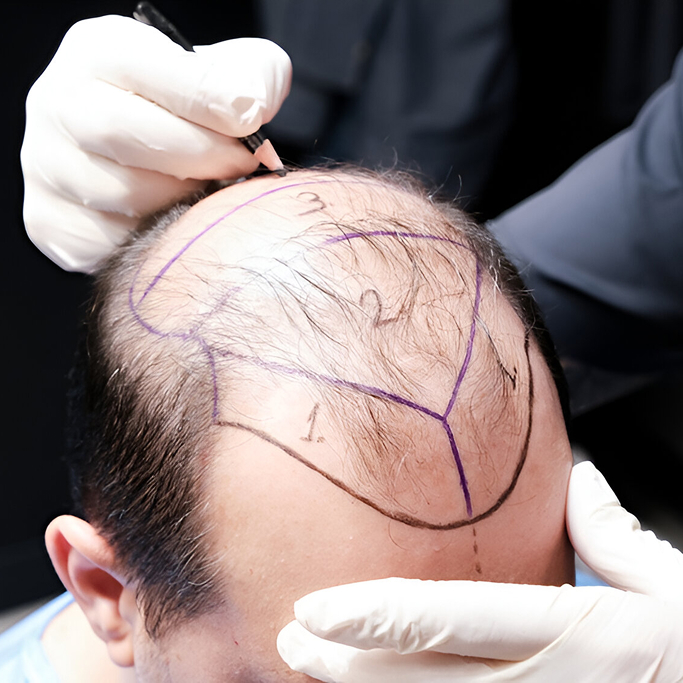
Artistic Hairline Design: Our surgeons personally map the hairline. We consider your facial symmetry, age, and aesthetic goals to ensure the final result is indistinguishable from natural growth.
Transparent Expectations: We provide an honest evaluation of what can be achieved. We prioritize density, proper angle, and depth to ensure optimal graft survival and a natural look.
In the competitive landscape of hair transplants in Delhi, the “technician-only” model has become a concerning industry standard. At many clinics, the surgeon acts merely as a supervisor, while untrained or minimally supervised staff handle the most delicate parts of your procedure. This gap in clinical oversight often leads to irreversible complications, such as over-harvesting of the limited donor area, unnatural “doll-like” hairlines, and poor graft survival rates.
At QHT, we believe your scalp health is too important to be delegated. Our commitment to a surgeon-led model is non-negotiable, ensuring every patient receives the highest tier of medical care.
In a standard procedure, the extraction of grafts and the creation of the recipient sites are the most technically demanding stages.
Minimizing Donor Trauma: Our surgeons utilize precision instrumentation to extract hair follicles, specifically focusing on preserving the integrity of the donor area. Unlike high-speed technician-led extraction, which often causes scarring or “moth-eaten” appearances, our surgeons use a calculated, slow-extraction approach to protect your future donor potential.
Strategic Site Creation: The angle, depth, and direction of the incision determine how naturally your hair grows. Our surgeons manually create every site to mimic your original hair growth pattern, ensuring that the final result flows naturally and maintains the density you desire.
Immediate Oversight: Because our surgeons are hands-on during both extraction and implantation, they can adjust the technique in real-time based on your skin elasticity and graft quality, something a technician simply cannot do.
Trust is earned through consistent, measurable outcomes. Over the past 15 years, patients from more than 25 countries including those from markets with the strictest medical regulations have chosen QHT. Our reputation is not based on marketing buzz, but on clinical results that speak for themselves:
Handling Complex & Corrective Cases: We are a referral hub for patients who have experienced failed transplants elsewhere. Our surgeons possess the advanced anatomical knowledge required to correct bad hairlines, address thinning in previously over-harvested areas, and manage scalp tissue that has undergone previous trauma.
High-Density Restoration: Through rigorous planning, we are able to achieve natural-looking, high-density results even for patients with advanced stages of hair loss (Grade 5+).
Long-Term Scalp Health: We don’t just focus on the “day of” results. Our model emphasizes the long-term health of your scalp, ensuring that the donor area remains healthy for potential future sessions and that your existing hair is protected during the procedure.
A qualified and experienced hair transplant surgeon is essential for the success of every hair transplant procedure. In particular, a leading hair transplant doctors in Delhi will be focused on preserving the donor area, delivering natural-looking results, and creating a personalized treatment plan that also considers potential future hair loss.

The surgeon will utilise medical judgement consistently throughout the process of hair transplantation by evaluating the patient’s hair loss patterns to assess possibilities for future hair loss.
A top hair surgeon understands:
The best hair transplant clinics in Delhi always have a doctor-guided approach as opposed to an assembly-line surgery based approach.
Top hair clinics in Delhi use different methods, but the right one depends on each person’s hair loss pattern, donor hair quality, scalp condition, and long-term needs. Good clinics focus on proper evaluation and ethical care, rather than promoting one technique for everyone.
It is a popular technique in India due to its minimally invasive nature. Each follicular unit is extracted one at a time which leaves behind no linear scars, is associated with faster healing, and is generally suitable for all types of patients provided they have chosen the appropriate amount of time for future planning.
DHI focuses on the precise implantation of hair grafts using specialized tools. This technique allows for controlled placement, helping achieve natural hair density and direction. It is best suited for selected cases and requires a high level of technical expertise to ensure optimal graft survival and aesthetic results.
Developed by QHT Clinic, QHT is an advanced hair restoration method that uses micro punches for follicle extraction and high-magnification instruments for implantation. This approach enhances graft handling, minimizes scalp trauma, and improves the precision of graft placement.
A reputable hair restoration clinic does not select one method over another; they will use either the FUE, DHI, or QHT method depending on which of the three methods are the most effective for that individual’s scalp and their potential future hair loss.
If you’re interested in learning more about the QHT technique, a detailed resource with medical information pertaining to the technique is available at the QHT Hair Transplant in Delhi.
Restore your hair with confidence at QHT. With medical precision, modern technologies, and state-of-the-art clinics across India, we offer advanced, personalised, doctor-led hair restoration procedures. From consultation, treatment, results to post-op care QHT team is here to guide. Start your dream hair journey with QHT.
D-15, Outer Ring Rd, above Federal Bank, Prashant Vihar, Sector 14, Rohini, New Delhi, Delhi, 110085.
Experience world-class hair transplant care in Delhi. At QHT Delhi, we bring together advanced technology, experienced surgeons, and a highly personalised approach to help you achieve natural, lasting results.
The Hair Transplant Prices varies depending on various factors such as:
The price of hair transplants is determined by a number of variables, including the patient’s hair loss pattern, the condition of their scalp, and the method used to perform the hair transplant. The factors affecting the cost are:
The number of grafts will be determined by the level of baldness, how dense you want the final outcome to be, and the condition of your scalp prior to the procedure.
A doctor skilled in advanced FUE or DHI procedures will charge significantly more than an average elementary trained doctor.
Doctor's experience and expertise in the planning and surgical procedures significantly affects both the safety and cost of the procedures.
Post procedure care, including follow up visits, medication and long-term care of the scalp is included in determining value for service.
Global bodies such as the World Health Organization encourage an evidence-based approach to medicine and following ethical guidelines when discussing the options available to patients for surgical procedures.
The best clinic is one that provides a doctor-led treatment plan, ethical counselling, safe treatment options, and will provide you help with long-term hair loss and not just cosmetic solutions.
FUE is one of the most widely recommended methods but may or may not be appropriate for you based on an individual assessment of your scalp or hair type.
Hair transplants are typically permanent, however, the surrounding native hair may grow thinner and require medical management to prevent this from continuing.
A well-structured hair transplant performed by qualified doctors, who follow all medical protocols during the procedure, is considered a safe surgical procedure.
Females can receive hair transplants, but a complete diagnosis of the cause of female hair loss is needed to recommend hair transplant surgery.