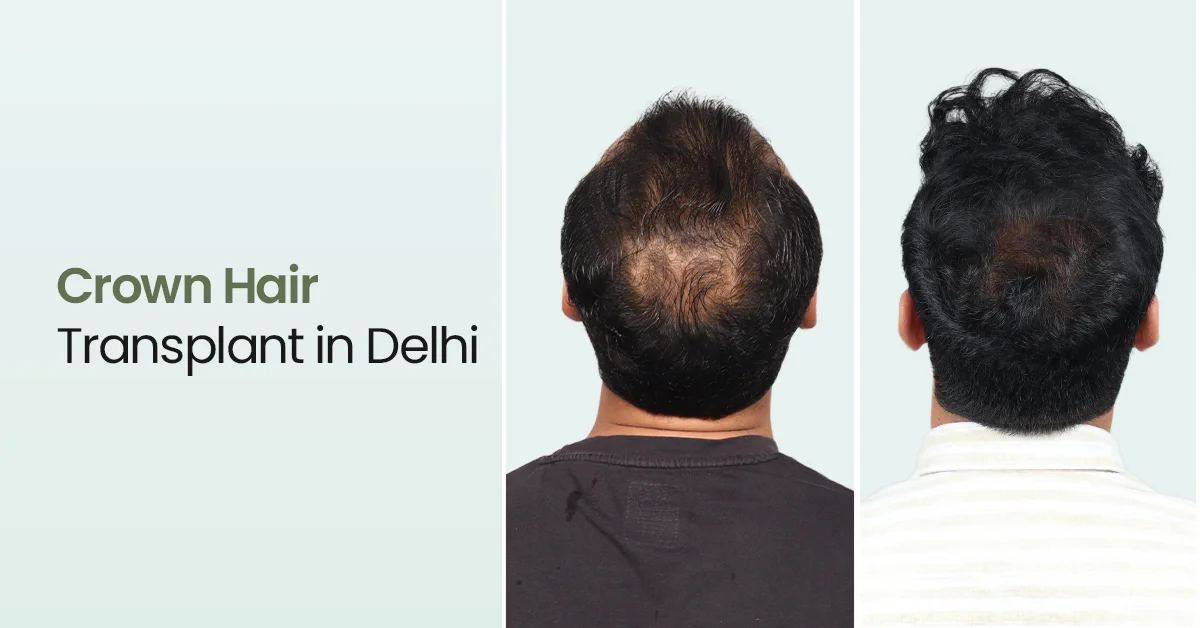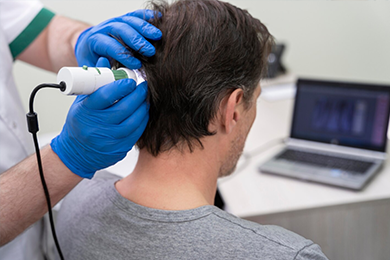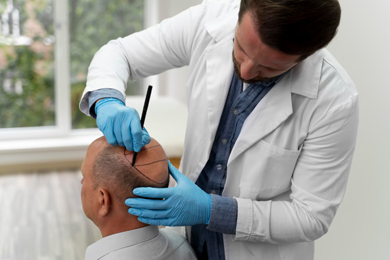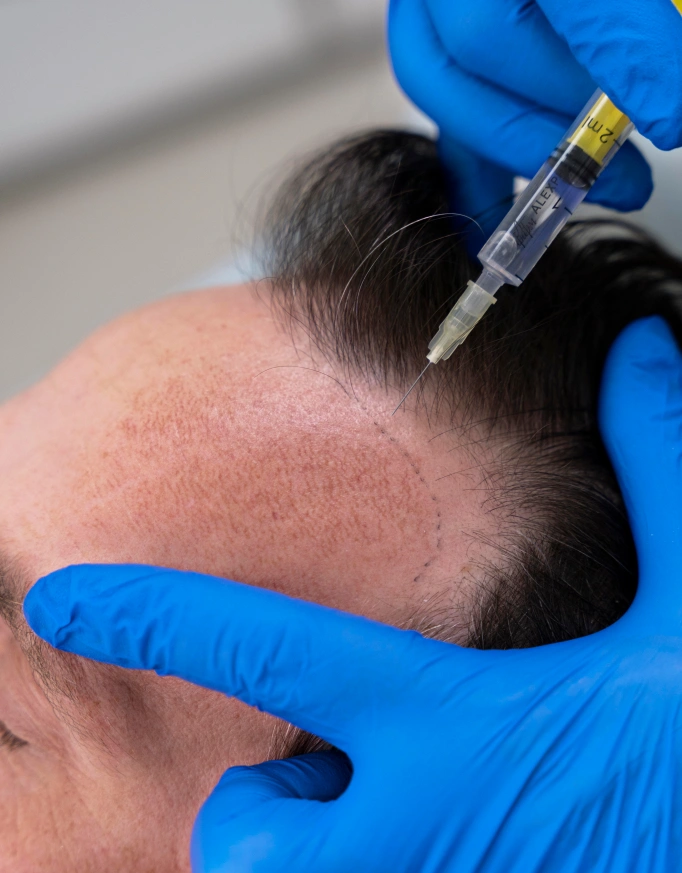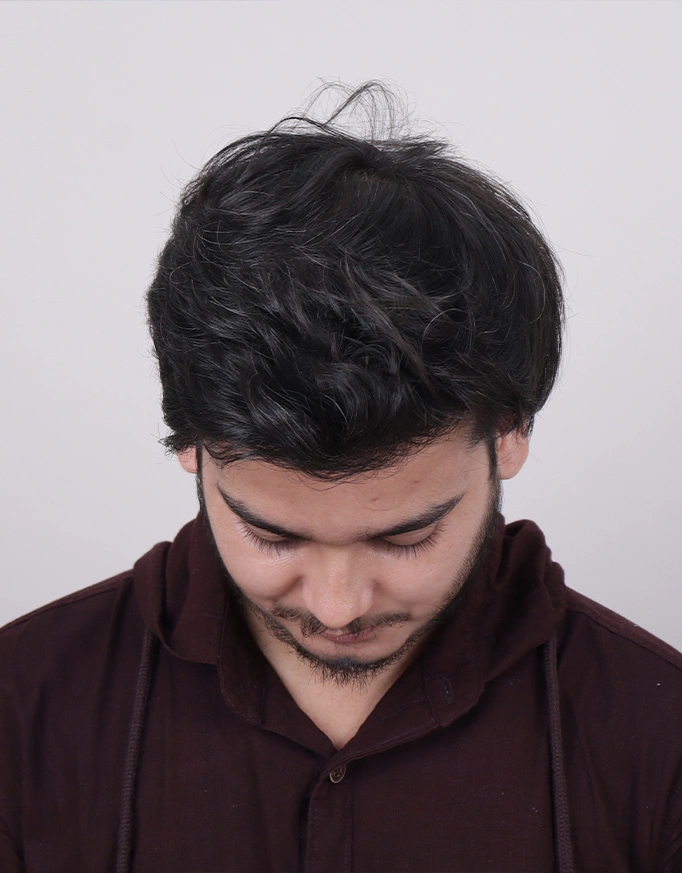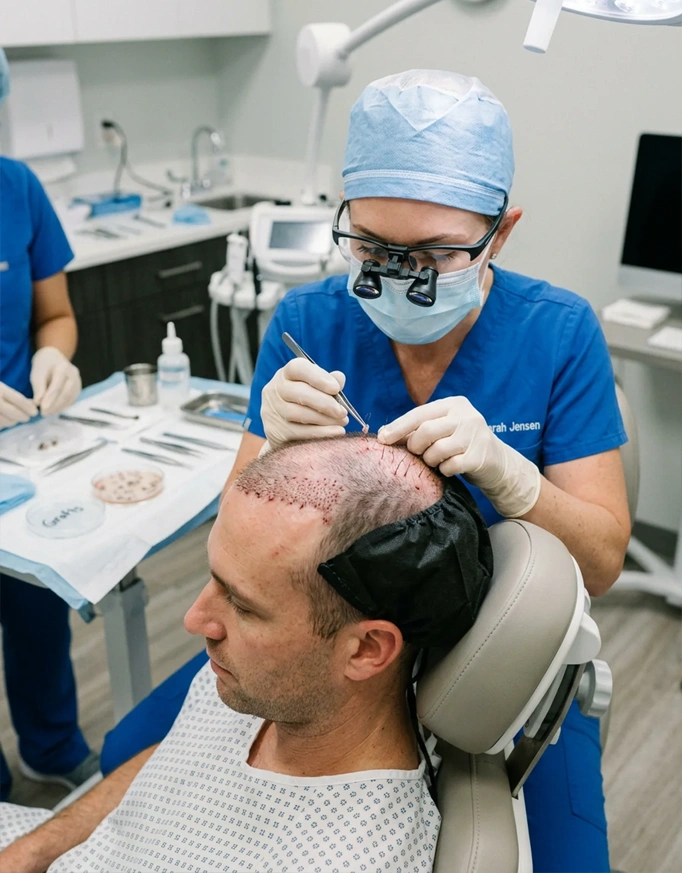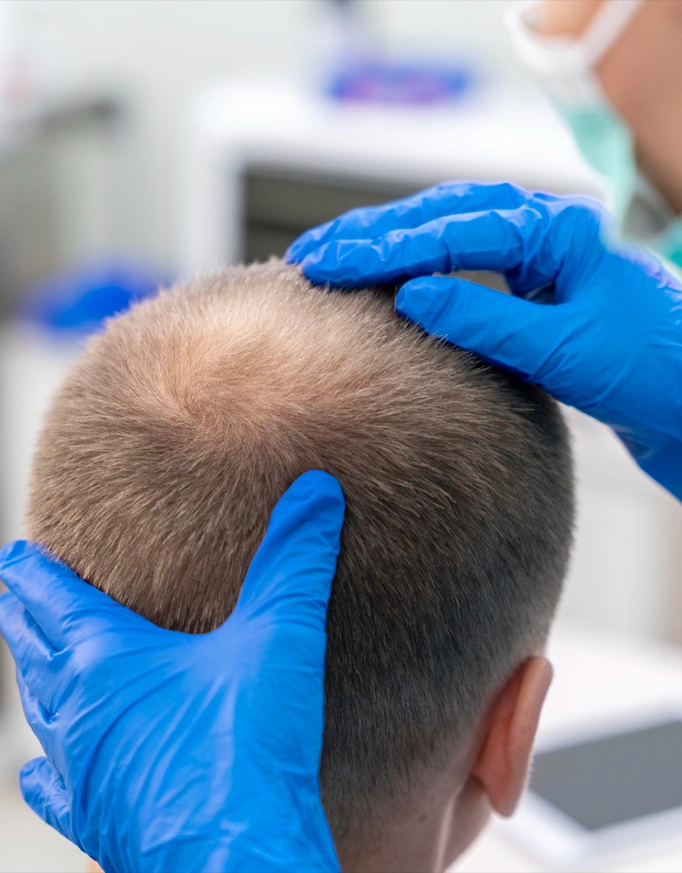


Circular growth requiring careful planning
Balanced coverage over an immediate dense appearance
Temporary sensitivity during initial healing
Noticeable crown thinning with donor availability
Crown hair loss (vertex thinning) is one of the most common presentations of Androgenetic Alopecia, the genetic, autoimmune condition responsible for hair loss in both men and women. In men, the pattern of hair loss starts mostly at the temples or the crown, while in women, thinning is diffuse and concentrated at the crown area. The prevalence of crown baldness increases with age and differs in appearance and rate of progression from hairline recession. The crown responds differently to both medical and surgical treatment options, and hair thinning in this region is particularly visible under direct bright light as compared to thinning of the hairline.

The extent of hair loss is measured using the Norwood scale, and crown involvement begins at Norwood stage 3. Before undergoing a crown hair transplant in Delhi, patients should understand how it differs from a standard hair transplant. The hair at the crown grows outward from a central point in a spiral/ whorl arrangement rather than in a uniform or straight line, which directly affects the graft placement and density buildup over the years. Moreover, the crown requires a larger number of grafts for adequate coverage as compared to the frontal areas.

Therefore, surgical planning for a crown hair transplant usually accounts not only for the current extent of hair loss but also for the likely pattern of future hair loss.
The primary cause of hair loss remains androgenetic alopecia, a genetically driven condition in which hair follicles become progressively sensitive to androgens (DHT), leading to shrinkage of hair follicles. This shrinkage/miniaturisation of hair follicles produces thinner and shorter hair, eventually resulting in isolated patches of baldness due to disruption in the hair growth cycle.
Understanding the cause of hairfall is an important part of the treatment procedure.
The magnitude of crown baldness increases with age, especially in men over 40.
Alopecia areata, thyroid disorders, hormonal imbalances, and scalp conditions such as seborrheic dermatitis can contribute to hair loss.
Chronic stress and an unhealthy diet can result in deficiencies of ferritin, vitamin D, zinc and biotin, all of which are associated with accelerated shedding of hair.
Tight ponytails and constant pulling on hair can lead to localised follicle damage and bald patches over time.
Usually, crown baldness treatment in Delhi is initially managed with medications, such as topical or oral remedies that help slow down hair loss as well as improve general scalp health. Although these treatments cannot revive lost hair follicles, they preserve the existing hair follicles and delay future loss of hair.
However, if the follicles are damaged, topical treatments cannot stimulate regrowth. If a patient remains unresponsive to medications or other non-surgical treatments, surgical intervention may be required. When hair thinning at the crown becomes more apparent, patients often seek a crown hair transplant in Delhi as a solution. In most cases, the goal of a crown restoration is not to achieve instant fullness but to achieve gradual density improvements.
Crown hair grows in circular patterns; therefore, the placement of grafts needs to conform to this natural growth pattern, rather than placing them in a straight line.
Factors such as availability and number of donor hairs, scalp elasticity, and continued hair loss determine surgical planning and treatment success.
A crown hair transplant presents distinct surgical challenges that are different from the hairline transplant. It requires a different approach for the arrangement of hair in the area.
Crown restorations prioritise creating a visible density. Grafts can be spaced strategically to produce visual fullness, without depleting the donor reserve. It also takes into account the characteristics of the hair, including the thickness of the hair shaft and natural curl.
At the frontal hairline, the hair grows somewhat forward and in a straight direction, but at the crown, it is naturally swirled or whorled. Accurately recreating this pattern is the core challenge of crown transplant surgery. Inaccurate angulation of implanted hair produces unnatural results.
A crown hair transplant in Delhi requires more thorough planning than frontal transplants. The total number of grafts required varies from individual to individual according to the size and pattern of hair thinning. As compared to the hairline, the crown requires more graft than the frontal region to achieve visual density.
Every graft taken from the donor area permanently reduces the available reserve. Because the crown requires a higher number of grafts, prioritising the crown coverage alone can leave the hairline and midscalp undertreated. It is important to plan donor hair allocation properly to ensure that all zones are covered adequately and the hair in the donor area is reserved for future transplantation.
The technique for vertex graft transplant in Delhi is usually determined on the basis of the individual’s current scalp and crown condition. Typically, the most common method to extract grafts is Follicular Unit Extraction (FUE), as it allows for individual graft extraction from the donor area, thereby giving the individual a more consistent appearance at the donor site and the ability to place these grafts more flexibly in the crown area.
Another advanced hair transplant technique often used is the QHT (Quick Hair Transplant) technique. This proprietary technique of the QHT clinic is ideal for patients exploring advanced hair transplant services in Delhi. In this technique, the harvested grafts are implanted simultaneously using a special instrument that allows for precise control over depth and angle during implantation.
This is helpful in particular regions, including the crown, because of the hair arrangement in this area.
The final decision for the use of an appropriate technique for transplant depends on the number of grafts required, current hair density and long-term expectations. Both techniques attempt to create a natural appearance by blending the transplanted hair with existing hair as opposed to creating immediate density.
After a transplant, newly transplanted hairs will usually shed within the first couple of weeks (shock loss). After 3 or 4 months, the hair growth will begin, and patients can see their final results over the next 9-12 months. Crown hair may take longer to mature than frontal hair, depending on the difference in blood supply to each area.
Not every patient with crown baldness or thinning is an ideal candidate for the surgical treatment.
The selection criteria for the treatment are based on:
A clearly defined area of baldness or thinning that has been stable for at least 12 months
Sufficient donor density to cover the thinning area without excessive harvesting and depletion of reserves needed for future procedures.
Patients with active progression of hair loss are generally advised to stabilise the condition with medical therapy before surgery.
An understanding that results take at least 12 months to reach full density.
Absence of any general disease like diabetes or hypertension, and if present, it is well managed by medications before surgery.
A crown hair transplant is not appropriate for all individuals or stages of hair loss. Several factors are taken into consideration before opting for a crown hair transplant. Some of them are:
In the case of minimal or early-stage hair loss, a crown hair transplant may not be necessary. Surgeons may prescribe medications and monitoring of the problem before suggesting surgery.
Patients who do not have enough good-quality donor hair could be at increased risk of poor hair transplant outcomes. Excessive harvesting can impact the current results and reduce chances for undergoing future procedures.
Scalp issues like infections, inflammatory conditions and dandruff must first be treated before thinking of surgery. These conditions may impact graft survival and healing.
Health issues like diabetes, autoimmune disorders, blood clotting disorders can impact the healing process and require medical intervention before surgery.
Restore your hair with confidence at QHT. With medical precision, modern technologies, and state-of-the-art clinics across India, we offer advanced, personalised, doctor-led hair restoration procedures.
From consultation, treatment, results, to post-op care, the QHT team is here to guide. Start your dream hair journey with QHT.
D-15, Outer Ring Rd, above Federal Bank, Prashant Vihar, Sector 14, Rohini, New Delhi, Delhi, 110085.
Experience world-class hair transplant care in Delhi. At QHT Delhi, we bring together advanced technology, experienced surgeons, and a highly personalised approach to help you achieve natural, lasting results.
The cost of a hair transplant in India varies depending on various factors such as:
The factors that affect the cost of a hair transplant are:
The technique used impacts the overall cost of hair transplant. More advanced precision-based techniques cost more.
The experience and skills of the surgeon affect the cost of the procedure.
Price will vary depending on how many grafts are needed. The more the number of grafts required, the higher the cost of the procedure.
Follow-Up care in accordance with established protocols provides long-term results and contributes to the final cost.
Global bodies such as the World Health Organization encourage an evidence-based approach to medicine and following ethical guidelines when discussing the options available to patients for surgical procedures.
The cost of a crown hair transplant depends on the number of grafts required for the individual patient. The higher the number of grafts required, the higher the cost of the procedure. A precise estimate can only be provided once the clinical evaluation is completed.
No, a crown hair transplant in Delhi does not cause pain as the procedure is done under anaesthesia. Mild discomfort is common after the procedure, but it can be easily managed with the prescription medications.
The transplanted hair will not shed; the surrounding native hair may continue to shed. The transplanted hair is taken from the hair fall resistant zone and is not affected by the hormone DHT.
You can see the final results by 9 to 12 months after surgery. The crown may take longer than the frontal regions to reach full density.
Some of the common side effects seen are mild redness, numbness, itching and scab formation. Usually, these resolve within a few days of surgery.
Before undergoing surgery, some of the essential steps to take are: