Roughly 1 in 14 hair transplants done worldwide ends up needing a repair surgery. That figure comes from the ISHRS, the global body of hair-transplant surgeons, and it is the best reason to slow down before you book anything near Saharanpur. The surgery is permanent. So are the mistakes. Who actually operates: A qualified surgeon should plan your hairline and place your grafts, never a technician a salesperson handed you off to. Plenty of listings for a hair transplant treatment in Saharanpur never name a surgeon at all, so ask for one by name. The technique on offer: FUE and the QHT method heal cleaner than the old strip surgery for most men, though the right pick turns on your stage of loss and how much donor hair sits at the back of your head. A clinic selling only one method is selling you its convenience. Pricing you can hold in your hand: Your graft count and final cost should sit on paper before surgery day. One figure on the phone and a bigger one once you are in the chair is the oldest trick in this trade.
Who actually operates: A qualified surgeon should plan your hairline and place your grafts, never a technician a salesperson handed you off to. Plenty of listings for a hair transplant treatment in Saharanpur never name a surgeon at all, so ask for one by name.
The technique on offer: FUE and the QHT method heal cleaner than the old strip surgery for most men, though the right pick turns on your stage of loss and how much donor hair sits at the back of your head. A clinic selling only one method is selling you its convenience.
Pricing you can hold in your hand: Your graft count and final cost should sit on paper before surgery day. One figure on the phone and a bigger one once you are in the chair is the oldest trick in this trade.
Aftercare that travels with you: Coming from out of town, you need scalp-care steps you can follow at home, your medicines sorted, and follow-ups you can do over video when an in-person visit adds nothing.
It costs you nothing to find out: The assessment carries no fee and no commitment, and it tells you whether you are a surgical candidate at all.
It sorts surgery from medicine: Early loss can be held with medication for now, and a call settles which road is yours before you spend a rupee on travel.
You travel once, not again and again: Everything up to surgery day happens from your phone, so the only trip is the one that actually changes your hair.
Waiting it out: Donor hair does not grow back once it is moved, and hair loss does not pause while you decide. Every month you wait, the math gets worse.
Clinics with no named specialist: If a salesperson books you and a technician operates, the surgeon may never touch your case.
Chasing the lowest price: The cheapest quote tells you nothing about how the hair will look in a year.
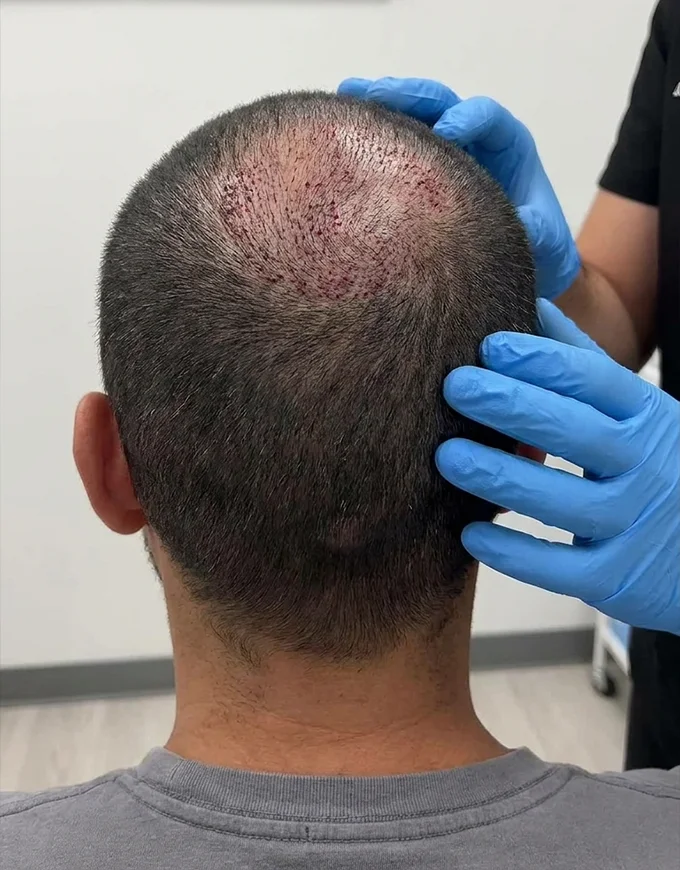
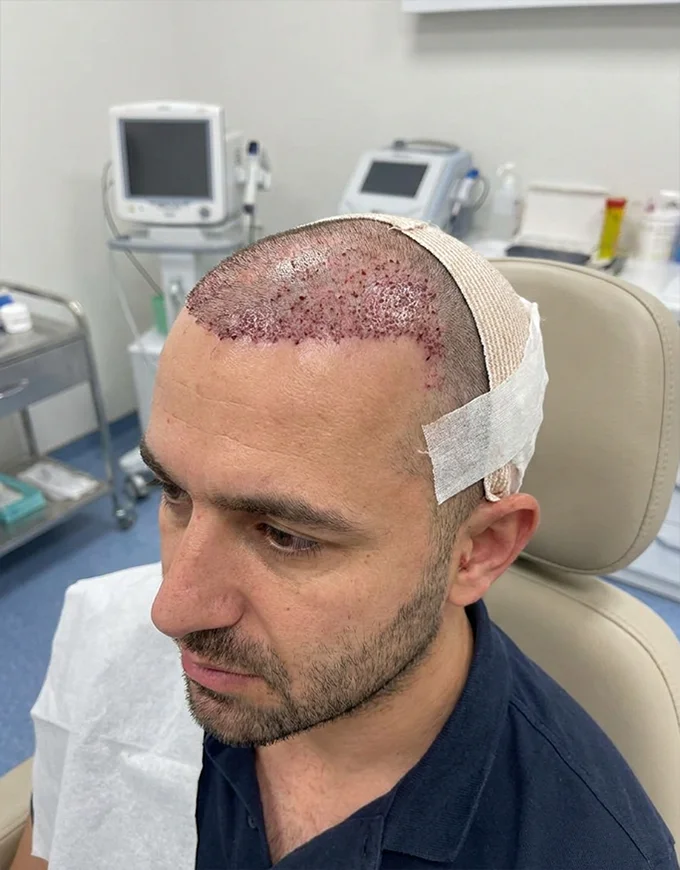
Two men sit down at Norwood 3: same stage of loss, same age. A year later one has a hairline nobody questions and the other has thin, see-through patches. Nobody changed the surgery. Everything was decided before the first graft came out.
A follicle is living tissue, and every extra minute it spends outside your scalp chips away at how many survive. Speed and a careful pair of hands protect that count.
Hair at the back and sides is built differently. It shrugs off DHT, the hormone that thins the top of the scalp, so once it is moved it keeps growing for life. It also will not grow back where it came from, which is why a good surgeon spends it like a fixed budget.
A wider bald zone needs more grafts and leans harder on a donor area that has a hard ceiling. Read it early and the plan stays honest.
FUE, FUT and the QHT method each suit a different stage of loss and a different donor supply. The matching is the job.
Skill turns a graft count into a hairline that looks like it grew there, and it keeps those grafts alive while they are being moved.
Real transformations, delivered through QHT’s patented technique. Every result reflects precise graft handling, careful density planning, and hairlines designed by surgeons, not technicians.
A transplant does not grow new hair. It moves the hair you still have into the places you have lost it. So the real question is never how soon you can book. It is whether there is enough to move.
You are likely a good fit if you:
One situation calls for patience. If your hair is still falling fast, a surgeon may tell you to wait and start medicine first. The loss here is androgenetic alopecia, the common pattern baldness driven by hormones and genes, and steadying it before surgery means you do not burn precious donor grafts chasing a line that is still moving.
Women lose hair too, usually as diffuse thinning across the top rather than a bald crown, and many are candidates with a different plan.
You do not need to travel to find out if a transplant is right for you. The only trip you make is for the surgery itself, and only after a surgeon has said it is worth making. Here is the whole thing, from your phone in Saharanpur to the day you walk out with a new hairline.
No single person runs your case. A surgeon, a dermatologist, an anaesthetist and a trained graft team each own a part of it.
For a patient coming from Saharanpur, the first thing a surgeon decides is whether the trip is worth making at all. Plenty of calls end with a plan to hold the hair on medicine for now and come back only if it progresses.
Distance, it turns out, is the easiest part of this to solve.
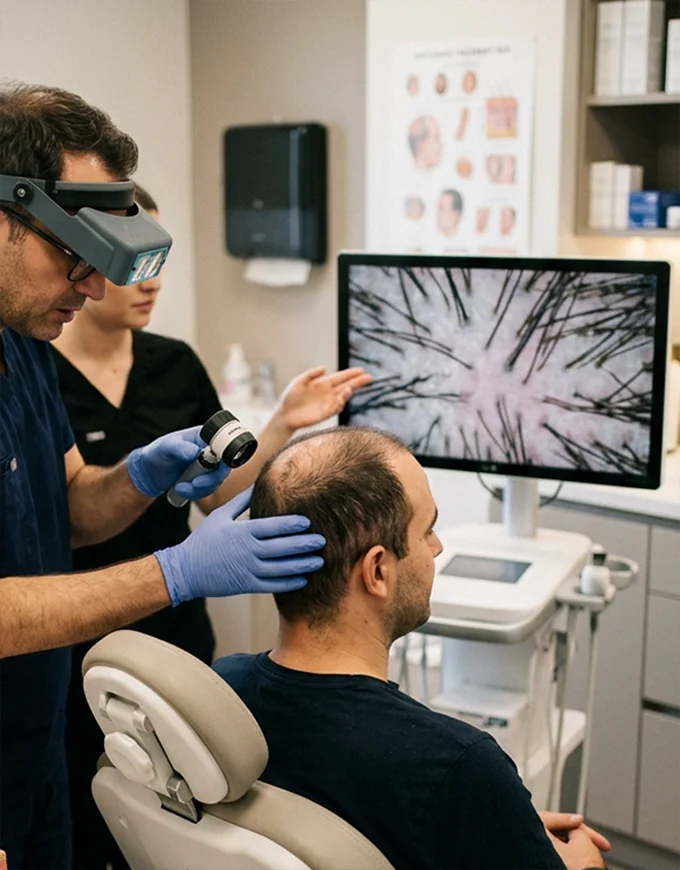
Step 1: Free online consultation. You send clear photos of your scalp and donor area. A surgeon reads your grade, your donor supply and your goals, then tells you straight whether surgery or medicine is the better first step. No travel, no fee.
Step 2: Plan and estimate. You get an indicative graft count, a technique recommendation and a cost range in writing, plus which QHT centre is closest and easiest for you to reach.
Step 3: Pre-op planning. Once you decide to go ahead, the team locks your final graft count, runs the medical checks, and sends your pre-op instructions in writing so nothing rides on memory before you set off.
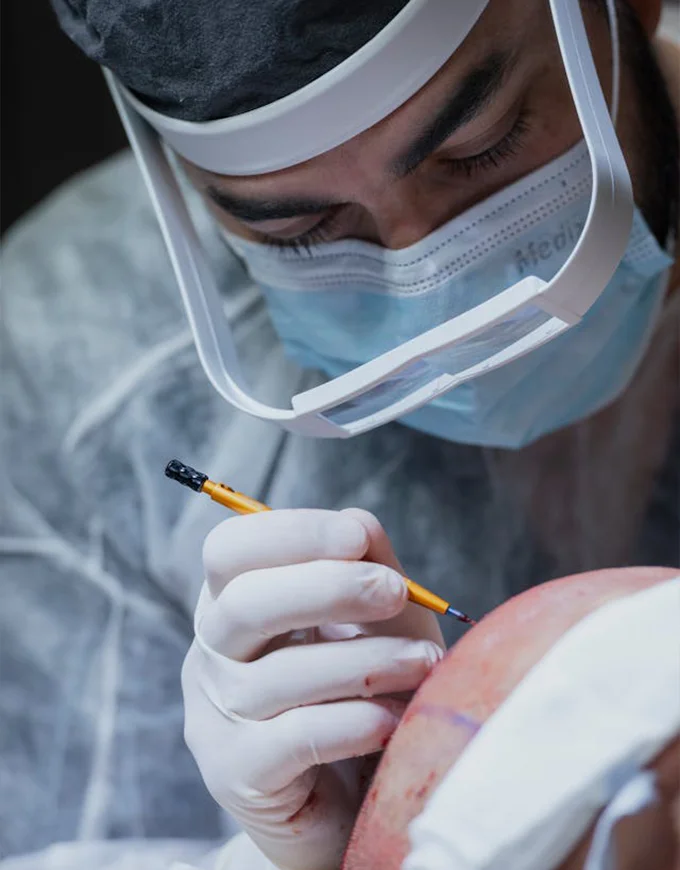
Step 4: Surgery day. The work is done under local anaesthesia, so your scalp is numb while you stay fully awake. The surgeon draws your hairline and waits for your yes before a single graft moves. Then grafts come out and go back in, with the team keeping each one safe. You head home the same day with a printed aftercare kit.
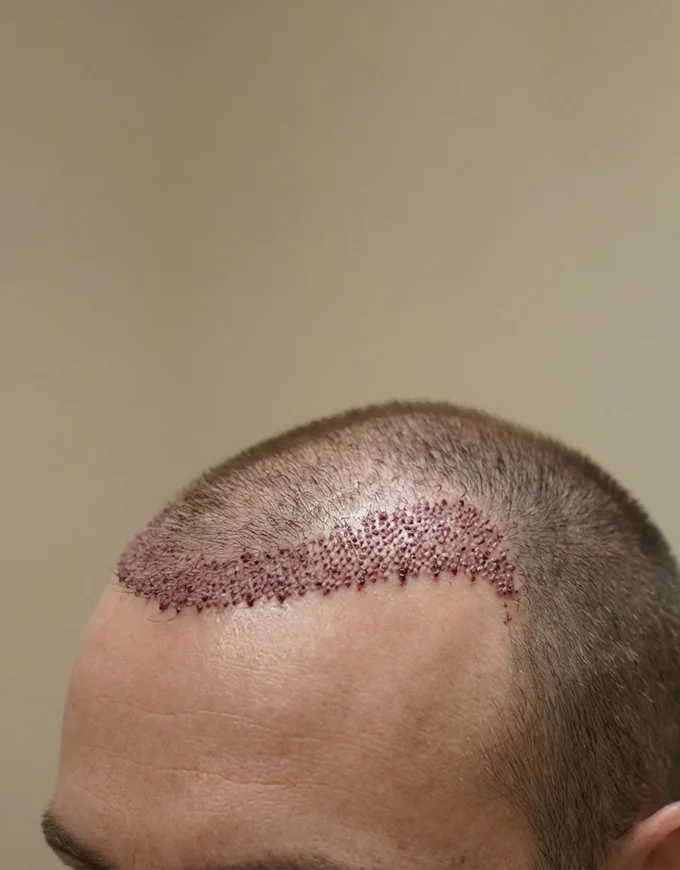
Step 5: Recovery and remote follow-up. Your reviews run on a fixed calendar: day 1, week 1, then months 1, 3, 6 and 12. For out-of-town patients, these happen over video whenever an in-person visit is not needed.

The surgery is one day. The healing runs for months, and nearly all of it happens at home, not in a clinic chair. For someone travelling back to Saharanpur, that is the reassuring part: most patients are on the road home within a day or two, and the rest is guided over video.
Here is the part nobody warns you about. Around month 3, when the transplanted hair has fallen out and the new growth has not arrived yet, most people quietly decide the whole thing failed. It did not. That empty stretch is the normal middle of the process.
Your surgeon sets the exact aftercare for your case.
The grafts do the slow work on their own. Your job is mostly to leave them alone.
There is no best technique. There is only the one that fits your stage of loss and your donor supply. Three sit on the table, and the gap between them is real.
FUE is the method most of the world now uses. The surgeon lifts follicles one at a time with a fine punch, so there is no long scar and the back of your head heals within a week. It suits early to moderate loss and anyone who keeps their hair short.
FUT is the older strip method, and it stays the cheapest for each graft. A thin band of scalp is removed from the back, then divided into grafts under magnification. It yields the most grafts in one sitting, which helps at advanced stages, in trade for a fine line at the donor site that longer hair hides.
QHT is this clinic’s own patented take on FUE, and the difference is timing. Each graft goes back into the scalp almost as soon as it comes out, placed through a SAVA implanter pen, with grafts selected under 10x magnification. That holds the time a follicle spends outside your body to under 2 hours. Less time outside means more follicles survive, which is how QHT reaches 95% graft survival and the densest result of the three.
For higher grades, where every graft counts, this is the method a QHT surgeon reaches for first. The technique is a tool. Which one lands in your plan is a decision, and it gets made with your head, not a brochure. See the full hair transplant cost in Saharanpur breakdown by technique.
Search “hair transplant clinic in Saharanpur” and look closely at what comes back. Almost every result is a booking desk run from another city, with no surgeon named and no operating theatre you could walk into. We work the opposite way, and we are upfront about the trade.
We do not run a clinic inside Saharanpur, and we will not pretend otherwise. Your consultation and scalp assessment happen online, free, with a qualified surgeon. If surgery is the right step, your nearest QHT clinic is Haridwar, just across the Uttarakhand border and around 80 km from Saharanpur, close to a two-hour drive. The same centre treats patients from across the belt, from Muzaffarnagar through Deoband and Roorkee. Follow-up then shifts back to video wherever an in-person visit adds nothing.
Everything the checklist earlier asked for, we put in writing or in the room: a named surgeon on your case, your cost fixed before surgery day, and a focused team around you instead of hired hands. Beyond that, the proof is public. 4.8 rating across 3,000+ verified Google reviews Approved technology Certified hair-transplant surgeons A before-and-after gallery spanning light thinning to advanced loss
Discover other solutions at a QHT clinic that complement your hair restoration journey.
Reach out anytime or visit us directly for personalized assistance, expert guidance, and seamless support experience.
QHT does not run a centre in Saharanpur. The nearest QHT clinic is in Haridwar, where the licensed operating theatre and the surgical team are based. Saharanpur patients plan the whole procedure online first and travel to the centre only for the surgery itself.

Qht Clinic, Chandra Rekha Tower, Chandra Rekha Lane Next to HP Jagat Petrol Pump, Delhi-Haridwar Highway, Jwalapur, Haridwar, Uttarakhand - 249407
D -15, Outer Ring Rd, above Federal Bank, Prashant Vihar, Sector 14, Rohini, New Delhi, Delhi, 110085
Plot No. 3, Sector 46, Opposite Huda Market, Gurugram, Haryana โ 122022
Hair transplant in Saharanpur, answered plainly by the surgeons who treat Saharanpur patients at our Haridwar centre.
No. There is no QHT clinic in Saharanpur itself. Your consultation is done online with a surgeon, and if you need surgery, it happens at your nearest QHT centre.
Yes. The assessment and your graft estimate are done from clear photos. Only the surgery needs you in person.
To your nearest QHT clinic, which for Saharanpur is Haridwar, around 80 km away and close to a two-hour drive. The surgeon confirms the details during your consultation.
That is what the online consultation decides. Early loss can be held with medication before surgery is even on the table.
The transplanted hair is. It comes from the DHT-resistant donor zone, so it keeps growing in its new spot. Hair you did not transplant can still thin over time, which is why planning early helps.
That depends on your Norwood grade and the density you want. You get an estimate online, confirmed before surgery.
Cost tracks the technique and your graft count, fixed in writing after assessment. As a guide from QHT’s own pricing, FUT starts near ₹50 per graft, FUE near ₹70, and QHT near ₹100, with totals that scale by graft count.
No. Local anaesthesia numbs the scalp for the procedure. A day or two of mild soreness afterward is normal.
Most people are back at desk work in 7 to 10 days, and most travel home within a day or two of surgery.
Yes, with a plan built for diffuse or female-pattern loss.
Same family, faster placement. Grafts go back almost as they come out, which keeps more of them alive.