The mid-scalp and crown area are mostly affected.
Targeted density restoration without disturbing existing natural hair.
Conservative harvesting and careful preservation of donor hair
Full density development seen in 9 to 12 months
Hair loss in women is far more common, and its effects extend beyond physical appearance. The hair loss in women results in low confidence, making them feel less attractive, ultimately reducing their quality of life. Hair loss in women could also be an indicator of an underlying hormonal disruption, which adds to the complexity of the treatment. Female pattern hair loss is the second most common type of hair loss in Indian women and leads to visible loss of hair in the central scalp and along the frontal parting. Studies indicate that the prevalence of this type of hair loss increases with age, although initial symptoms can appear in teenage years. As a result, the treatment often emphasises restoring density and fullness to existing hair rather than creating a new hairline.
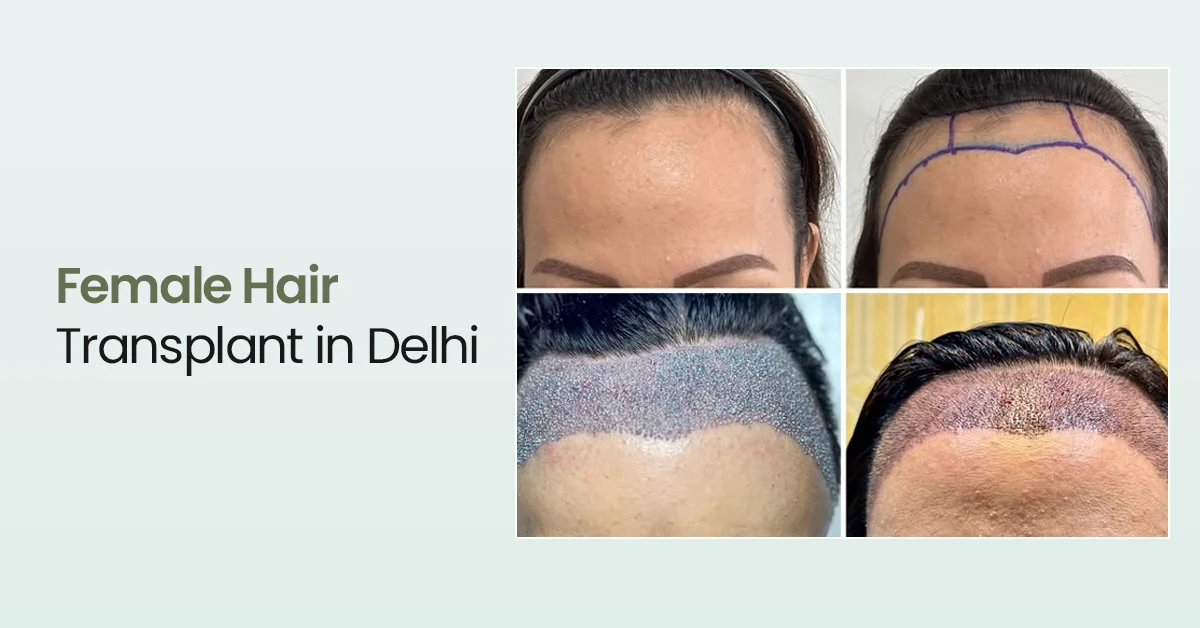
With shifting trends and growing awareness, women are actively seeking permanent hair loss treatment options over temporary fixes. Delhi has developed well-equipped facilities capable of effectively treating hair loss in women. The goal of a female hair transplant in Delhi is aesthetic restoration of thinning areas that gives natural, long-lasting results.
The main cause of hair loss in women remains androgenetic alopecia; however, the process of disease progression remains unclear. In men, the hair loss usually begins at the temples, forming an M-shaped pattern, but in women, the hair thinning is progressive and more pronounced in the crown area and central part.
Hair loss in women can stem from several factors. Understanding the underlying cause of hair loss is essential to determining the treatment course and setting realistic expectations.
Hormonal imbalances resulting from thyroid disorders, polycystic ovarian syndrome (PCOS) and hormonal shifts after childbirth and menopause can disrupt the hair growth cycle, causing gradual thinning of the hair over time. Alteration in estrogen signalling plays a role in female pattern hair loss.
The genetics of female hair loss is complex and differs from that of men. Androgenetic alopecia remains the primary cause of female pattern hair loss, with shrinkage of hair follicles, producing a thinner and less pigmented hair shaft, leading to hair thinning and hair loss.
Women may begin to experience hair loss from their teenage years, but it mostly becomes more common after menopause or around the age of 55
Metabolic syndromes resulting in obesity, insulin resistance, and high blood pressure are associated with female hair loss. Other conditions like anaemia, lupus, scalp infections and dermatological diseases can also result in hair loss.
Chronic stress and nutrient deficiencies like ferritin and biotin contribute to hair thinning. These deficiencies are commonly seen in women following strict weight loss diets.
Medications for blood pressure, gout, or psychiatric disorders can lead to hair loss as a side effect. Treatments like chemotherapy and radiotherapy also trigger a form of hair loss called Anagen effluvium.
Addressing the underlying cause is the key to a successful female hair transplant procedure. It ensures the longevity of the treatment and better density. Any underlying causes of hair loss must be treated first before performing surgery, especially for female patients.

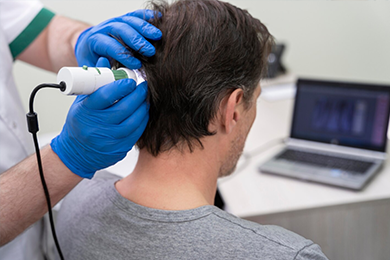
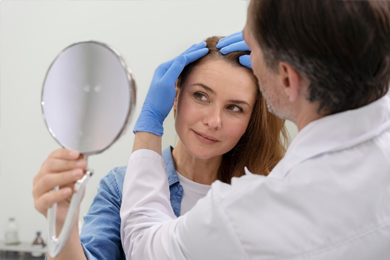
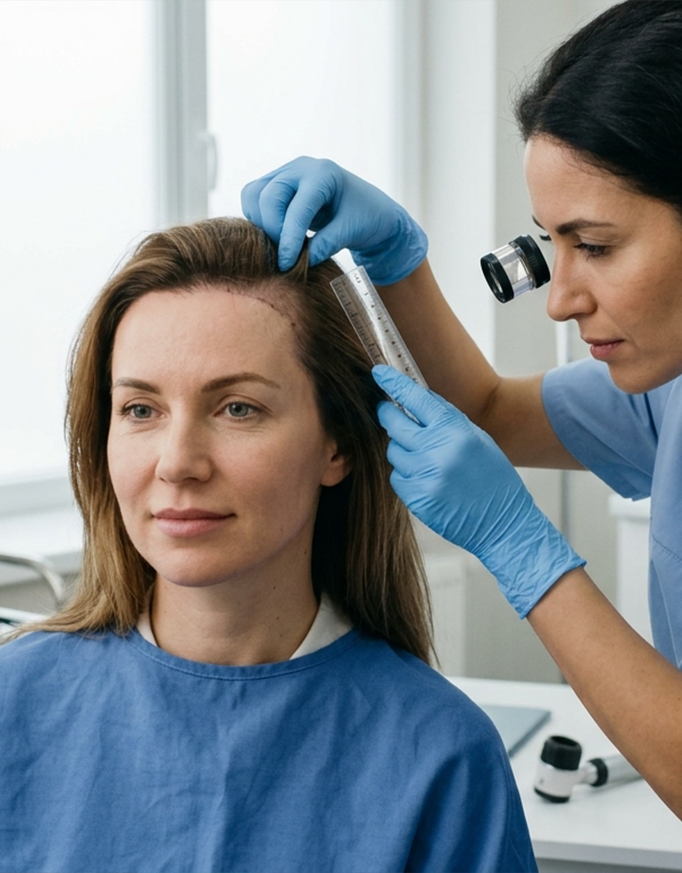
Female hair transplant procedure can be considered for women who have consistently tried topical therapies or non-surgical procedures, but remain unresponsive to the treatments. Not all women are suitable for the surgical intervention. To determine the candidacy for the treatment, a thorough evaluation of the scalp is important.

Women suitable for treatment must fulfil the following criteria.
Typically, women who have diffuse unpatterned alopecia, active hair loss or are currently dealing with an inflammatory scalp condition are generally advised against surgery, as the outcome can be uncertain in such cases.
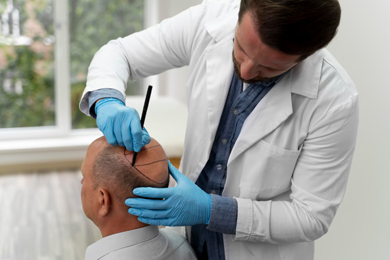
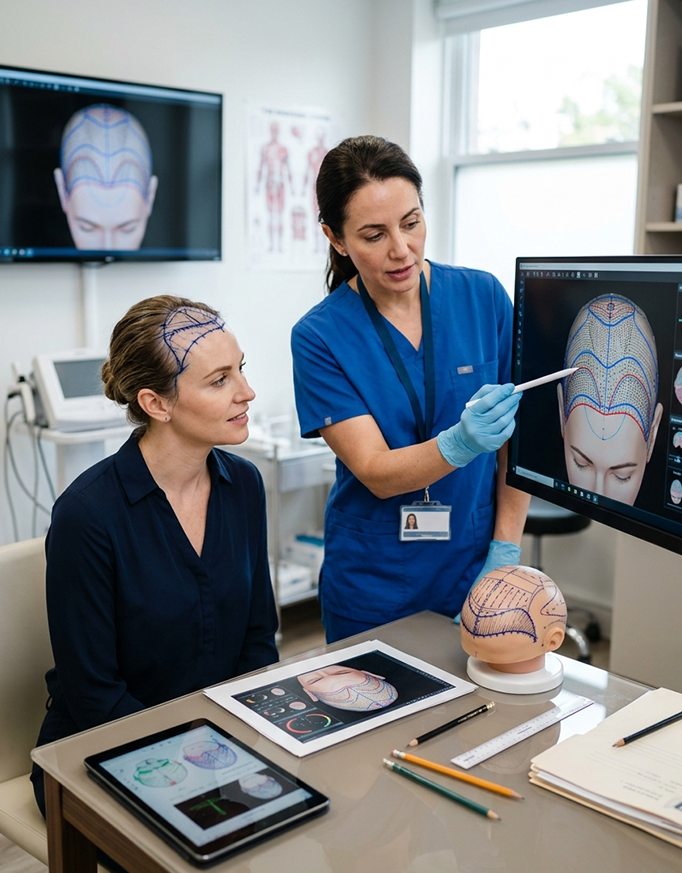
Surgical planning for female patients is a detail-oriented process that requires a different aesthetic approach than for men. Female hair loss typically presents as a diffuse thinning with an intact hairline. Usually, existing hair is present in areas of thinning, so grafts must be placed with precision in between native hair follicles without causing any damage to the natural hair.
Key aesthetic principles to consider in female hair transplant:
The mechanism and process of hair loss in women differ significantly from those in men. A critical nature in female pattern hair loss is diffuse thinning in the frontal and central parts of the scalp, whereas in men, the hair loss usually starts from the temples, resulting in hairline recession. For determining the hair loss stage in men norwood scale is the standard tool, while in women, the Ludwig scale and Sinclair scale are used.
Women rarely experience complete baldness like men. The donor area in women is also unstable and has thin hair due to the shrinkage or miniaturisation of follicles, which presents as a challenge while performing the treatment.
Surgical approach in women, therefore, requires more caution. When the donor area density and quality of hair are adequate, the techniques, including FUE, FUT and QHT, can be used for female hair transplant in Delhi.
Unlike men, women do not have reliable donor hair zones which are fully resistant to follicular shrinkage. In female pattern hair loss, women may experience some degree of thinning, which reduces the availability of grafts for the transplant. Donor area selection is a very important part of female hair transplant in Delhi.
A female hair transplant procedure is greatly impacted by the skills of the surgeon. Female hair restoration procedures are much more complex than male procedures and demand more precision throughout the surgery. Existing hair should also be handled carefully, and the grafts must be placed precisely in between the native hair follicles at the correct angles, without disturbing the roots of the existing hairs.
Even minor trauma during extraction or placement could cause either temporary or permanent loss of the surrounding hair follicles.
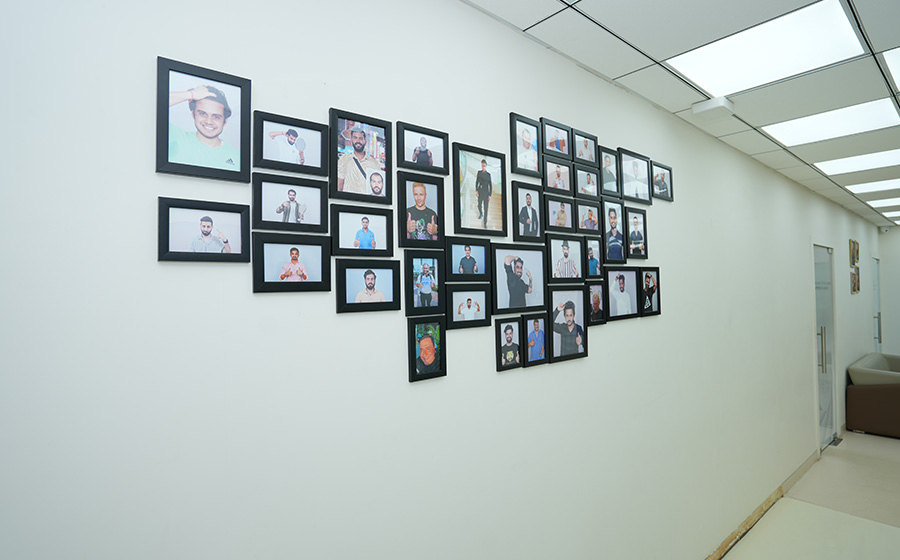
Women who are exploring treatment options frequently visit our Delhi hair transplant clinic to understand the treatment.
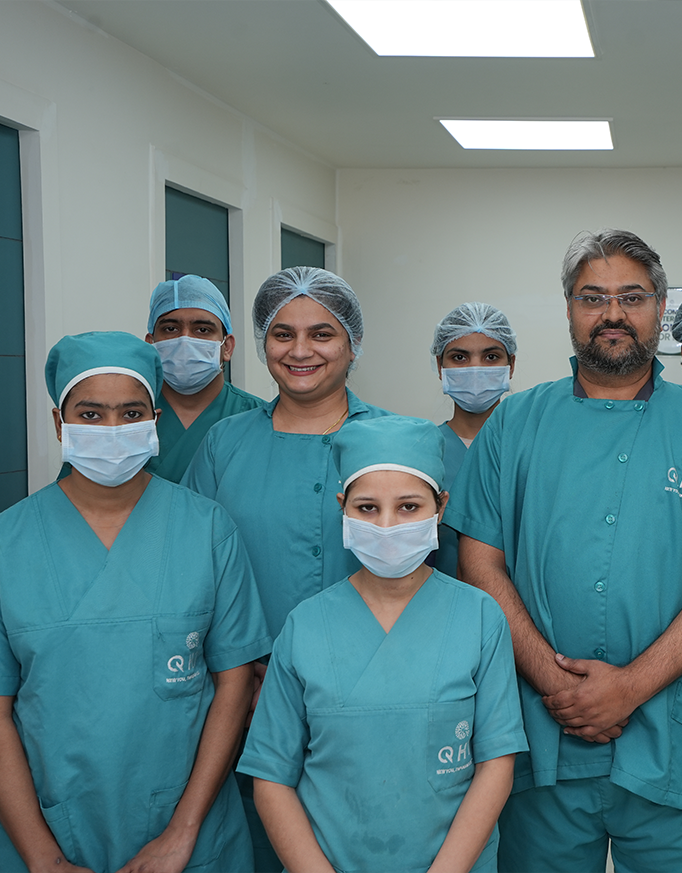
At Qht, we approach female hair loss with a multifactor framework. For women, a hair transplant needs meticulous planning, and our team focuses on detailed hormonal history, hair loss pattern, donor quality and patients' expectations before starting the treatment. With medical precision, modern technology, and state-of-the-art clinics across India, we offer advanced, personalised, doctor-led hair restoration procedures.
From consultation and treatment to results and post-op care, the QHT team is here to support and guide you at every stage. Start your hair restoration journey at QHT with confidence.
D-15, Outer Ring Rd, above Federal Bank, Prashant Vihar, Sector 14, Rohini, New Delhi, Delhi, 110085.
Experience world-class hair transplant care in Delhi. At QHT Delhi, we bring together advanced technology, experienced surgeons, and a highly personalised approach to help you achieve natural, lasting results.
The Hair Transplant Prices varies depending on various factors such as:
The factors that affect the cost of a hair transplant are:
Advanced techniques have prices on the higher end due to precision and advanced tools integration.
Surgeons’ level of expertise and direct involvement is reflected in the overall cost of the procedure.
Price increases proportionally with the number of grafts needed for the treatment to achieve the desired density.
Comprehensive and structured Follow-Up care in accordance with established protocols provides long-term results, which adds to the final cost.
Some of the frequently asked questions regarding female hair transplant in Delhi are:
Yes, female hair transplants are successful. However, it is crucial to undergo a thorough scalp assessment before opting for surgery to confirm candidacy and establish a realistic treatment plan tailored to the individual’s requirements.

Female hair transplants are not painful as the procedures are performed under anaesthesia; however, temporary discomfort such as swelling or tenderness after the procedure is normal for the first few days.
It has been found that several famous actresses have also undergone hair transplant procedures to deal with their hair thinning issues. However, their details often remain hidden from the public eye.
After a hair transplant, you might experience mild redness, numbness, swelling and scab formation around the transplanted grafts. However, it is temporary and typically resolves within a few weeks of surgery.


Not necessarily. Due to the advancement in technology, now there are several non-shaving and partial shaving methods available for undergoing a hair transplant.