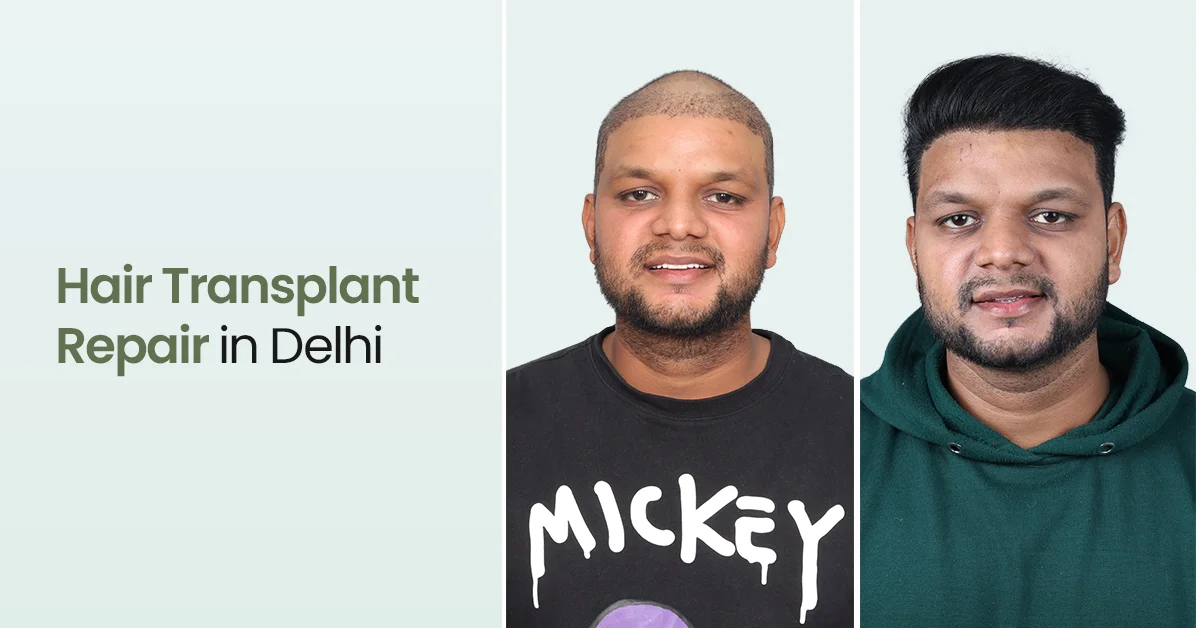
Correcting poor and unnatural transplant results.
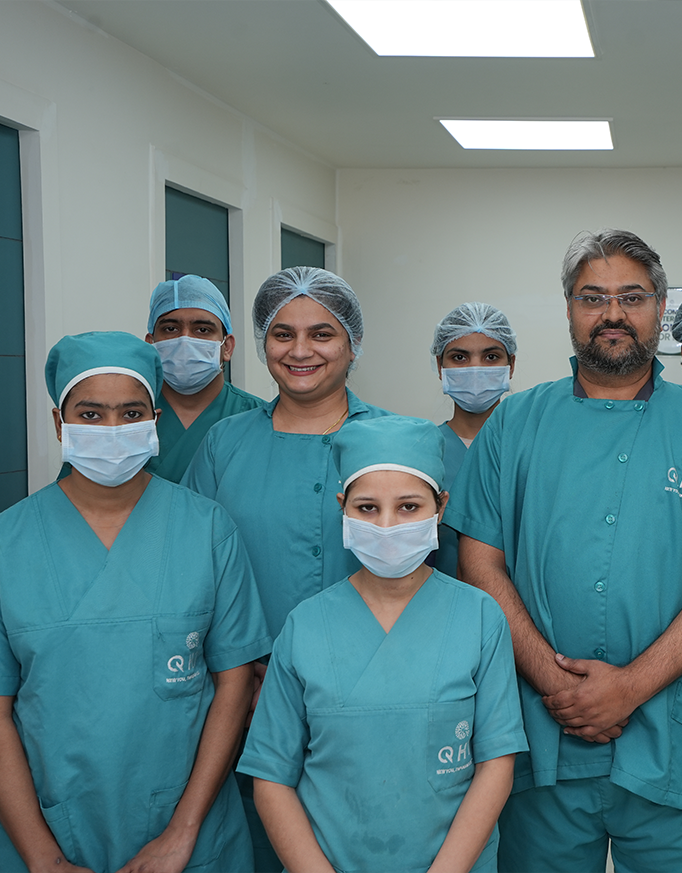
Procedures performed by qualified surgeons.
Final results are visible between 9 and 12 months.
Careful extraction to avoid further donor hair damage.
A hair transplant repair in Delhi is a surgical correction procedure performed when a previous hair transplant procedure has not yielded satisfactory results or when natural hair surrounding the transplanted hair starts to fall off due to genetic causes, creating patchy areas on the scalp. Unnatural-looking hair transplants with poor hairline design or abnormal density in the transplanted areas look botched, and a corrective procedure becomes necessary.
The demand for hair transplants has grown rapidly over the past few years, along with an increase in unqualified professionals offering the treatment at lower prices. The number of hair transplant repair cases in Delhi has also increased for the same reasons. A hair transplant is a precision-based procedure that requires thorough scalp analysis, accurate hairline design, donor area preservation and precise graft placement of grafts at correct angulation for the best results.
It is important to understand that hair transplant repair surgery differs from the first-time procedure. The previous surgery leaves the patient with less hair in the donor area, and poorly distributed grafts placed at the incorrect angulation. Corrective procedures focus on restoring scalp health and achieving safe, realistic corrections. An effective repair requires more careful strategic planning, surgical restraint and a long-term approach, not the simple addition of a large number of new grafts.
The majority of poor or unsuccessful procedures have a history of low-quality work, often delegated to technicians or, in some cases, performed by unqualified professionals. The two prominent reasons that produce these results are poor judgment and poor technique. One of the most common errors in treatment is aggressive hairline design.
The genetic alopecia leads to progressive thinning of hair over time. While transplanted hair is DHT resistant, the natural hair around the transplanted hair remains susceptible to hair fall. Over time, this creates patchy areas around the transplanted hair, requiring an additional revision procedure. An initial assessment of the underlying cause of hair loss is essential before starting the treatment.
The most common error is failing to account for the progressive nature of hair loss. thinning. Age-appropriate hairline design is critical, keeping in mind that hairline recession progresses with age. Performing a hair transplant at a very young age, before the full pattern of hair loss has been established, increases the risk of isolating the transplanted hair as scalp behind the hairline loses its coverage over time.
Grafting only the crown area can also prematurely deplete the donor area reserve and create a doughnut appearance as the area around the transplanted crown begins to recede.
The errors in technique in a prior procedure include:
A bad transplant correction in Delhi focuses on addressing these issues by improving graft angulation and restoring a more natural look, not simply by adding additional grafts on top of previous work.

Patients seeking corrective procedures in Delhi often present with poorly executed surgery or progressive genetic hair loss that creates a patchy area around transplanted hair. The natural hair around the transplanted hair is not resistant to hair fall. Poor judgment during the initial assessment of progressive hair loss can have undesirable results.
Patients suitable for hair transplant repair procedure typically have:
It is important to note that patients with extreme depletion of donor hair, extensive scarring from previous surgery, or those with active hair loss are not good candidates for surgical repairs. These patients need to be managed with conservative/non-surgical treatments instead.
Repairs should only be performed if there are reasonable chances of improvement without causing additional harm to the scalp or compromising eligibility for future treatments. Patients with body dysmorphic disorder or unrealistic expectations cannot be considered good candidates for a corrective procedure. Honest counselling is the fundamental way to guide such patients.
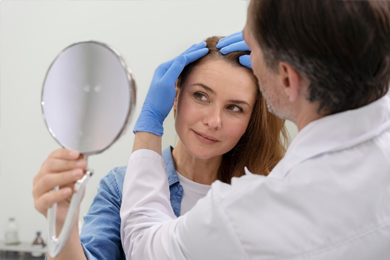
Correcting a previous hair transplant procedure is a complex process that requires thorough assessment of both donor and recipient areas. The density of remaining hair and the quality of hair follicles in the donor area influence the repair procedure significantly.
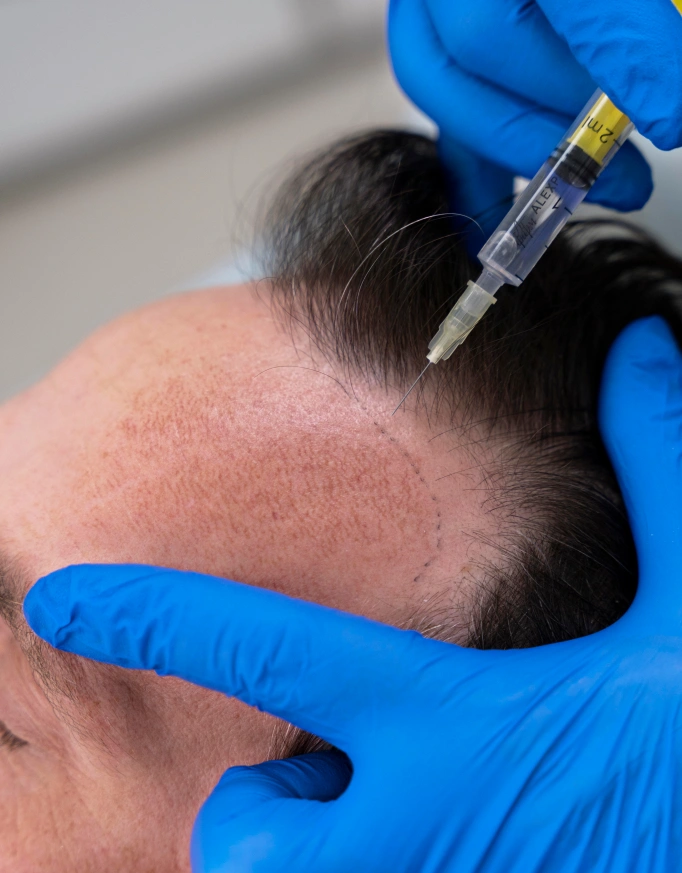
This is ideal for cases with mild graft misdirection or slight inaccuracy of the angulation. The technique allows new grafts to be implanted between or in front of misdirected hairs, improving the direction and appearance of growth.
The grafts from the misdirected area can be extracted using micropunch tools. After the scalp heals and the blood supply in the area improves, the hair can be reimplanted at the correct angulation and depth.
A straight or flat hairline is redesigned with single hair follicular units placed at varied angles to create an irregularity like a natural hairline.
Areas with less or insufficient coverage after a hair transplant surgery may require implantation of additional follicular units to correct and improve density.
Linear scars left resulting from FUT surgery can be camouflaged by placing grafts directly into the scarred area.
In cases where the donor area at the scalp lacks sufficient hair grafts for transplant, other donor sites like the beard can also be used for hair transplant correction. This is exclusively done for patients having insufficient hair at the donor site.
The results from a prior hair transplant procedure take at least 9 -12 months to reach full density. Judging the density or growth before that timeline should not be a deciding factor for a corrective procedure. It is ideally advised to wait for 10-12 months after the initial procedure before going for another session. By the 12th month, the entire growth of the previous hair transplant is established, and no further surgical intervention should take place before that period.
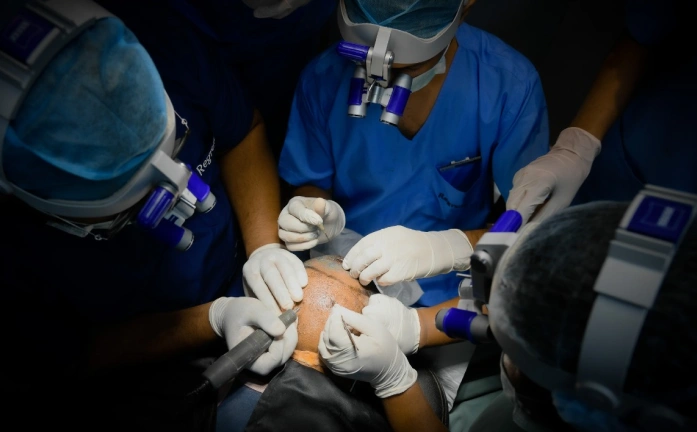
Surgeons’ experience and skills are the most important factors that determine the success of the transplant procedure. The revision procedure demands considerable planning, execution and aftercare.
Grafts must be placed accurately to avoid disruption to pre-existing healthy follicles; density must also be carefully balanced to minimise the risk of shock loss. All the decisions must be made in accordance with the age of the patient and the progression of hair fall.
Expert hair transplant doctors in Delhi ensure that corrective procedures align with the patient’s goals and expectations while improving scalp health to achieve long-lasting, natural results.
Looking for a repair hair transplant clinic in Delhi? At QHT clinics, we understand that undergoing a revision hair transplant procedure can be challenging. Our experts ensure that every case begins with an extensive clinical evaluation of prior work, followed by a personalised treatment plan designed to achieve safe, natural-looking results based on the individual patient’s donor capacity, scalp condition and aesthetic goals.
With surgeon-led procedures, modern techniques and strict patient safety protocols, QHT has consistently delivered reliable results across the country.
D-15, Outer Ring Rd, above Federal Bank, Prashant Vihar, Sector 14, Rohini, New Delhi, Delhi, 110085.
Experience world-class hair transplant care in Delhi. At QHT Delhi, we bring together advanced technology, experienced surgeons, and a highly personalised approach to help you achieve natural, lasting results.
The cost of a hair transplant repair in India varies depending on the complexity of the case, the technique used, the number of grafts needed, and the clinic’s reputation.
Many factors affect the cost of a hair transplant and a hair transplant revision procedure, including:
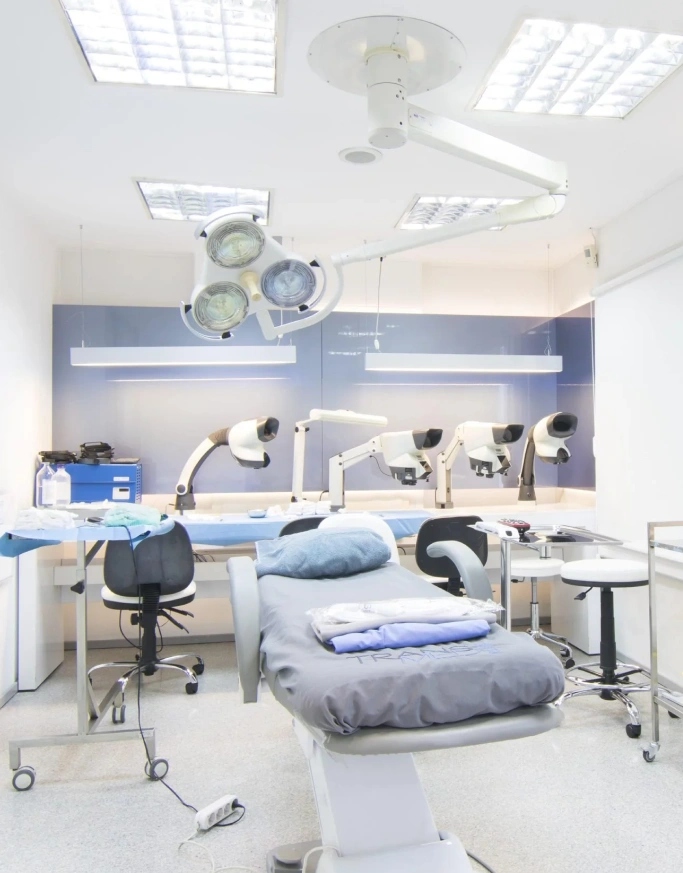
The cost of hair transplant increases with the use of advanced surgical tools and well-equipped sterile environments.
The direct involvement of an experienced surgeon throughout the procedure adds to both the reliability & expense.
Advanced techniques, such as the FUE and QHT, are generally expensive and can increase the overall cost of the procedure.
The structured post-operative care and support (follow-up, medication, monitoring, etc.) increase the cost of a hair transplant.
Some of the most frequently asked questions regarding hair transplant repair in Delhi are:
Insufficient blood supply due to overpacking of grafts in the scalp leads to graft failure. Improper graft handling, poor post-operative care and unsuitable patient selection also contribute to reduced graft survival.
Yes, if the procedure is performed by a skilled surgeon after proper evaluation, then a failed hair transplant repair will result in successful outcomes.
A bad hair transplant results in an unnatural-looking hairline, with limited visible density and eventually partial or complete graft failure. These features cannot be concealed by styling and become more prominent with time.
It takes 9 to 12 months to see the outcome after a hair transplant repair surgery.
Yes, your results will look natural if the hair transplant repair surgery is performed by a skilled surgeon with attention to graft angulation, hairline design and density distribution.