Recovery Timeline After Hair Transplant

A clear timeline covering recovery, shedding, and gradual regrowth following a hair transplant procedure.

Schedule a recovery consultation today
Step-by-step Healing Process
Focus on Long-Term Scalp Health
Follow-up and Aftercare Tips
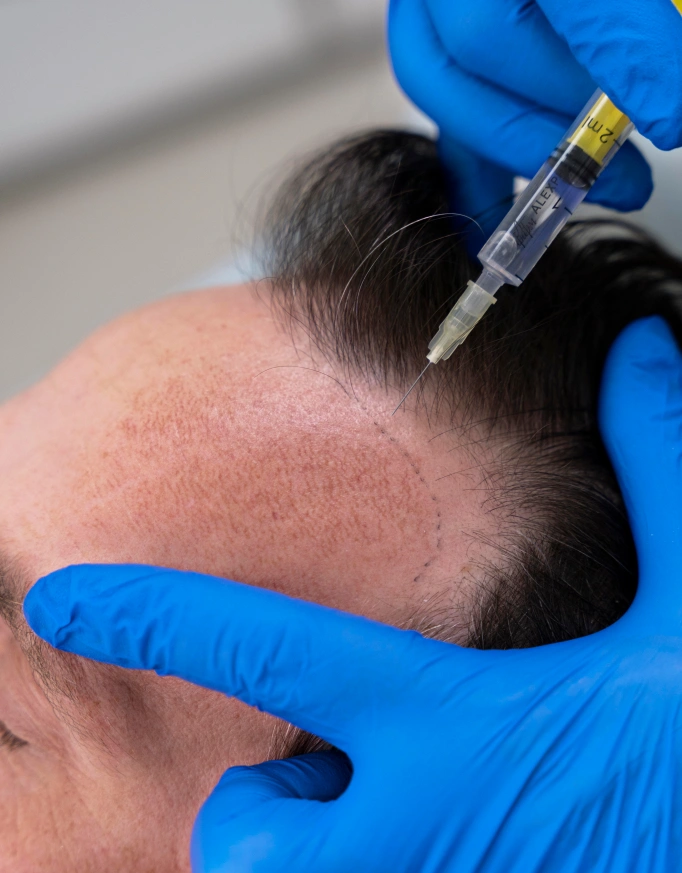
Doctor-Led Procedures
Step-by-step Healing Process
Focus on Long-Term Scalp Health
Follow-up and Aftercare Tips
Doctor-Led Procedures
Recovery Timeline

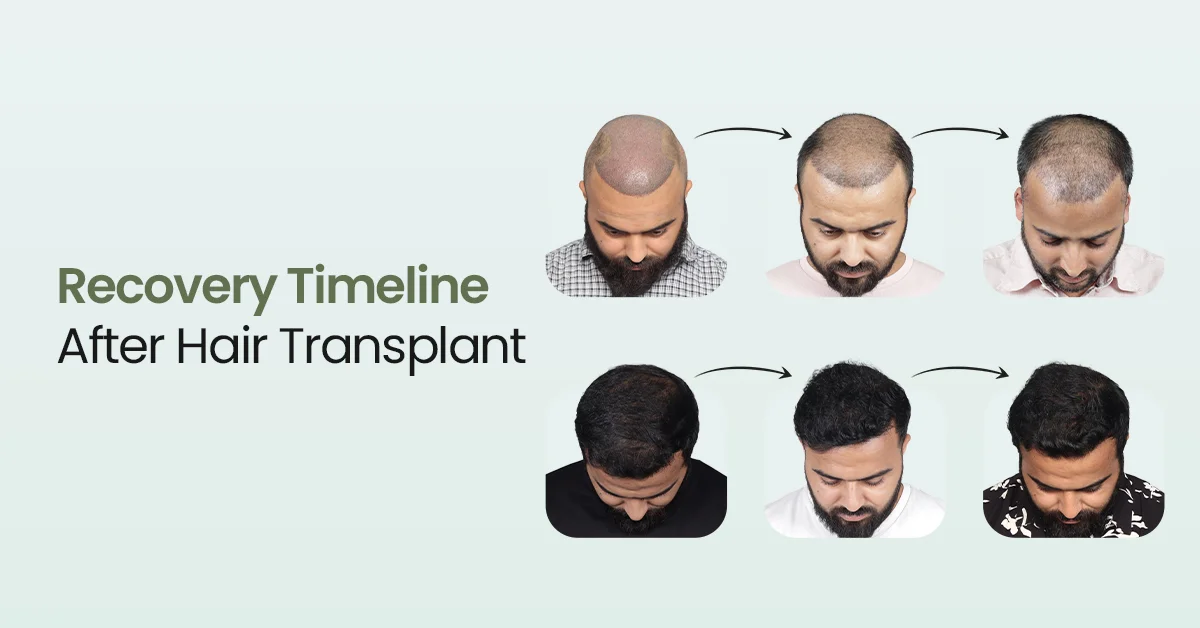
Healing occurs in phases, with full results visible in 9 to 12 months.

Recovery Timeline
Early Side Effects

Redness, numbness and scalp sensitivity are common.

Early Side Effects
Noticeable Improvement

Visible hair growth by 3 to 4 months.

Noticeable Improvement
Graft Survival

Adherence to aftercare protocols increases graft survival rates.

Graft Survival
Hair Transplant Recovery Timeline in Delhi

Hair Transplant Recovery Timeline in Delhi

Hair Transplant Recovery Timeline in Delhi

A hair transplant recovery timeline usually follows a predictable pattern and is straightforward for most patients, though the exact pace of recovery varies from patient to patient. Individual factors, including scalp condition, the technique used, and adherence to postoperative protocols, all influence the recovery period. Patients are often focused on the final result, but understanding each stage of the recovery timeline makes the healing period significantly less stressful. 

The recovery period can be separated into an initial healing period lasting approximately 10-14 days, which covers graft stabilisation and surface wound healing. The long-term growth phase extends up to 9-12 months, which includes regrowth and the development of full density.  Most patients return to their daily routine within the first few days after surgery. 

The transplanted follicles undergo a transitional period after being moved from the donor area to the recipient area. During the transitional phase, it is normal to experience temporary discomfort, including redness, numbness, scabbing or shedding. These are the signs of the healing process and usually resolve quickly. Apart from an individual’s own healing capability, factors such as climatic conditions, daily routine and skin conditions can also impact the healing timeline.

Understanding the events happening at every stage of hair transplant recovery time in Delhi reduces unnecessary anxiety, improves adherence to the postoperative instructions and supports better long-term outcomes. 

Immediate Post-Procedure (Days 1-3)

The first 48-72 hours following the hair transplant procedure are crucial to ensure graft survival. The newly transplanted hair grafts have not established a blood supply yet, and hence, protecting them from trauma or infection is the primary goal of post-hair transplant recovery in Delhi. Patients may notice some mild swelling, discomfort, itching, redness, and tenderness at both the recipient and donor sites. Small scabs start to form around the graft site as the body’s healing response is initiated. The discomfort can be managed with prescription medications. 

Some standard instructions to follow during this phase include: 

  1. Sleep with the head elevated at 30-45 degrees to minimise swelling and protect newly transplanted grafts from pressure. 
  2. Avoid touching, scratching, or rubbing the grafts; do not disturb the grafts in any way.
  3. Keep the area moist by spraying normal saline every 2-3 hours for the first 2 to 3 days, as directed.
  4. Avoid exposure to direct sunlight, sweating or any physical impact
  5. Follow the washing instructions provided by the doctor and keep the scalp clean.
  6. Take all prescribed medicines and use only mild shampoos recommended by your surgeon to clean the scalp.
  7. Do not wear helmets, tight caps or anything that creates friction at the graft site. Avoid using high-pressure water faucets or shower heads for cleaning the scalp. 
First Week (Days 4-7)

By day 4, scabs around the graft site typically begin to harden, which is a visible sign of healing. Swelling and tenderness also subside considerably by this point. During this phase, patients may include gentle washing in routine only following the guidance from their surgeon. Patients can return for desk-based work or light activities that do not involve physical exertion. Strenuous physical activity, including gym, swimming, and weightlifting, should be avoided as these increase the blood flow to the scalp and may stimulate bleeding at the incision site or the transplanted graft site. Also, these activities generate sweat that can compromise graft stability. 

Scabs should not be scratched or picked at; they should be allowed to detach on their own naturally by day 14 or week 2. For patients who have undergone FUT, the donor area may feel a bit tight, and after the first week, the sutures are typically removed. Direct sun exposure should be minimised for at least a week.  

Week 2-3: Scab Shedding and Shock Loss

Scabs naturally begin to shed by the second week, and the scalp takes on a pink appearance with newly healed tissue. Most patients can return to their daily activities, though sweating should still be avoided. Patients can gradually transition to normal washing routines by week 2-3. 

By the third week, the surface of the scalp has most likely healed completely. However, the underlying hair follicles are still adapting to their new environment and have not yet entered the growth phase (anagen phase). In addition, many patients may experience some temporary shedding of their transplanted hair, referred to as “shock loss.” This is an expected part of recovery. This temporary condition occurs when the hair follicles simultaneously enter the resting phase (telogen phase). The shaft falls out, but the follicle remains intact beneath the scalp. New hair growth from these follicles typically becomes visible around 3 to 4 months. 

The shock loss does not indicate that the transplant has failed; rather, it is an expected part of the healing process. 

Week 4: Stabilisation Phase

During the fourth week, the scalp feels normal, and the remaining redness also fades away. This marks the beginning of the transition phase of the transplanted follicles beneath the scalp.

Several patients start exploring recovery after a hair transplant in Delhi to understand the expected timeline for visible hair growth. During this phase, the most important focus should be on maintaining healthy scalp care routines, following gentle cleansing procedures and being patient during this journey. 

The fourth week of recovery marks a transition where the scalp health becomes the primary focus over early visual changes for patients undergoing hair restoration treatment in Delhi

Months 2 to 6: Growth Phase

By the second month, after the shedding has stopped, the scalp starts preparing for hair regrowth. The second month is primarily a resting phase in the hair growth cycle, and visible hair growth is not typically expected until 3 to 4 months. 

Fine, thin hair emerges during months 3 and 4, indicating that follicles have entered the active growth phase. By the end of month 4, a greater proportion of transplanted hair shows visible growth, though the coverage may look patchy and uneven. 

Regrowth or improvement in hair density differs from one area of the scalp to another. The frontal region tends to show improvement earlier, while the crown area may take longer to reach the desired density. This is because of the difference in blood supply between the two areas. 

Maintaining gentle hair care and proper hygiene throughout this phase helps with hair regrowth.

Months 6 to 9: Density Development Phase

After 6 to 9 months, the hair strands progressively thicken and strengthen. A meaningful improvement in coverage is seen around this period, as more follicles enter the active growth phase, increasing the overall density. Patients may notice a marked resemblance between the new hair and their natural hair. Hair styling becomes easier, even though full density has not yet been achieved. 

Although the results are becoming increasingly visible, the hair continues to grow and thicken over the coming months, with individual growth rates varying between patients.  

Months 9 to 12: Result Stabilisation

Transplanted hairs grow at a consistent rate by months 9-12 and have largely settled into a permanent growth pattern. Although minor changes in texture or thickness may still occur after this point, the overall density of the transplant is mostly formed by the one-year mark.

There are several factors that determine the final density, including the placement of grafts, individual hair and scalp characteristics of the patient, and aftercare routines. Following a consistent scalp care routine during the healing period yields long-term results and promotes scalp health. 

Factors that Influence Hair Transplant Recovery

Factors that Influence Hair Transplant Recovery

Factors that Influence Hair Transplant Recovery

The recovery timeline is predictable, but there are some factors that determine the healing pace and the success of graft establishment during hair transplant recovery time in Delhi.

Adherence to Post-Operative Care

Strictly following prescribed medication protocols and scalp care routines directly influences graft survival. Inadequate knowledge about washing the scalp with newly transplanted grafts can result in graft loss. Regular follow-ups and postoperative checkups are essential to monitor growth and address concerns early, if present.

Lifestyle Habits

Androgenetic alopecia is linked to lifestyle habits. Irregular sleep patterns and a diet high in processed foods can disrupt hormonal balance and hair growth. Many people find it challenging to maintain a healthy diet and lifestyle due to work and social engagements. A protein-rich diet, along with adequate levels of nutrients like ferritin, biotin, vitamin D and zinc, supports hair health during the recovery phase. 

Smoking and Drinking

Smoking reduces blood flow to the scalp, and alcohol can interfere with the absorption of important nutrients that support hair health. It is advised to avoid smoking and drinking at least 3 weeks before and after surgery for optimal healing. 


Scalp Condition

Pre-existing scalp conditions, infections or chronic inflammation should be treated or managed before the treatment; if not stabilised, these can interfere with the treatment and graft survival, impacting overall healing and outcomes.

Do's and Don'ts for Optimal Recovery

Do's and Don'ts for Optimal Recovery

Do's and Don'ts for Optimal Recovery

Some of the common dos and don’ts that patients need to follow during hair transplant recovery time in Delhi are

Do’s:
  1. Take all the prescribed medications for recovery, including antibiotics or minoxidil, as directed by surgeons.
  2. Sleep with your head elevated at a 30-45 degree angle for the first week after surgery.
  3. Use only a mild shampoo approved by the attending surgeon. 
  4. Attend all follow-up appointments after the hair transplant.
Don’ts:
  1. Do not drink alcohol or smoke for at least 3 weeks before and after a hair transplant.
  2. Do not expose the scalp to direct sunlight for a few weeks after the hair transplant.
  3. Do not scratch or pick at the scabs formed during the recovery phase.
  4. Do not perform any heavy exercise for the first few weeks after a hair transplant.
  5. If you experience pain that seems unusual or is worsening, contact the doctor without any delay. 

QHT Clinic- One of the Leading Hair Transplant Providers in India

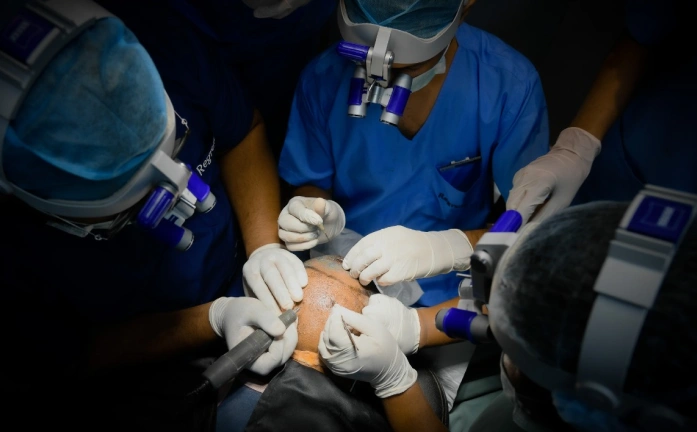
Recovery after a hair transplant is not dependent solely on an individual’s healing capacity, but it is also influenced by surgical technique and precision graft placement. At QHT, every step is designed to support faster healing, improve graft survival, and achieve consistent long-term natural results.

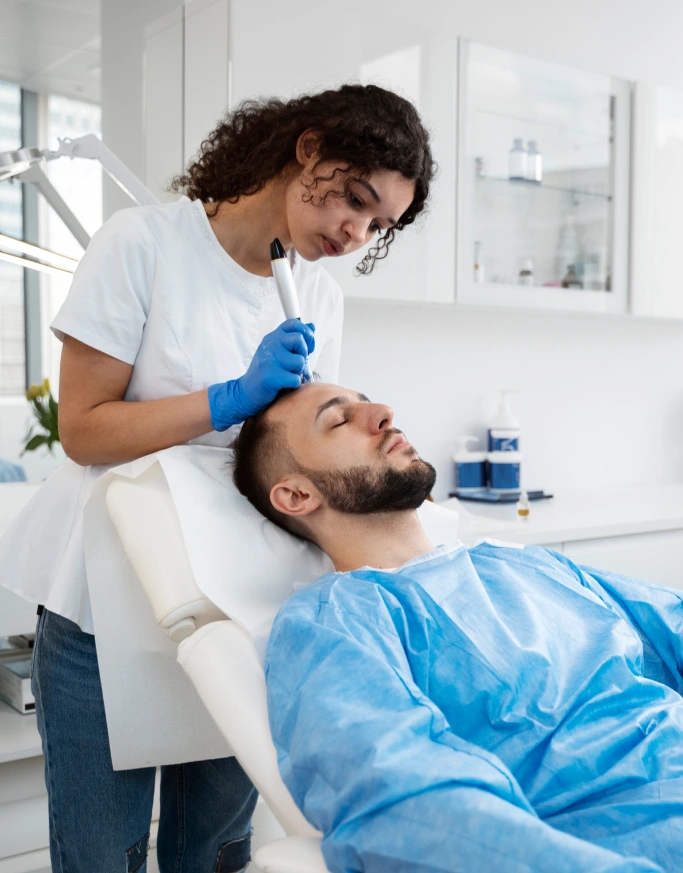
With over 15000+ successful procedures, QHT Clinic has developed a reputation as one of India’s leading hair transplant clinics. QHT's proprietary technique, Quick Hair Transplant (QHT), developed by expert surgeons, focuses on better graft survival rates with minimal trauma to the surrounding follicles during the procedure. With the help of advanced tools like the SAVA implanter pen, this technique allows precise graft placement, providing better graft stability in the early recovery phase and supporting faster recovery.

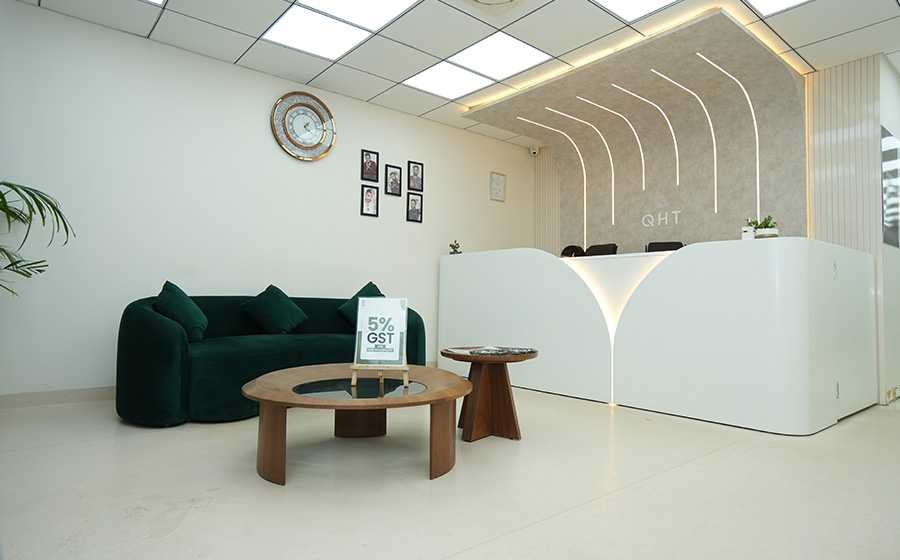
For patients seeking a hair transplant in Delhi, QHT Clinics offer premium facilities with personalised treatment plans and expert guidance throughout the treatment.

India’s leading Hair transplant clinic- QHT Delhi

Experience world-class hair transplant care in Delhi. At QHT Delhi, we bring together advanced technology, experienced surgeons, and a highly personalised approach to help you achieve natural, lasting results.

India’s leading Hair transplant clinic- QHT Delhi

Results of Hair Transplant.

The results of a hair transplant are gradual. Normally with initial hair loss, growth begins after 3 to 6 months, and full results can be seen by 9 to 12 months. Successful outcomes include signs of natural density, soft hairline, comfort on the scalp—not instant thickening of hair.
Result Vector
Devendra Before Image
Devendra After Image
Harsh Sharma  Before Image
Harsh Sharma  After Image
Probir Das Before Image
Probir Das After Image
Ajay  Before Image
Ajay  After Image
Dheerendra Before Image
Dheerendra After Image
Amit Kumar  Before Image
Amit Kumar  After Image

Hair Transplant Cost in India

7

The cost of a hair transplant in India varies depending on various factors such as:

  • The surgeon’s experience 
  • The clinic’s reputation
  • The location of the clinic
  • The type of procedure
  • Your insurance policy type
Type of hair transplant Approximate Cost (INR)
Follicular Unit Extraction Starts from INR 35 Per Graft
Follicular Unit Transplantation Starts from INR 25 Per Graft
Quick Hair Transplant Starts from INR 50 Per Graft
Factors Affecting the Cost of Hair Transplant

The price of hair transplants is determined by a number of variables, including the patient’s hair loss pattern, the condition of their scalp, and the method used to perform the hair transplant. The factors affecting the cost are:

  • Graft Quantity
    Graft Quantity

    A higher number of grafts increases the duration of the procedure, which in turn raises the overall cost.

  • Surgical Technique
    Surgical Technique

    The choice of an advanced technique, such as FUE or QHT, can significantly impact the cost of the procedure.

  • Doctor Expertise
    Doctor Expertise

    Having an active surgeon’s supervision during the procedure contributes to the safety and reliability of the outcome.

  • Post-transplant Care
    Post-transplant Care

    Follow-up appointments, prescribed medications, and scalp monitoring are part of the post-operative care package and are reflected in the overall pricing.

Frequently Asked Questions

Global bodies such as the World Health Organization encourage an evidence-based approach to medicine and following ethical guidelines when discussing the options available to patients for surgical procedures.

01
Whom should I call if I experience sudden pain during my recovery phase?

If you suddenly feel pain or worsening pain during your recovery phase, contact your hair transplant clinic without delay. Early identification can help resolve the situation quickly and safely.

02
When can I see the final results after my hair transplant?

Most patients can appreciate their final results by 9 to 12 months. It takes at least 9 months for hair to reach full density.

03
Can I use my regular shampoo for hair wash after the transplant?

It is often advised to use a mild shampoo after the transplant for the first few months after the hair transplant. Contact your doctor before applying any hair care product to avoid future complications.

04
When can I see the first signs of hair regrowth?

Patients often see the first signs of hair regrowth by 3 to 4 months after transplant. Fine, thin hair may appear during this period and will continue to grow and thicken in the coming months. 

05
Is redness common during the recovery phase after a hair transplant?

Yes, mild redness is a normal and temporary side effect after a hair transplant. Apart from redness, numbness, swelling, itching, and scab formation are also commonly experienced during the early recovery phase.

06
Can I travel by flight during the recovery period?

Air travel is generally safer after the initial recovery, when the symptoms, including swelling, redness and tenderness, have subsided. Avoiding travel during the first 48-72 hours allows the graft to stabilise and reduce the risk of complications.

07
When can I wear a cap or helmet after a hair transplant?

Immediately after the procedure, caps should be avoided; a loose-fitting cap may be worn after 7-10 days. Helmets, on the other hand, should be avoided for at least 2-3 weeks to prevent friction or pressure on the grafts.

08
When can I dye/colour my hair again?

Hair colouring should be avoided for at least 4-6 weeks after the procedure. The scalp should be allowed to heal completely before dyeing hair. Hair dyes have harsh chemicals that can irritate or damage the newly transplanted hair follicles.

09
When is it safe to resume gym and workout?

It is generally advised to avoid any strenuous exercise, including gym, workouts, swimming or weight lifting, for at least 3-4 weeks after a hair transplant. You can resume light activities after the first week, but any activity involving intense workouts should be avoided. 

10
Is swelling around the eyes normal after a hair transplant?

Swelling around the eyes is a common occurrence after a hair transplant procedure. It resolves in 3 to 4 days and can be managed with head elevation and prescribed medications.

Begin with a Medical Assistance and Not Assumptions

Understanding the recovery timeline after a hair transplant helps set realistic expectations and supports better long-term outcomes. Aftercare and patience are two factors within the patient's control, and both have a direct impact on achieving healthy, natural-looking hair after a hair transplant. At QHT Clinic, recovery plans are overseen by highly trained medical professionals who closely monitor all stages of the healing process and provide support and guidance throughout the recovery phase. Book a consultation today to begin your journey.

Book a hair transplant with QHT Clinic.