

Crown Hair Transplant in Jaipur | Vertex Baldness Treatment at QHT

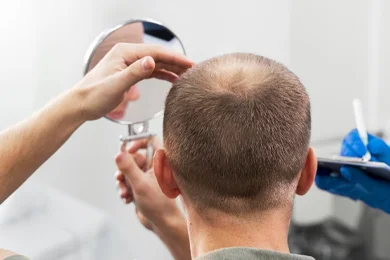
You rarely notice your own crown. You catch it in a bad photo, or in the mirror of a lift, the one angle that shows the back of your head. By then the vertex, the spiral of hair at the top and back of the scalp, has usually been thinning for months. If you are looking at a crown hair transplant in Jaipur, start with one honest fact. QHT does not run a clinic in Jaipur. What QHT runs is a free scalp assessment you can begin from home, and it settles the first real question before anything else: does your crown actually need surgery, or will treatment hold it?

Book a Free Online Consultation
Crown Hair Transplant in Jaipur
95% graft survival rate
15,000+ scalps and hairlines restored
Surgeon-led, every case
Remote aftercare to Jaipur
95% graft survival rate
15,000+ scalps and hairlines restored
Surgeon-led, every case
Remote aftercare to Jaipur

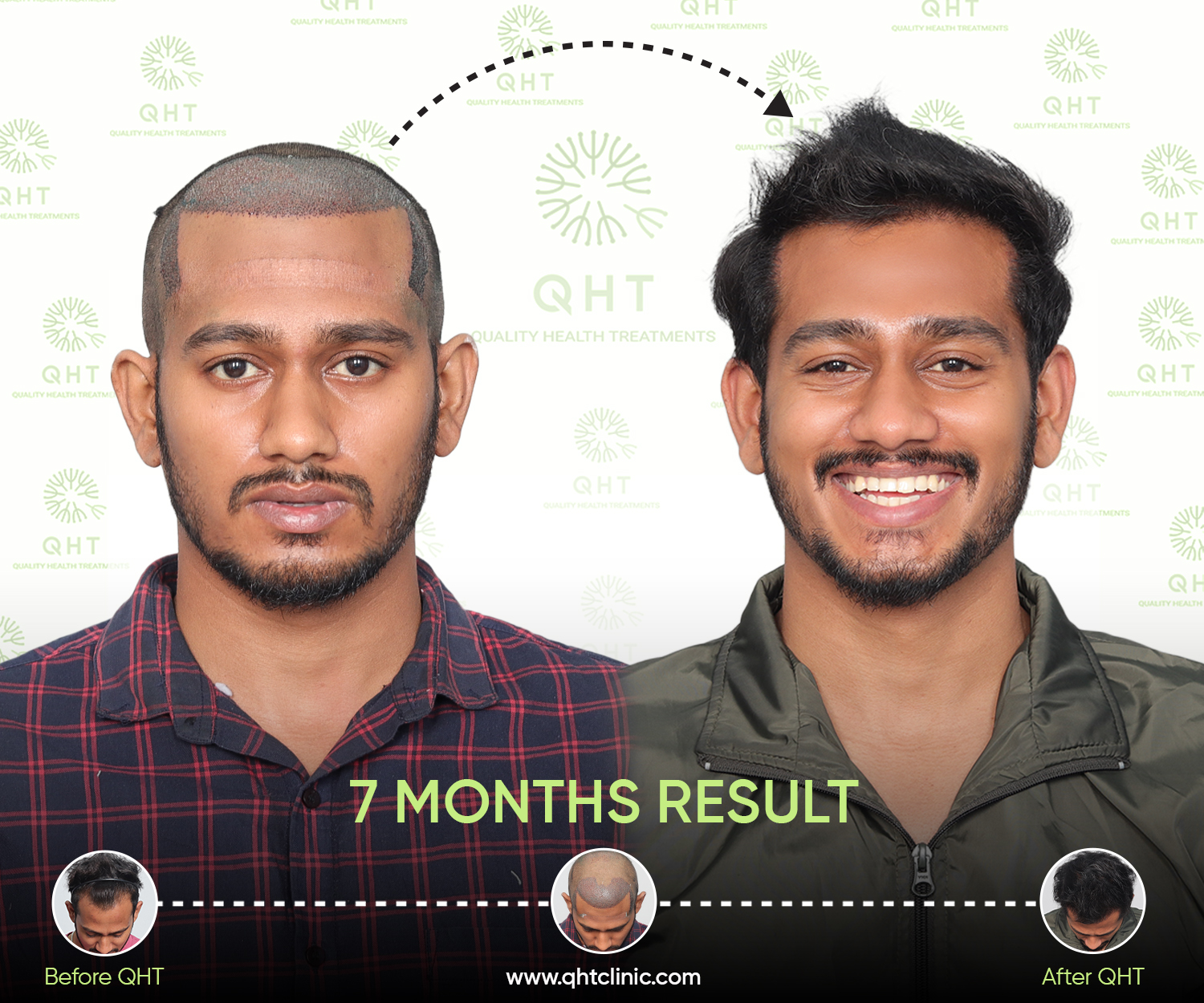
Best and Natural-looking Hair Transplant Results

At QHT Clinic, we use clinically proven hair transplant techniques to give you the results you desire. Our goal at QHT is to deliver precision-executed results that blend seamlessly with your existing hair to create a denser, more natural-looking crown.

Result Vector
Devendra Before Image
Devendra After Image
Harsh Sharma  Before Image
Harsh Sharma  After Image
Probir Das Before Image
Probir Das After Image
Ajay  Before Image
Ajay  After Image
Dheerendra Before Image
Dheerendra After Image
Amit Kumar  Before Image
Amit Kumar  After Image
What Is Crown Hair Transplant & Why Is It Challenging?

What Is Crown Hair Transplant & Why Is It Challenging?

What Is Crown Hair Transplant & Why Is It Challenging?

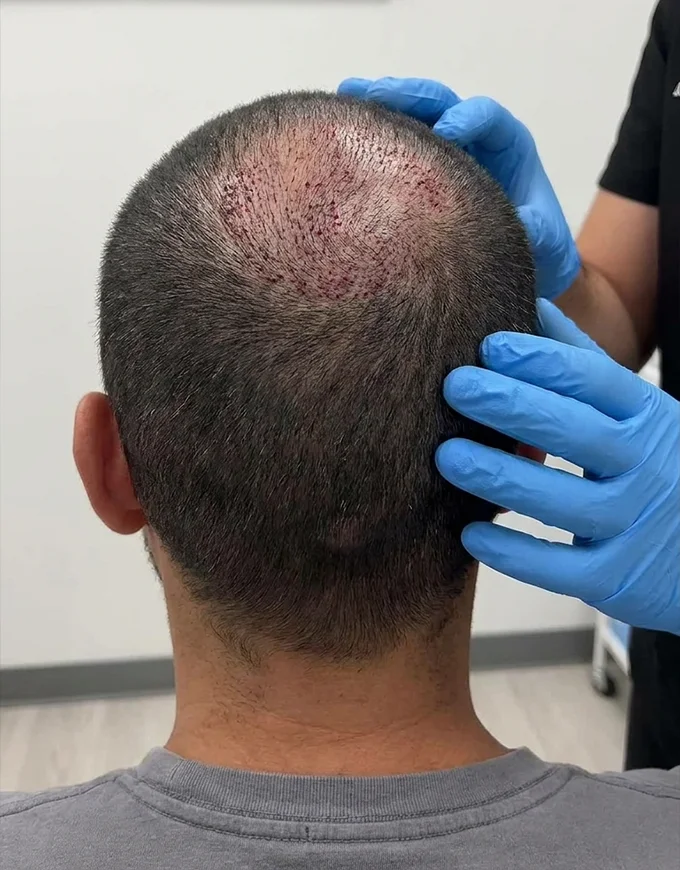
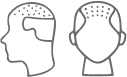
The crown is the hardest part of the scalp to rebuild convincingly. Look closely at the top-back of any head and you will see a whorl, a spot where the hair spirals out in a circle. Surgeons call this area the vertex.

A crown hair transplant moves living hair from the back and sides of your scalp into that spiral so it fills in again.

Here is why it fights back. Hair in the crown grows in many directions at once, so a surgeon has to match that swirl or the result looks flat and fake.

The crown also takes longer to show its payoff than the front of the head. And because the hair sits in a circle rather than a straight line, it takes more grafts to cover the same visible patch.

Crown loss is not rare. It is the second most common pattern of genetic hair loss after a receding front hairline, and it becomes worth treating surgically from Norwood grade 3 on the Norwood scale, the standard map doctors use to grade male-pattern baldness.

The question QHT fields most on assessment calls is blunt: is the crown even worth treating yet? Sometimes the answer is not yet, and that matters, because the hair around a thinning crown can keep receding after surgery and leave a treated patch stranded.

Crown vs Frontal Hairline Transplant – Key Differences

Crown vs Frontal Hairline Transplant – Key Differences

Crown vs Frontal Hairline Transplant – Key Differences

Two bald spots, two different operations. People assume the crown and the hairline are the same job in a different spot. They are not. A top of head hair transplant follows different rules from a hairline, and knowing them sets your expectations straight.

Feature Frontal hairline Crown (vertex)
When it thins Often first Alongside or after the front
Growth direction Forward, one way Spiral whorl, many directions
Grafts used Mostly single-hair units Mostly multi-hair units
Density per graft Higher visible impact Lower, so more grafts needed
How fast it matures Faster Slower
Placement Simpler angles Angled to the whorl
Difficulty Lower Higher

One practical takeaway from that last row. A crown takes longer to judge than a hairline, so month three or four is exactly when most people wrongly assume the grafts have failed. They have not. The crown is just slower.

How Many Grafts Are Needed for Crown Transplant?

How Many Grafts Are Needed for Crown Transplant?

How Many Grafts Are Needed for Crown Transplant?

A crown can take 3,000 grafts and still ask for more. It is the most graft-hungry zone on the scalp, and that circular whorl is the reason. There is no single number that fits everyone.

What the QHT assessment works out is your number, from four things: how much you have lost, how coarse your hair is, how much donor hair you have to spare, and how much more you are likely to lose.

As a rough guide, QHT groups crown cases like this:

  • Early crown thinning: 1,200 to 2,000 grafts
  • Moderate loss: 2,000 to 3,000 grafts
  • Advanced loss, where the vertex merges into the mid-scalp at Norwood 5 to 6: 3,000 to 4,500 or more, often split across two sessions

Treat those as starting points for your crown area graft count, not a quote. The real figure comes out of the scalp assessment, once a surgeon has actually looked at your donor supply.

Crown Hair Transplant Procedure at QHT Jaipur

Crown Hair Transplant Procedure at QHT Jaipur

Crown Hair Transplant Procedure at QHT Jaipur

Here is what actually happens when a Jaipur patient books, step by step. It does not start with surgery. It starts on a screen.

Step zero (The assessment): You share scalp photos and QHT reviews them in a free consultation. If surgery is not right for you yet, you are told so. If it is, you travel to your nearest QHT branch for the procedure itself. The closest surgical centres to Jaipur are Delhi (Rohini) and Gurugram (Sector 46), with another centre in Haridwar. There is no QHT operating theatre in Jaipur.

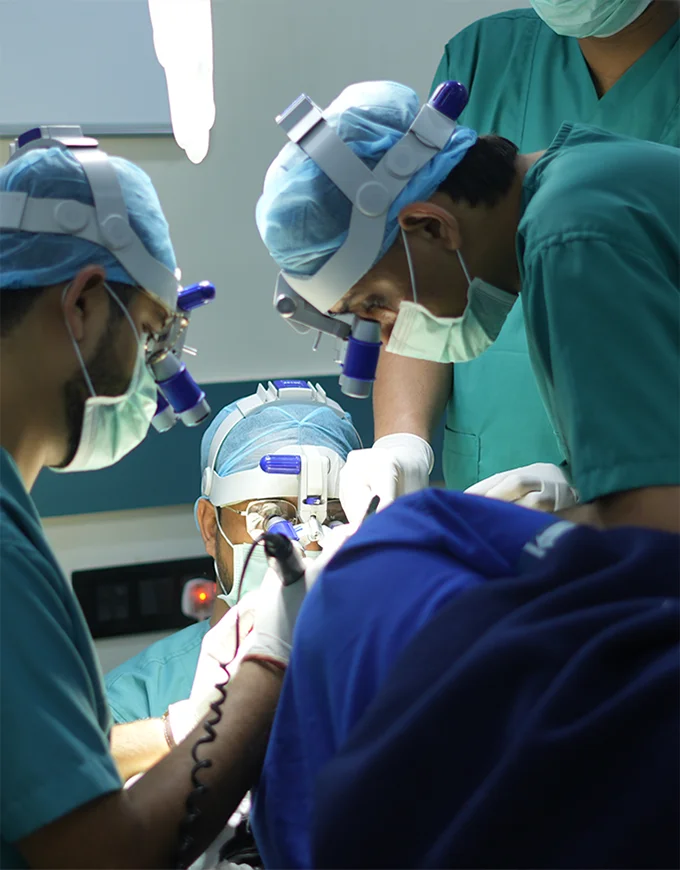
Once you are in the chair, a crown hair transplant in Jaipur patient goes through the same surgeon-led stages QHT uses everywhere:

  • Consultation and scalp check: donor density, medical history, and scalp health
  • Surgical planning: mapping the whorl, testing how loose the scalp is, setting a density target, and pre-op instructions such as stopping smoking and alcohol two weeks before
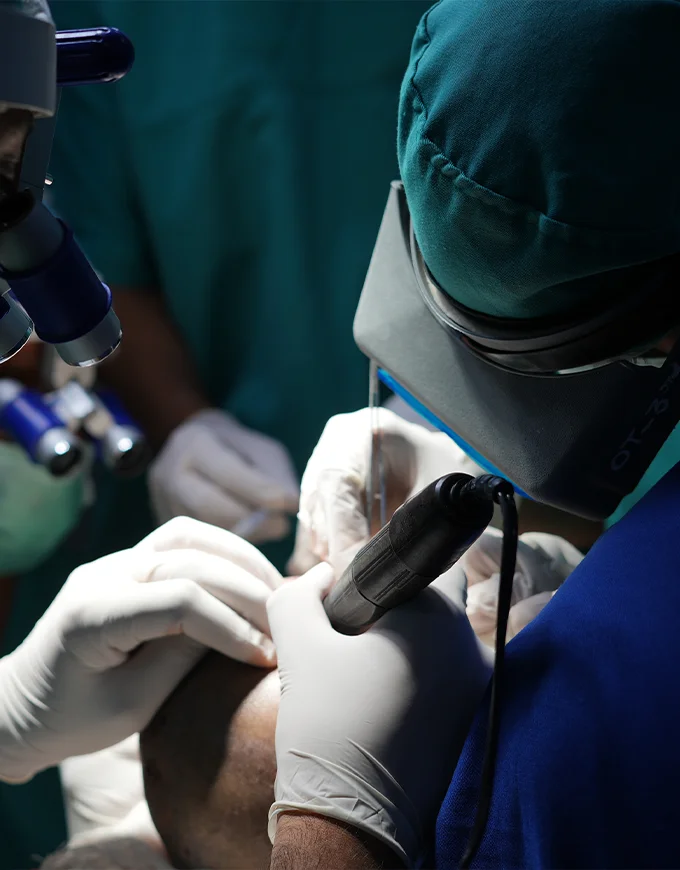
  • Donor extraction: FUE, FUT, or the patented QHT method, using motorised micropunches, with grafts graded under 10x magnification
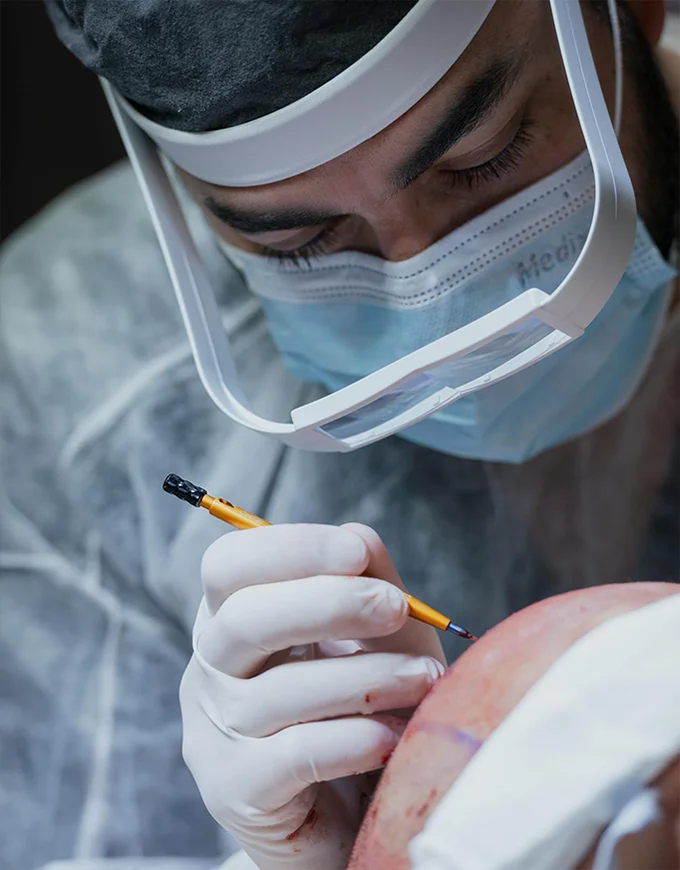
  • Recipient site prep: tiny incisions angled to follow the whorl
  • Graft handling and placement: grafts kept in chilled PRP saline, then placed with the SAVA implanter pen, with out-of-body time held under two hours
  • Aftercare: a written plan and scheduled follow-ups, which can run remotely for patients who have travelled back to Jaipur

That whorl angle is the detail FUE for crown baldness lives or dies on. Get the spiral wrong and the hair stands up oddly. QHT reports a graft survival rate above 95% across more than 15,000 patients, and immediate placement after extraction is a big part of why.

Crown Hair Transplant Cost in Jaipur

Crown Hair Transplant Cost in Jaipur

Crown Hair Transplant Cost in Jaipur

Crown cost comes down to one thing more than any other: the number of grafts. A bigger, two-session crown costs more than a small early one. That is the whole logic.

QHT prices per graft, and the rate is the same at every branch:

  • FUT from ₹50 per graft
  • FUE from ₹70 per graft
  • QHT from ₹100 per graft

No hidden charges sit on top. Because there is no QHT clinic in Jaipur, the online assessment does something useful before you spend a rupee on travel: it gives you a graft-based quote up front, so you are not pricing a crown hair transplant in Jaipur blind. For the full picture of how your stage changes the graft count, see the ranges in the grafts section above.

Before & After: Crown Transplant Results Gallery

Before & After: Crown Transplant Results Gallery

Before & After: Crown Transplant Results Gallery

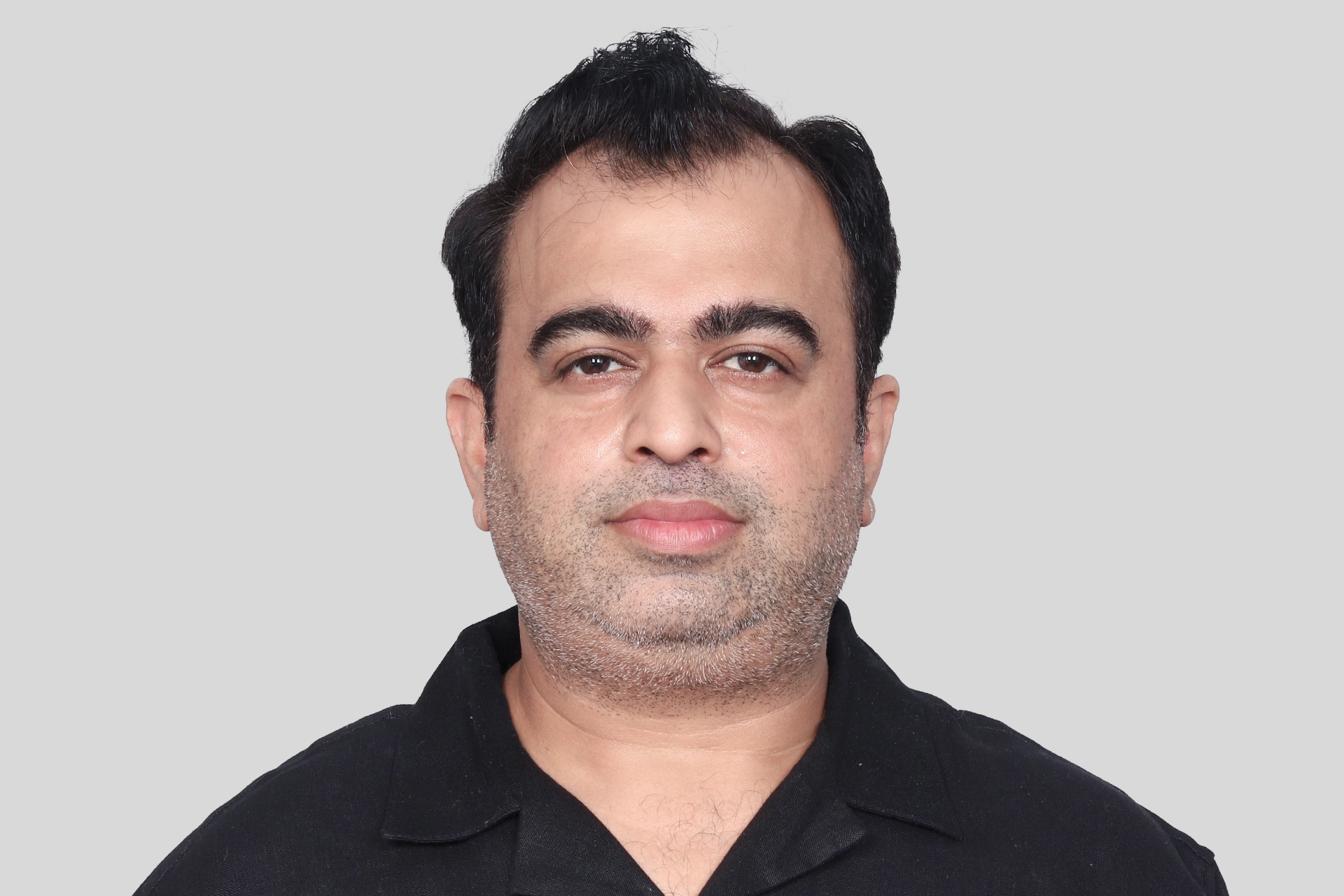
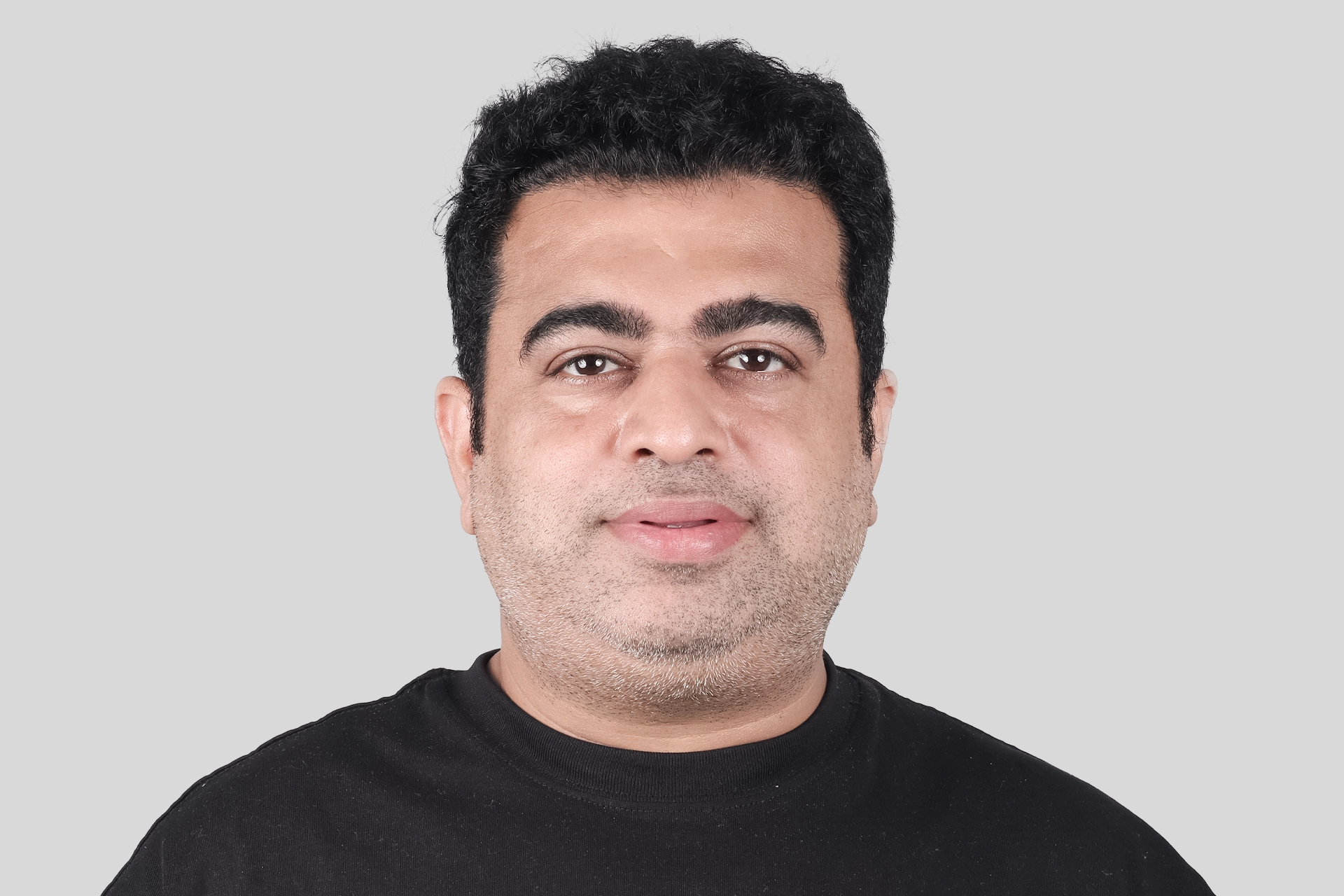
The photo that made you search is the same kind of photo that proves the result. Crown work shows best from directly above, in the light, which is the angle people avoid for years.

Each crown hair transplant before and after set follows ISHRS photography guidelines and is published with the patient’s consent.

Results differ from person to person. Watch the dates under each pair, because what you are really seeing in these images is time, which is what the next section is about.

Recovery After Crown Hair Transplant

Recovery After Crown Hair Transplant

Recovery After Crown Hair Transplant

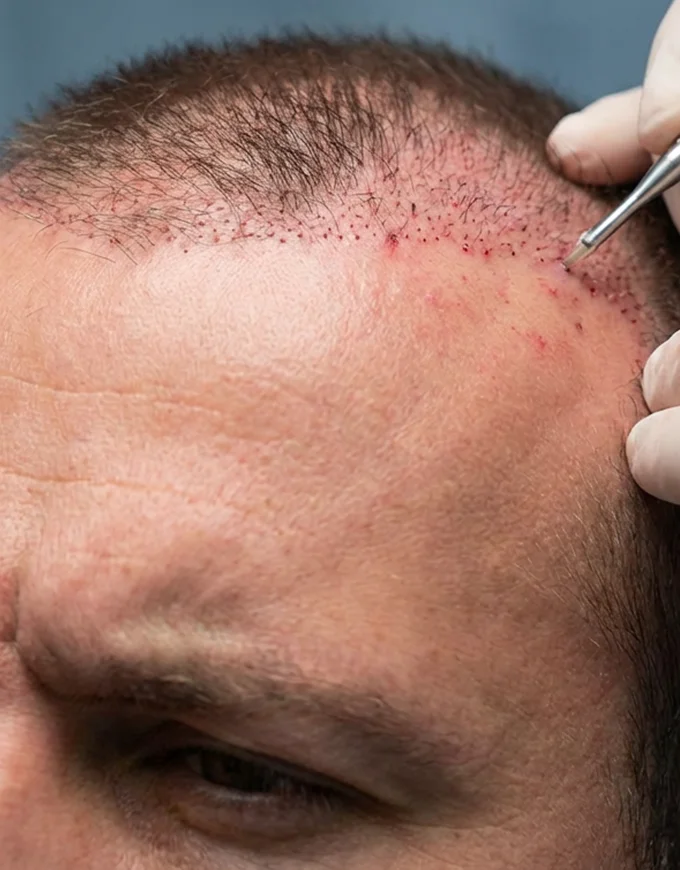
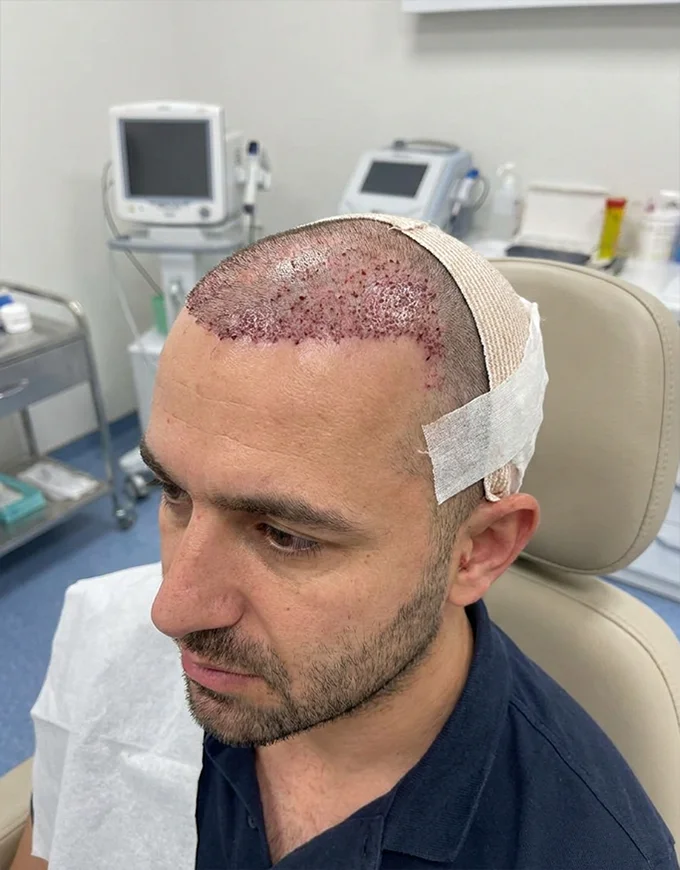
Day three is the rough one. Tender scalp, redness, a bit of swelling that can drift toward the forehead. Then it settles fast. Here is the real timeline for the crown.

Time What happens
Day 0 to 3 Tenderness, redness, some swelling
Day 4 to 14 Scabs drop off; FUT stitches come out
Week 2 to 4 Transplanted hairs shed. This is supposed to happen
Month 3 to 4 First fine regrowth appears
Month 5 to 7 Hair thickens and darkens
Month 9 to 12 Most of the density arrives
Month 15 to 18 The crown finishes maturing

Most people are back to work inside 7 to 10 days, long before the crown shows much. Two crown-specific habits help while it heals.

Watch how you sleep, since the crown is the spot your head rests on, and skip heavy workouts for about two weeks so sweat and friction stay off the new grafts.

The shed at week two to four throws people every time. The hair you paid for falls out, and it is meant to. It grows back from month three.

Why Crown Needs Expert Planning - Donor Laxity Explained

Why Crown Needs Expert Planning - Donor Laxity Explained

Why Crown Needs Expert Planning - Donor Laxity Explained

Before a single graft is cut, the surgeon checks how loose your scalp is. That looseness has a name, donor laxity, and it sets a hard limit on how many grafts can be safely taken in one sitting. A tighter scalp gives up fewer.

There is a second limit that matters more on the crown than anywhere. The hair ringing a thinning vertex can keep falling after your surgery. Spend your whole donor supply on the crown today and you may have nothing left to defend the area around it tomorrow.

So QHT often plans the crown in two stages: treat the visible thinning first, then come back for a touch-up once the surrounding loss has settled.

This is also why an assessment sometimes tells a younger patient to wait. Protecting what you have can be the smarter move than chasing density you cannot hold.

Hair Transplant Cost in India

7

Factors that Affect the Final Cost

  • The total number of grafts needed
  • The technique chosen
  • Any add-on therapies like PRP or GFC
  • Post-procedure care needs
Type of hair transplant Approximate Cost (INR)
Follicular Unit Extraction Starts from ₹ 70 Per Graft
Quick Hair Transplant Starts from ₹ 100 per graft
Follicular Unit Transplantation Starts from ₹ 50 Per Graft
Factors Affecting the Cost

Some factors that may affect the number of grafts required include:

  • Number of Grafts
    Number of Grafts

    More grafts needed means a higher total cost.

  • Surgeon and Team
    Surgeon and Team

    Skilled, doctor-led care affects the final price.

  • Technique Chosen
    Technique Chosen

    FUT, FUE, and QHT each have a different per-graft rate.

  • Aftercare and Follow Up
    Aftercare and Follow Up

    Post-surgery support and reviews add to the value.

The doctor does the delicate part

Surgeon angles every crown graft.

The doctor does the delicate part
One specialty, nothing else

Only hair, no cross-sell.

One specialty, nothing else
Settle it from home, travel once

Plan online, one branch visit.

Settle it from home, travel once
See the work before you commit

Real crown results, consent-shared.

See the work before you commit

Frequently Asked Questions

Global bodies such as the World Health Organization encourage an evidence-based approach to medicine and following ethical guidelines when discussing the options available to patients for surgical procedures.

01
Does QHT have a clinic in Jaipur?

No. QHT does not operate in Jaipur. Jaipur patients start with a free online scalp assessment, and if surgery is the right call, they travel to the nearest QHT branch in Delhi or Gurugram. Haridwar is the other surgical centre.

02
Can I get a crown assessment online from Jaipur?

Yes. You share scalp photos and get a free consultation remotely, which tells you whether you are a surgical candidate before you plan any travel.

03
Do crown hair transplants actually work?

They do, and the result is permanent, because the moved hair keeps the staying power of the donor area it came from. QHT reports graft survival above 95%.

04
How many grafts will my crown need?

Most crowns fall between 1,200 and 4,500 grafts depending on how advanced the loss is. Your exact number comes from the scalp assessment, since it depends on your donor supply.

05
Is a crown transplant more painful than a hairline one?

The surgery itself is done under the same local anaesthetic, so it is not more painful to sit through. The crown can feel more tender afterward for a simple reason: it is the part of your head you lie on.

06
Crown or medication, how do I know which I need?

That is exactly what the assessment decides.

07
What is the success rate of a crown transplant at QHT?

QHT reports a graft survival rate above 95%. For context, QHT cites ISHRS data that around 10% of hair transplant cases worldwide need corrective work later, which is why planning matters.

08
How long until I see the full crown result?

Early regrowth starts around month three. Most density lands by month nine to twelve, and the crown finishes maturing by 15 to 18 months. It runs slower than the hairline, so patience is part of the plan.

Book a Crown Assessment at QHT Jaipur

Start with the free assessment. In one consultation you find out whether you are a surgical candidate or better served by treatment first, and only then do you plan travel to your nearest branch. No clinic visit in Jaipur required to begin.

A crown hair transplant in Jaipur handled through QHT comes with upfront pricing, no hidden charges, and 12 months of follow-up support.

Start Your Free Online Assessment