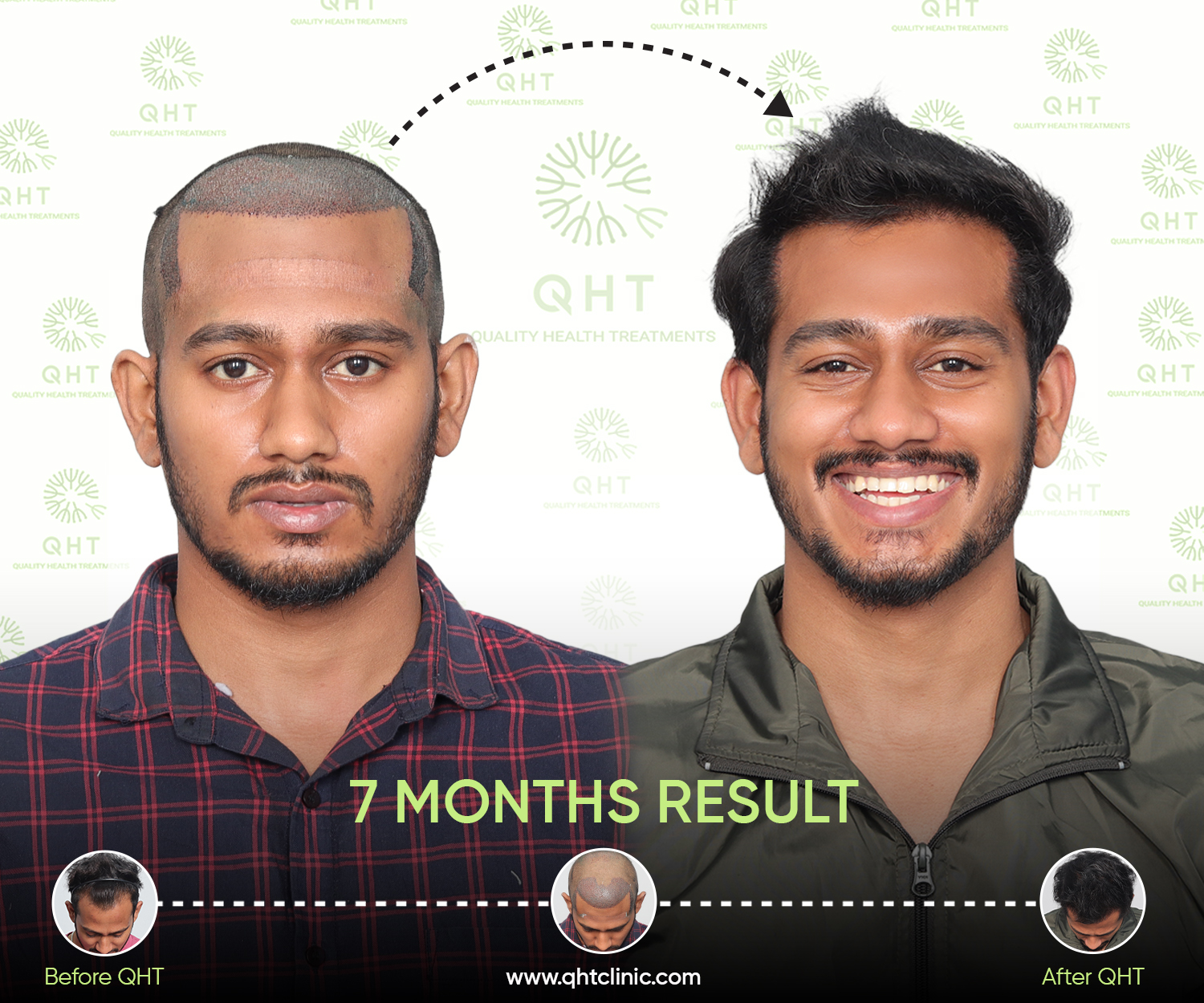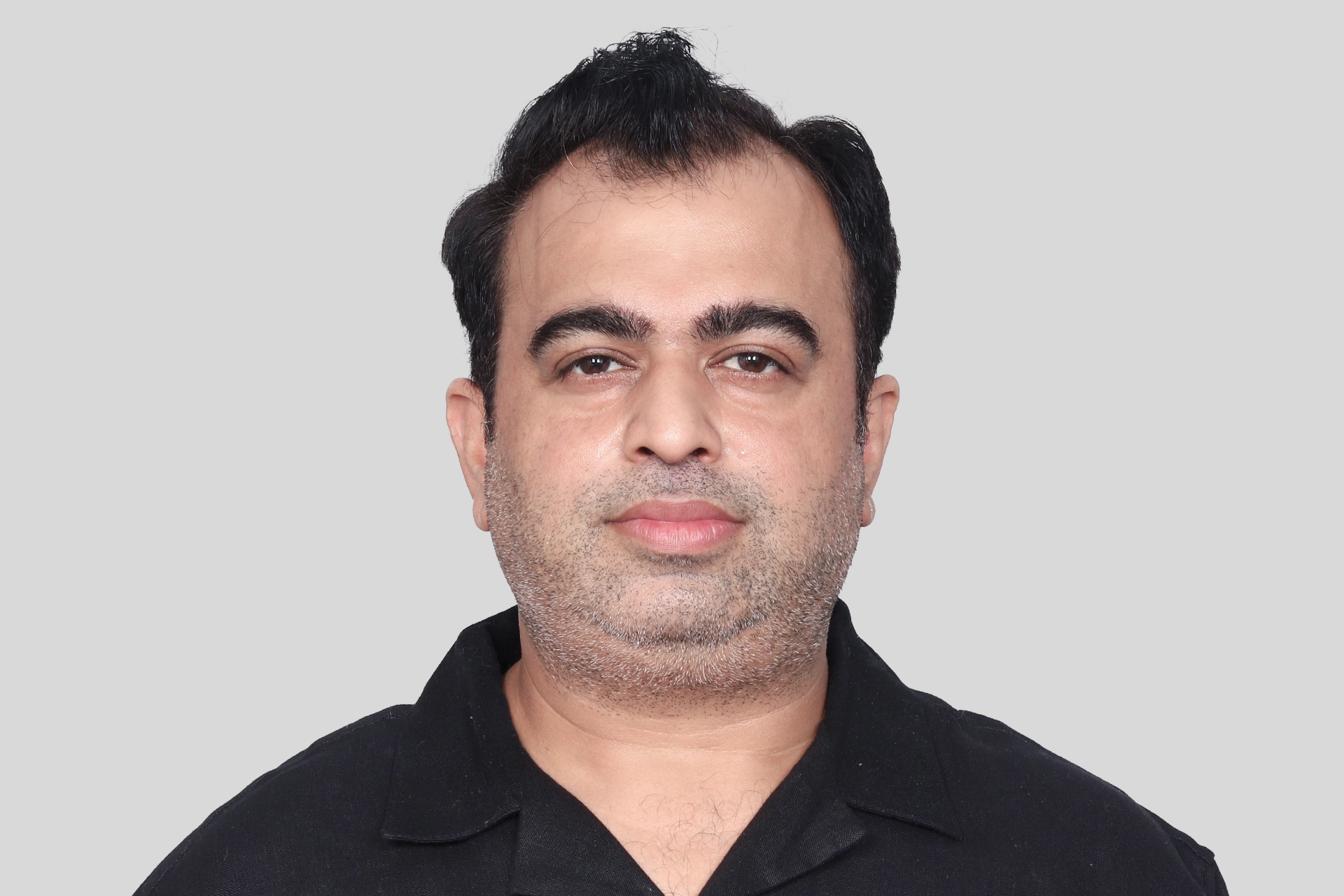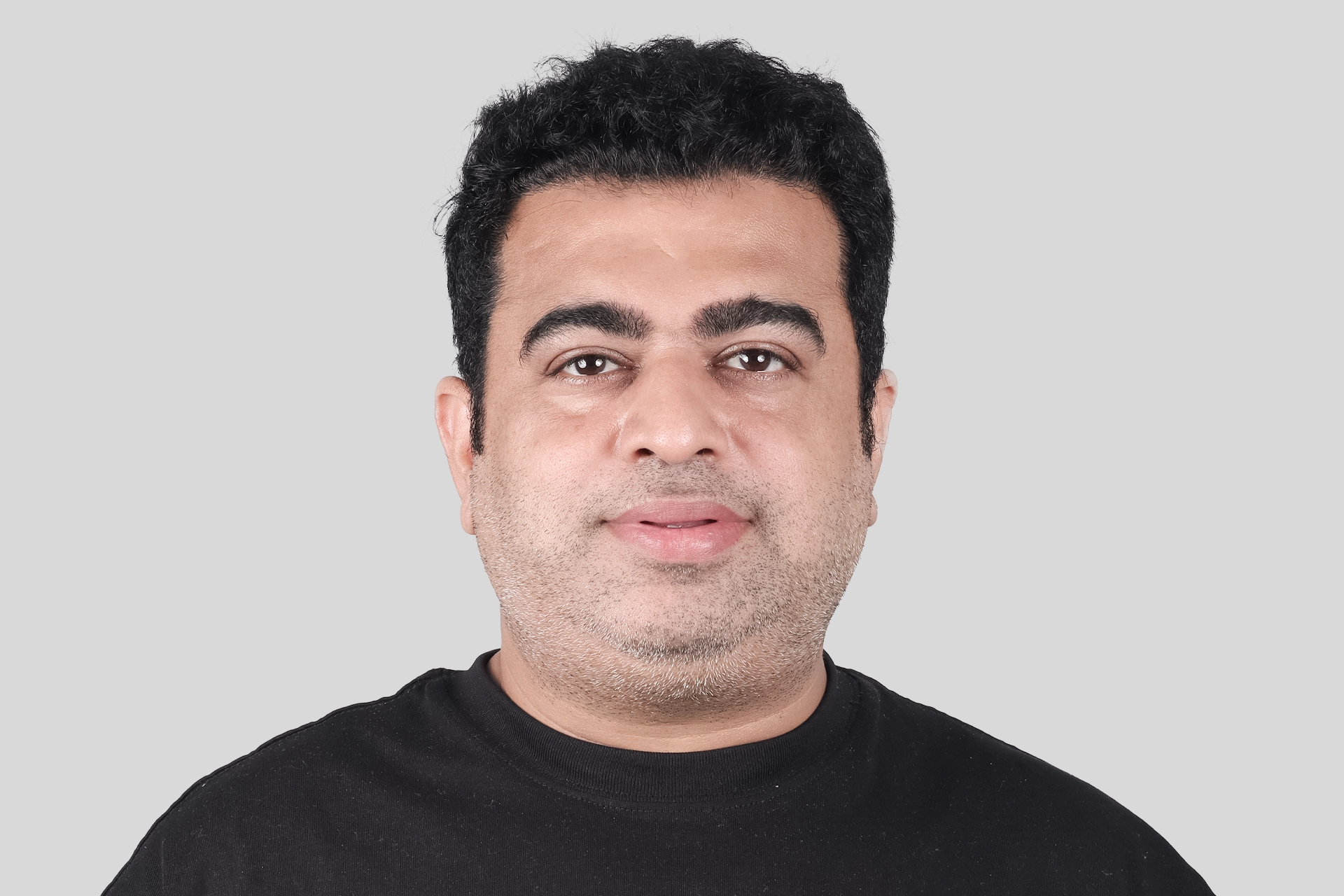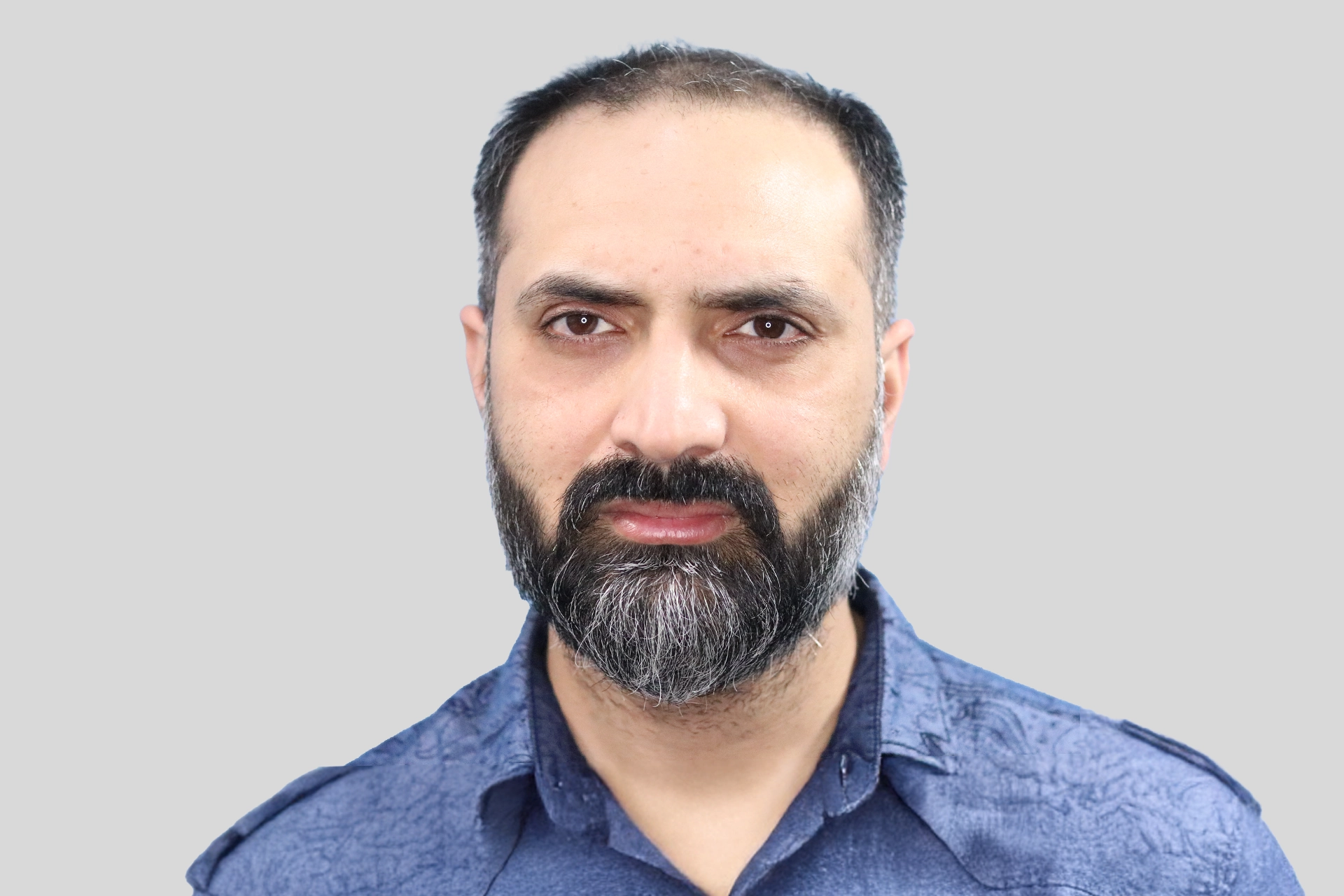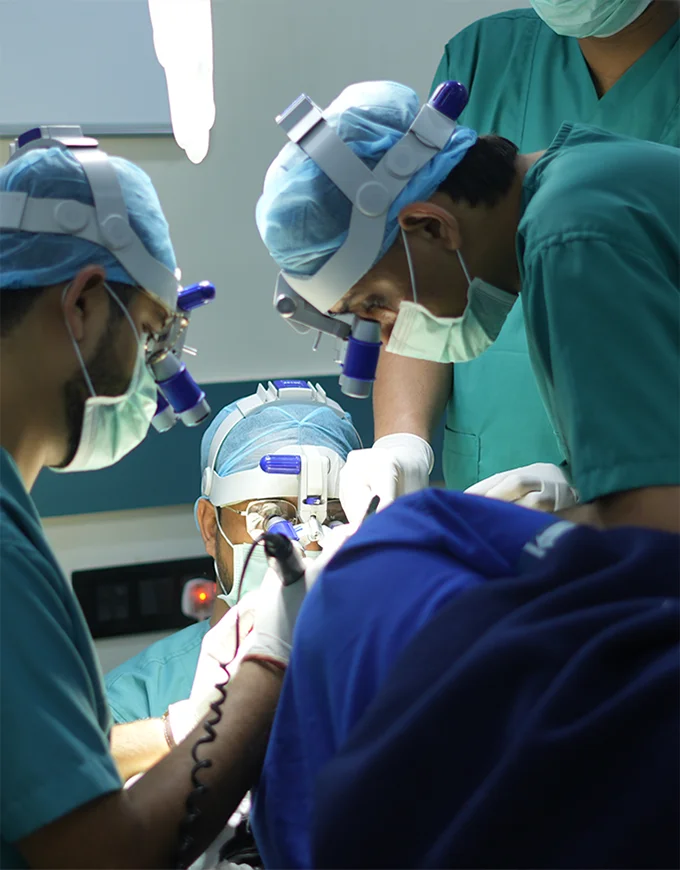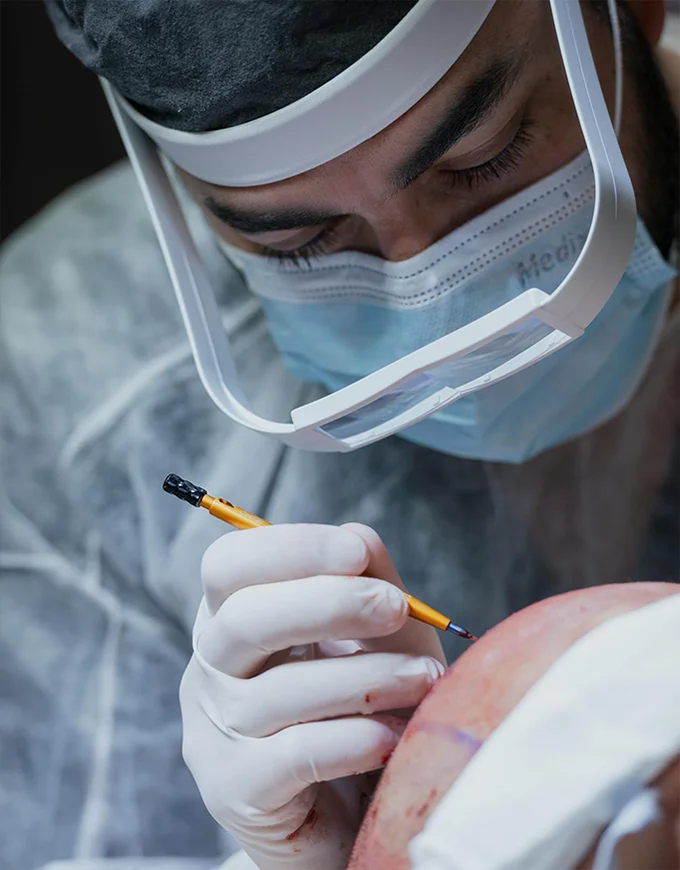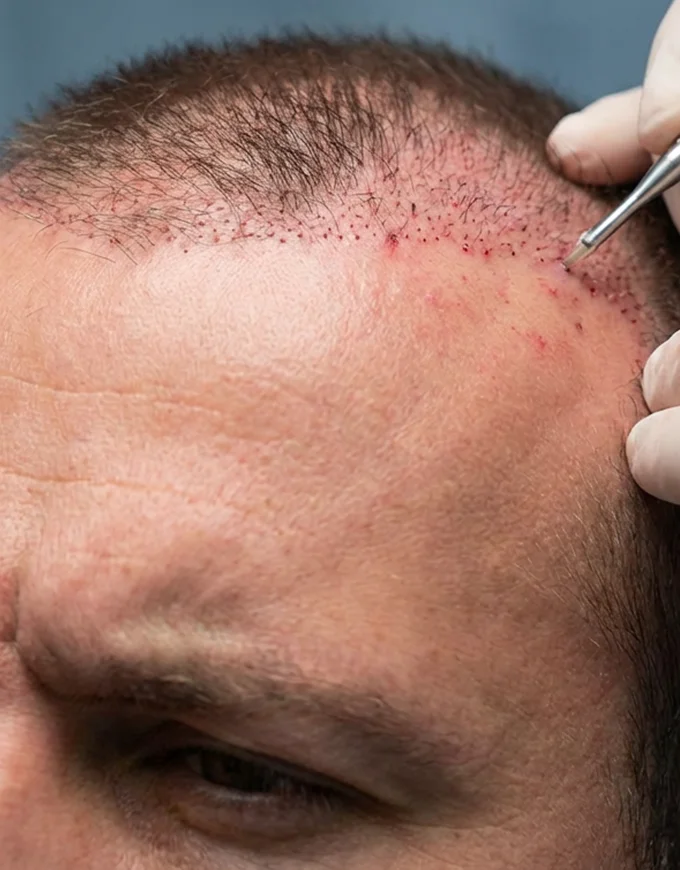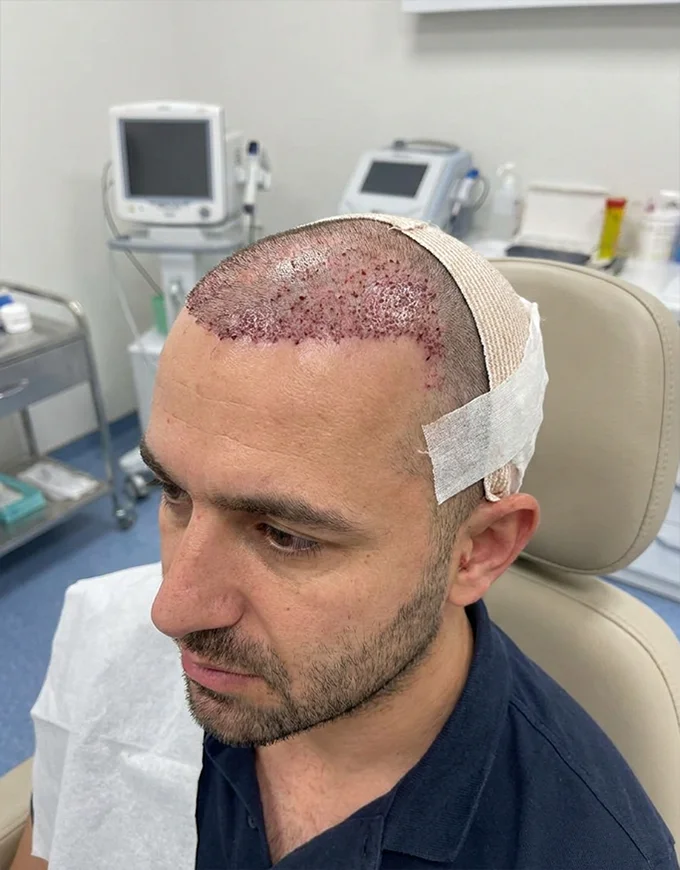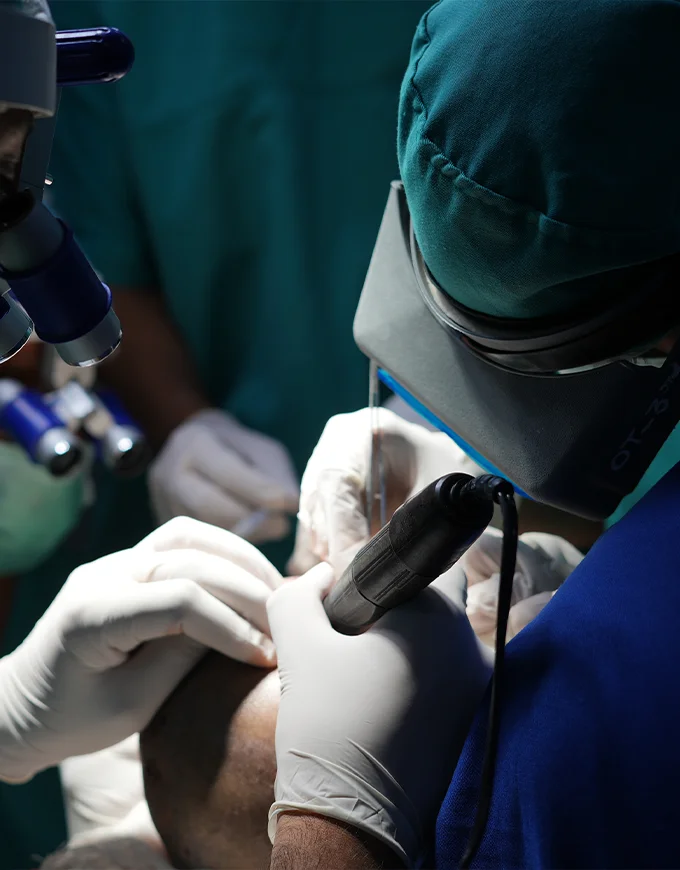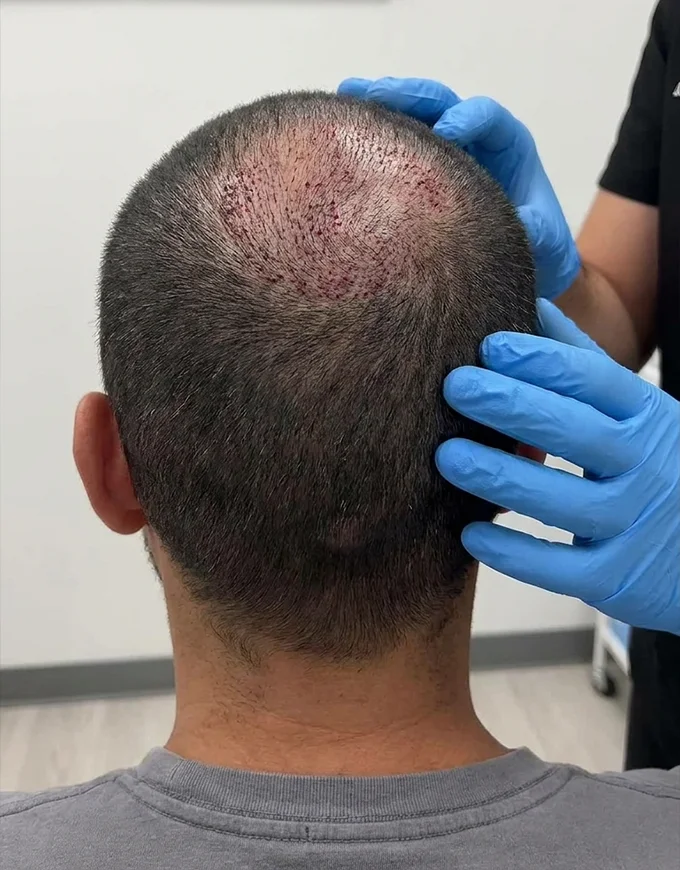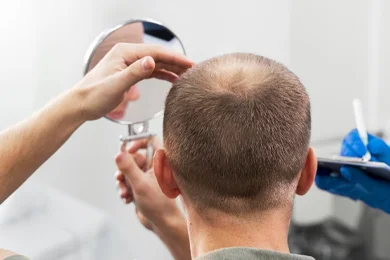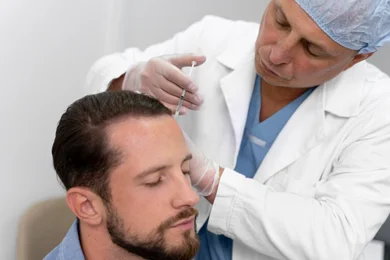


At QHT Clinic, we use clinically proven hair transplant techniques to give you the results you desire. Our goal at QHT is to deliver precision-executed results that blend seamlessly with your existing hair to create a denser, more natural-looking crown.
The crown is the hardest part of the scalp to rebuild convincingly. Look closely at the top-back of any head and you will see a whorl, a spot where the hair spirals out in a circle. Surgeons call this area the vertex.
A crown hair transplant moves living hair from the back and sides of your scalp into that spiral so it fills in again.
Here is why it fights back. Hair in the crown grows in many directions at once, so a surgeon has to match that swirl or the result looks flat and fake.
The crown also takes longer to show its payoff than the front of the head. And because the hair sits in a circle rather than a straight line, it takes more grafts to cover the same visible patch.
Crown loss is not rare. It is the second most common pattern of genetic hair loss after a receding front hairline, and it becomes worth treating surgically from Norwood grade 3 on the Norwood scale, the standard map doctors use to grade male-pattern baldness.
The question QHT fields most on assessment calls is blunt: is the crown even worth treating yet? Sometimes the answer is not yet, and that matters, because the hair around a thinning crown can keep receding after surgery and leave a treated patch stranded.

Two bald spots, two different operations. People assume the crown and the hairline are the same job in a different spot. They are not. A top of head hair transplant follows different rules from a hairline, and knowing them sets your expectations straight.
| Feature | Frontal hairline | Crown (vertex) |
| When it thins | Often first | Alongside or after the front |
| Growth direction | Forward, one way | Spiral whorl, many directions |
| Grafts used | Mostly single-hair units | Mostly multi-hair units |
| Density per graft | Higher visible impact | Lower, so more grafts needed |
| How fast it matures | Faster | Slower |
| Placement | Simpler angles | Angled to the whorl |
| Difficulty | Lower | Higher |
One practical takeaway from that last row. A crown takes longer to judge than a hairline, so month three or four is exactly when most people wrongly assume the grafts have failed. They have not. The crown is just slower.
A crown can take 3,000 grafts and still ask for more. It is the most graft-hungry zone on the scalp, and that circular whorl is the reason. There is no single number that fits everyone.
What the QHT assessment works out is your number, from four things: how much you have lost, how coarse your hair is, how much donor hair you have to spare, and how much more you are likely to lose.
As a rough guide, QHT groups crown cases like this:
Treat those as starting points for your crown area graft count, not a quote. The real figure comes out of the scalp assessment, once a surgeon has actually looked at your donor supply.
Here is what actually happens when a Jaipur patient books, step by step. It does not start with surgery. It starts on a screen.
Step zero (The assessment): You share scalp photos and QHT reviews them in a free consultation. If surgery is not right for you yet, you are told so. If it is, you travel to your nearest QHT branch for the procedure itself. The closest surgical centres to Jaipur are Delhi (Rohini) and Gurugram (Sector 46), with another centre in Haridwar. There is no QHT operating theatre in Jaipur.
Once you are in the chair, a crown hair transplant in Jaipur patient goes through the same surgeon-led stages QHT uses everywhere:
That whorl angle is the detail FUE for crown baldness lives or dies on. Get the spiral wrong and the hair stands up oddly. QHT reports a graft survival rate above 95% across more than 15,000 patients, and immediate placement after extraction is a big part of why.
Crown cost comes down to one thing more than any other: the number of grafts. A bigger, two-session crown costs more than a small early one. That is the whole logic.
QHT prices per graft, and the rate is the same at every branch:
No hidden charges sit on top. Because there is no QHT clinic in Jaipur, the online assessment does something useful before you spend a rupee on travel: it gives you a graft-based quote up front, so you are not pricing a crown hair transplant in Jaipur blind. For the full picture of how your stage changes the graft count, see the ranges in the grafts section above.
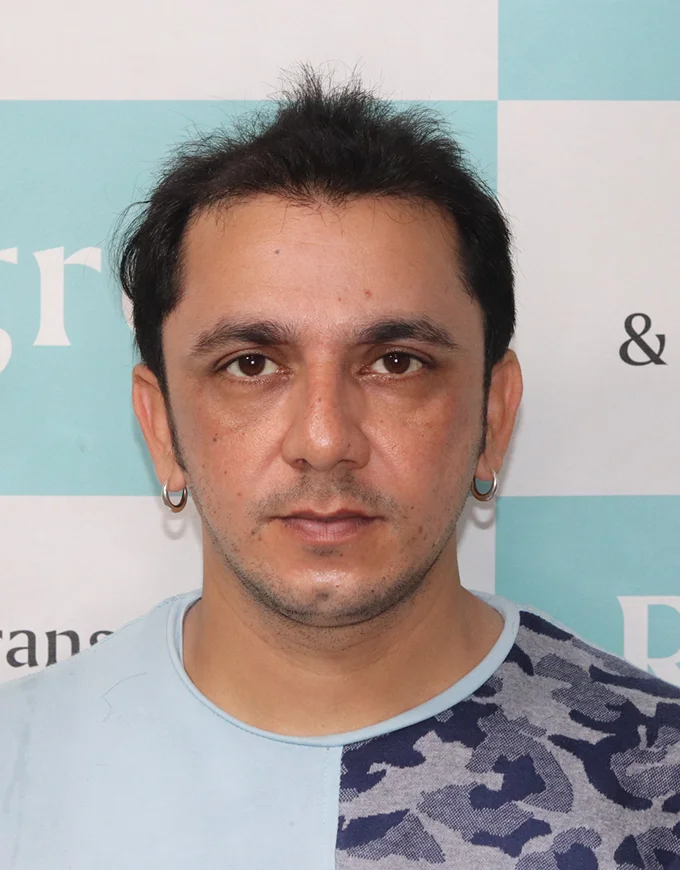
The photo that made you search is the same kind of photo that proves the result. Crown work shows best from directly above, in the light, which is the angle people avoid for years.
Each crown hair transplant before and after set follows ISHRS photography guidelines and is published with the patient’s consent.
Results differ from person to person. Watch the dates under each pair, because what you are really seeing in these images is time, which is what the next section is about.
Day three is the rough one. Tender scalp, redness, a bit of swelling that can drift toward the forehead. Then it settles fast. Here is the real timeline for the crown.
| Time | What happens |
| Day 0 to 3 | Tenderness, redness, some swelling |
| Day 4 to 14 | Scabs drop off; FUT stitches come out |
| Week 2 to 4 | Transplanted hairs shed. This is supposed to happen |
| Month 3 to 4 | First fine regrowth appears |
| Month 5 to 7 | Hair thickens and darkens |
| Month 9 to 12 | Most of the density arrives |
| Month 15 to 18 | The crown finishes maturing |
Most people are back to work inside 7 to 10 days, long before the crown shows much. Two crown-specific habits help while it heals.
Watch how you sleep, since the crown is the spot your head rests on, and skip heavy workouts for about two weeks so sweat and friction stay off the new grafts.
The shed at week two to four throws people every time. The hair you paid for falls out, and it is meant to. It grows back from month three.
Before a single graft is cut, the surgeon checks how loose your scalp is. That looseness has a name, donor laxity, and it sets a hard limit on how many grafts can be safely taken in one sitting. A tighter scalp gives up fewer.
There is a second limit that matters more on the crown than anywhere. The hair ringing a thinning vertex can keep falling after your surgery. Spend your whole donor supply on the crown today and you may have nothing left to defend the area around it tomorrow.
So QHT often plans the crown in two stages: treat the visible thinning first, then come back for a touch-up once the surrounding loss has settled.
This is also why an assessment sometimes tells a younger patient to wait. Protecting what you have can be the smarter move than chasing density you cannot hold.
Factors that Affect the Final Cost
Some factors that may affect the number of grafts required include:
More grafts needed means a higher total cost.
Skilled, doctor-led care affects the final price.
FUT, FUE, and QHT each have a different per-graft rate.
Post-surgery support and reviews add to the value.
Surgeon angles every crown graft.
Only hair, no cross-sell.
Plan online, one branch visit.
Real crown results, consent-shared.
Global bodies such as the World Health Organization encourage an evidence-based approach to medicine and following ethical guidelines when discussing the options available to patients for surgical procedures.
No. QHT does not operate in Jaipur. Jaipur patients start with a free online scalp assessment, and if surgery is the right call, they travel to the nearest QHT branch in Delhi or Gurugram. Haridwar is the other surgical centre.
Yes. You share scalp photos and get a free consultation remotely, which tells you whether you are a surgical candidate before you plan any travel.
They do, and the result is permanent, because the moved hair keeps the staying power of the donor area it came from. QHT reports graft survival above 95%.
Most crowns fall between 1,200 and 4,500 grafts depending on how advanced the loss is. Your exact number comes from the scalp assessment, since it depends on your donor supply.
The surgery itself is done under the same local anaesthetic, so it is not more painful to sit through. The crown can feel more tender afterward for a simple reason: it is the part of your head you lie on.
That is exactly what the assessment decides.
QHT reports a graft survival rate above 95%. For context, QHT cites ISHRS data that around 10% of hair transplant cases worldwide need corrective work later, which is why planning matters.
Early regrowth starts around month three. Most density lands by month nine to twelve, and the crown finishes maturing by 15 to 18 months. It runs slower than the hairline, so patience is part of the plan.