FUT, FUE and proprietary QHT method
Filter by Norwood grade and area
Surgeon, dermatologist, anaesthetist and technicians
Around 7-10 days, remote follow-up
Finding the best hair transplant clinic in Kolkata is not easy, because almost every clinic describes itself as the top choice. This page takes a different approach. Instead of repeating those claims, it compares the main hair transplant clinics in Kolkata on points you can check, such as the surgeon who performs the procedure, the technique used, and the clinic’s track record. The goal is to help you judge a clinic on facts rather than advertising.
QHT does not have a clinic in Kolkata. Our nearest centres are in Hyderabad and Delhi. We treat patients from Kolkata through our medical-tourism programme. Your first consultation and scalp evaluation can be done online from home, and the procedure is carried out at the QHT centre that is easier for you to reach.
Most readers simply want to know which option suits their situation. A short summary is given below.
Every clinic site you open in Kolkata looks reassuring. Polished galleries, confident claims, a surgeon’s name in a clean font. But a homepage is written to impress, not to be questioned, and the details that actually shape your result rarely make it onto the landing page.
So instead of ranking logos, use the checklist below on every clinic you’re considering, QHT included. The questions are simple. The answers separate a clinic that stands behind its work from one that hopes you won’t ask.
| What to check before you book | Why it matters | How QHT handles it |
| Who actually holds the instruments | A surgeon planning your hairline and a technician running the case are not the same procedure | Surgeon-led design and extraction, start to finish |
| How many grafts survive | Low survival shows up months later as thin spots and a second surgery you didn’t budget for | 95%+ graft survival |
| The technique behind the method | Every extra minute a follicle spends outside the body chips away at its regrowth | The patented QHT method keeps out-of-body time short by design |
| A track record you can actually see | Real before-and-after depth beats a handful of hero shots | 15,000+ procedures, with a full gallery to scroll |
| Pricing written down before you commit | Per-graft “extras” are where a quoted figure quietly balloons | Fixed package pricing, in writing, before you travel |
| Follow-up after you’re back in Kolkata | You can’t walk into the clinic for a quick check the next morning | Structured remote follow-up built around your return home |
Ask these six and the pattern shows up fast. The weaker names turn vague right where it counts, on who performs the surgery and on how many grafts truly take. The ones worth your money answer straight, without a pause.
Note: QHT operates from centres in Hyderabad and Delhi and treats Kolkata patients through planned travel and online consults. Confirm every detail during your own consultation, as clinic specifics change over time.
A hair transplant is a permanent procedure, so the clinic should be chosen on facts rather than on price or advertising. A few points decide the final result more than anything else. The guidance below helps you shortlist a hair transplant clinic in Kolkata with confidence.
In many clinics, the surgeon plans the case while trained technicians carry out most of the extraction and implantation. This is a common practice, but the patient has the right to know who does the actual work. Before booking, confirm how much of the procedure the surgeon performs personally. It is also advisable to meet the operating surgeon during consultation, not only a counsellor or coordinator.
Two terms are commonly seen. ABHRS is an international board certification for hair restoration surgeons. NABH is an Indian accreditation that reflects a clinic’s safety and hygiene standards. Both are useful indicators, but neither is mandatory for practice, and a clinic may deliver good results without them. A stated certification should be treated as something to verify rather than accept directly. If a clinic claims either, it can be confirmed on the official ABHRS or NABH website.
The right technique depends on the extent of hair loss, not on which method sounds most advanced.
A suitable clinic recommends the method based on the patient’s scalp condition. Caution is advised if a patient is directed towards the most expensive option without a clear medical reason.
Star ratings can be inflated, so they should not be relied upon alone. Detailed reviews that mention the surgeon by name and describe the recovery period are more reliable. For before-after photos, the lighting, angle and haircut should be similar in both images. It is also useful to ask for results from patients whose baldness grade is close to your own, as photos of mild cases offer little guidance for advanced hair loss.
A hair transplant does not end on the day of surgery. Transplanted hair sheds in the first few weeks, and visible growth appears gradually over six to twelve months. For this reason, follow-up care is important. Patients should confirm what is included after the procedure and how reviews are managed for those living far from the clinic. This applies to QHT as well, since patients from Kolkata travel to a centre in Hyderabad or Delhi. A clear remote follow-up plan, with scheduled photo reviews and a direct point of contact, makes the distance easier to manage.

QHT does not have a clinic in Kolkata. Patients from the city are treated at the nearest QHT centre, which is in Hyderabad or Delhi. The first step, including the consultation and scalp evaluation, can be completed online from home.
Based on this assessment, the doctor may suggest medicines or non-surgical treatments that can work in place of surgery, depending on the stage of hair loss. Surgery is recommended only when it is the suitable option, and it is then scheduled at the centre that is easier to reach.
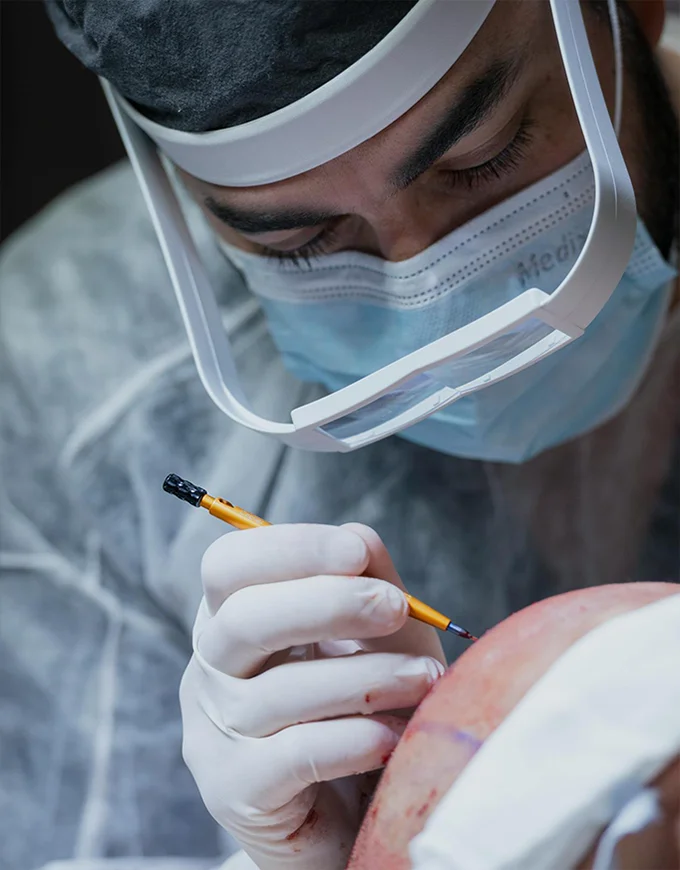
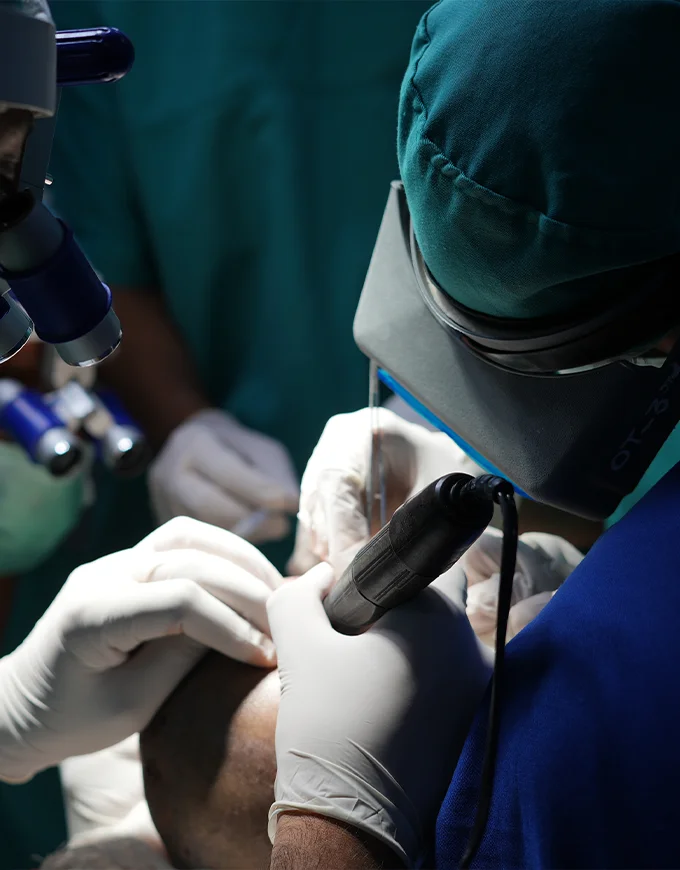
The procedure follows the QHT method. In this approach, extraction and implantation are carried out together, so the grafts spend less time outside the body. The aim is to keep the out-of-body time under about two hours, which supports better graft health. A SAVA implanter is used for controlled placement of each follicle.
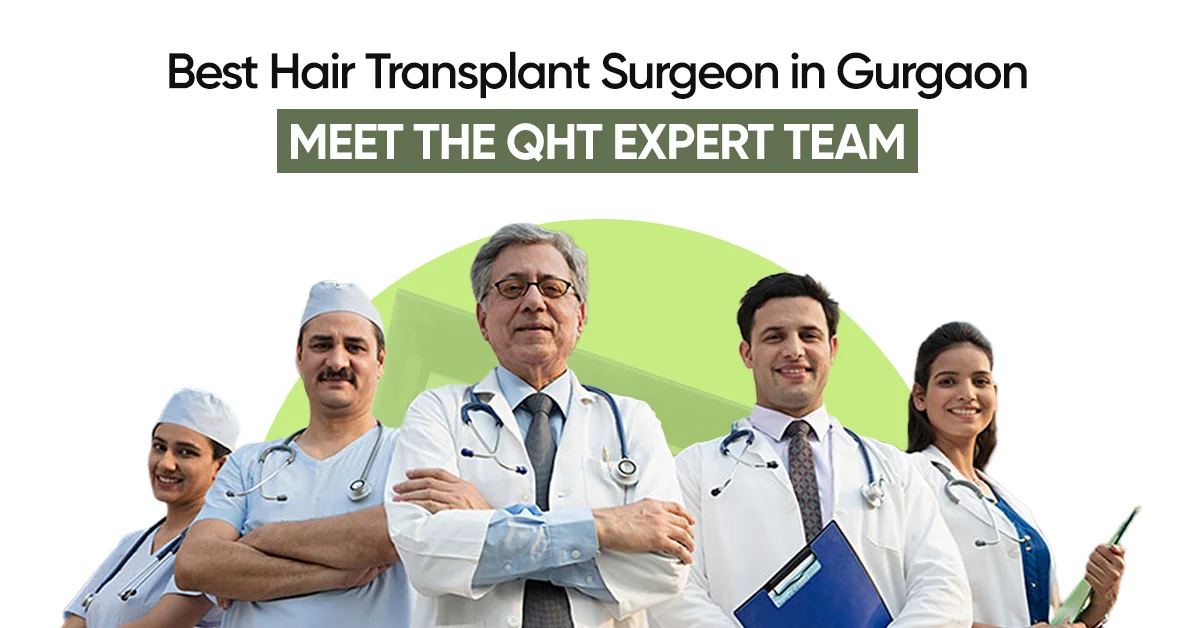
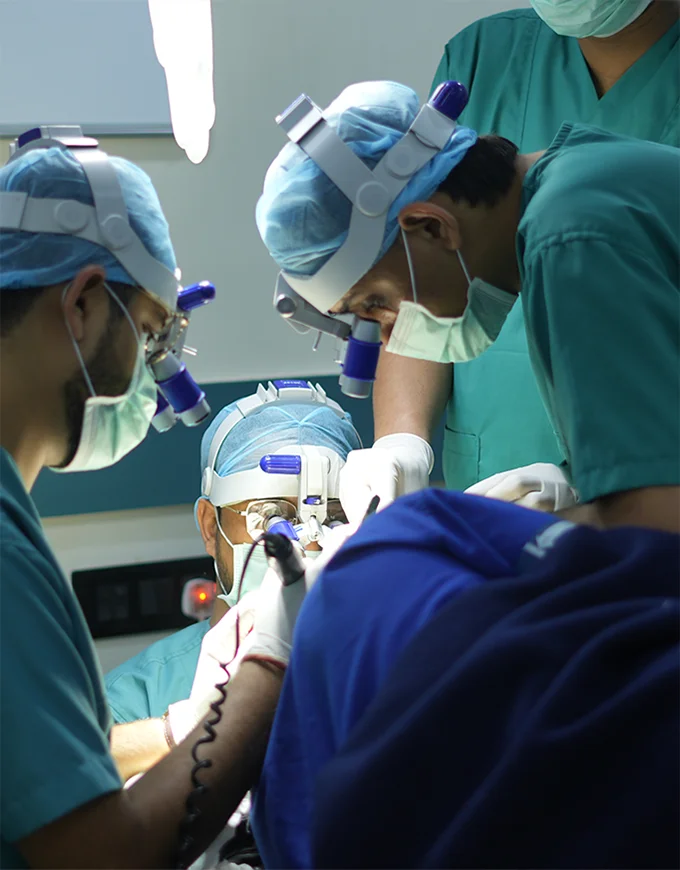
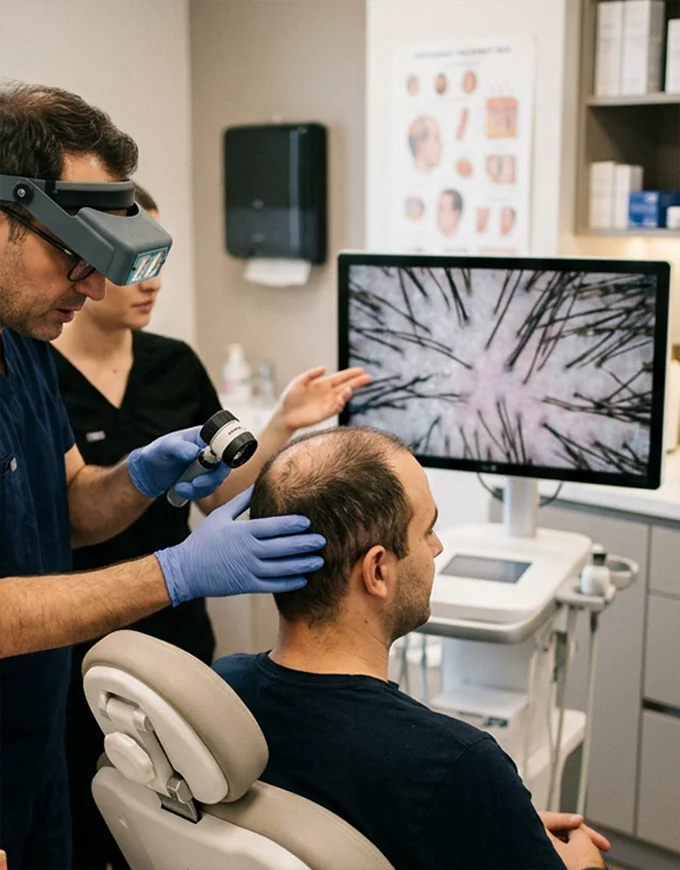
Care at QHT is handled by a team rather than a single person. A surgeon, a dermatologist, an anaesthetist and trained technicians are involved across the consultation, the surgery and the recovery stage. The patient meets the doctor before the procedure, and the same team manages the case through to follow-up.
QHT offers three main techniques, and the right one depends on the stage of hair loss.
The QHT method is the clinic’s own technique. The final cost is calculated per graft and confirmed after the consultation, once the number of grafts is decided. Beyond the scalp, QHT also offers beard restoration, eyebrow work, repair of earlier transplants and non-surgical options such as PRP and GFC. Full details are available on the individual service pages.
Every procedure at QHT is performed under qualified medical supervision, with a surgeon leading each case. The team includes a surgeon, a dermatologist, an anaesthetist and trained technicians, so the patient is assessed and treated by people with defined roles. If you want to confirm a doctor’s qualifications, you can ask for these during the consultation and check them against the relevant medical register.
The QHT centres in Hyderabad and Delhi are equipped for surgical hair restoration. Procedures are performed in a sterile operation theatre under proper surgical conditions. The SAVA implanter used during the QHT method controls the depth, angle and direction of each graft, which influences how natural the hairline looks after healing. Patients travelling from Kolkata are treated at these centres, and facility photos can be requested during the online consultation.
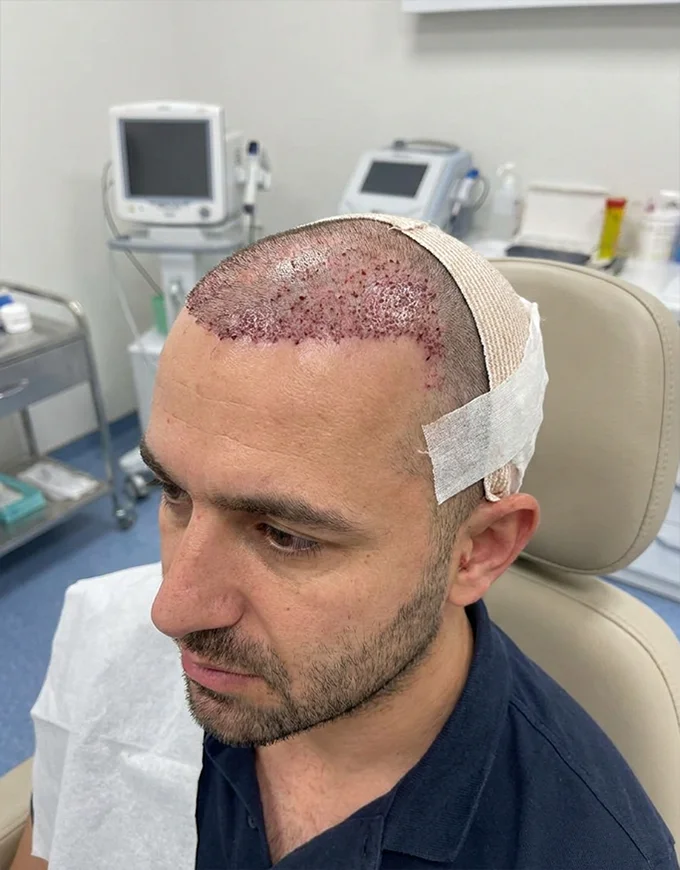
Results from a hair transplant appear gradually. The transplanted hair sheds within the first few weeks, and visible regrowth develops over the following six to twelve months. Most patients return to routine activity within about 7 to 10 days after the procedure.
QHT has treated more than 15,000 patients across its centres, and a results library is available where outcomes can be viewed by baldness grade and treated area. Outcomes still vary from person to person, depending on the donor area, the stage of baldness and how the scalp responds. The doctor assesses what is realistic for each case during consultation, rather than promising a fixed result.
For a patient in Kolkata, the distance is the main concern, and the process is built to reduce it. The steps are simple.
This is handled through the QHT medical tourism programme, which is set up for patients who travel from other cities. Full details are on the medical tourism page.
Real before-and-after photos help you see what is possible for a case like yours. The QHT results gallery has cases from many Norwood grades and graft ranges. You can filter the gallery by grade or by graft count. This makes it easy to find patients with a hair loss pattern close to yours.
Factors that Affect the Final Cost
Some factors that may affect the number of grafts required include:
More grafts needed means a higher total cost.
Skilled, doctor-led care affects the final price.

FUT, FUE, and QHT each have a different per-graft rate.
Post-surgery support and reviews add to the value.
Global bodies such as the World Health Organization encourage an evidence-based approach to medicine and following ethical guidelines when discussing the options available to patients for surgical procedures.
No. QHT does not have a clinic in Kolkata. Patients from the city are treated at the nearest QHT centre in Hyderabad or Delhi. The consultation and scalp evaluation can be done online from home, and travel is needed only if surgery is advised.
There is no single answer that suits everyone. The right clinic depends on your stage of baldness, the surgeon who performs the procedure, and your budget. The safest approach is to compare clinics on verifiable facts, such as the surgeon’s qualification and real patient results, rather than on advertising.
A hair transplant is considered safe when it is performed by a qualified surgeon in a sterile operation theatre. Minor effects such as swelling, mild pain or temporary numbness can occur and usually settle within a few days. Risk rises mainly when the procedure is done in an unsuitable setup or without proper medical supervision.
The transplanted hair is taken from areas that are resistant to balding, so it is generally long-lasting. Hair that was not transplanted can still thin over time, which is why some patients are advised medicines to protect the existing hair. Results vary from person to person.
Most procedures are completed in one day, with the duration depending on the number of grafts. The transplanted hair sheds within the first few weeks. Visible regrowth develops over six to twelve months, and most patients return to routine activity within about 7 to 10 days.
Neither is better in general; each suits a different need. FUT can place a high number of grafts in one session and suits advanced baldness, but leaves a thin linear scar. FUE leaves no linear scar and recovers faster, which is why it is chosen more often. The doctor advises the right method after seeing your scalp.
Yes, if the travel gives you a better-qualified surgeon or a purpose-built surgical centre. The first consultation is done online, so you travel only when surgery is confirmed, and the visit is usually planned as a single trip. Remote follow-up continues after you return home.