

Crown Hair Transplant in Kolkata | Vertex Baldness Treatment at QHT

QHT Clinic offers surgeon-led hair transplant Procedures with a 95% graft survival rate and personalised treatment planning to recreate a natural crown whorl pattern using advanced FUE and QHT techniques.

Find the Nearest Branch
Crown Hair Transplant in Kolkata
15,000+ Hair Transplant Surgeries
Surgeon-Led Procedures
Donor Area Preservation
95% Graft Survival Rate
15,000+ Hair Transplant Surgeries
Surgeon-Led Procedures
Donor Area Preservation
95% Graft Survival Rate
Personalised Treatment Planning

Tailored treatment planning to produce balanced and natural coverage.


Personalised Treatment Planning
Donor Area Management

Conservative harvesting to preserve donor hair for future sessions.

Donor Area Management
Whorl Pattern Replication

Precise graft placement to match natural crown swirl.

Whorl Pattern Replication
Growth Timeline

Gradual density improvement, with peak density achieved within 12-18 months.


Growth Timeline
What Is Crown Hair Transplant & Why Is It Challenging?

What Is Crown Hair Transplant & Why Is It Challenging?

What Is Crown Hair Transplant & Why Is It Challenging?

Crown hair is one of the areas that start thinning in the early stages of androgenetic alopecia, along with the hairline. With the progression of the disease, the balding area increases and becomes noticeable. Once follicles are permanently miniaturised, permanent restoration or crown hair transplant is the only solution. 

A crown hair transplant involves transplanting DHT-resistant hair follicles from the donor zone into the thinning area. The procedure is referred to as a vertex hair transplant or a crown hair transplant. 

Crown hair transplant is considered more complex and technically demanding than a frontal hairline, as the hair grows outward from a central point in a circular whorl-like pattern. Every graft placed must follow the natural pattern, and to achieve the desired density, graft selection also matters. Unlike the hairline, the grafts chosen contain multiple hair follicles to achieve good coverage. It is also more complex because the crown has a different blood supply than other scalp regions, causing results to take longer to appear. 

Crown hair transplant in Kolkata requires special consideration due to the warm and humid weather, which means the scalp is exposed to heat and moisture. This cannot worsen the disease, but it can contribute to scalp irritation, greasiness, follicular clogging, and seborrheic dermatitis. Pre-procedure scalp health review is an important part of planning for patients coming from high-humidity environments. 

Crown vs Frontal Hairline Transplant – Key Differences

Crown vs Frontal Hairline Transplant – Key Differences

Crown vs Frontal Hairline Transplant – Key Differences

Crown hair follows a different pattern from the frontal hairline, with a special swirling pattern. The hairline follows a linear, forward-facing pattern and generally has lower density. Crown hair is more DHT-sensitive than hairline, and this is the reason the hair loss in this area is accelerated. The hairline recession follows an M pattern usually, and crown thinning starts as diffuse thinning in earlier Norwood stages, with complete baldness in NW5 and NW6. 

Hairline vs Crown transplant in Kolkata: Main differences
Factor Frontal Hairline Crown/Vertex
Growth Direction Outward and forward facing Circular whorl from a central point
Density  Less Density coverage required Requires higher density coverage
Grafts Needed Lower, requires single-follicle-containing grafts specifically Higher; multiple follicle-containing grafts needed
Complexity Level Low to Moderate Higher, due to the circular pattern 
Maturation Timeline Early, noticeable by months 6 to 9 Longer; noticeable in 12-18  months
How Many Grafts Are Needed for Crown Transplant?

How Many Grafts Are Needed for Crown Transplant?

How Many Grafts Are Needed for Crown Transplant?

The number of grafts required for a crown transplant in Kolkata varies depending on the extent of baldness or thinning and the density of the donor area. In earlier stages, the density coverage needed is less, but in advanced Norwood stages (5-7), crown coverage alone may require between 1500 and 3000 grafts.

Crown Baldness Stage Average Grafts Needed
Early Baldness (NW3) 1500-2000 grafts
Moderate Baldness (NW4-NW5) 2000-3000 grafts
Advanced Baldness (NW 6- NW7) 3000-4000+ grafts

 These ranges are indicative only. The actual graft estimate can only be provided after a thorough clinical assessment. To achieve the desired density, the number of grafts required per unit can vary from patient to patient. 

Crown Hair Transplant Procedure at QHT Kolkata

Crown Hair Transplant Procedure at QHT Kolkata

Crown Hair Transplant Procedure at QHT Kolkata

Vertex hair transplant in Kolkata at QHT Clinic follows a structured process from consultation to post-transplant recovery. Every step is designed to produce long-term natural results with a safe and comfortable treatment journey. 

  • Consultation and Scalp Evaluation: Treatment begins with a detailed consultation and scalp evaluation to assess the extent of hair loss, donor area density, scalp health and patient expectations. 
  • Surgical Planning: The surgeon maps the natural pattern and plans graft placement and technique to be used, depending on crown thinning or baldness. Pre-surgical planning may also include blood investigations and hormonal assessment. 
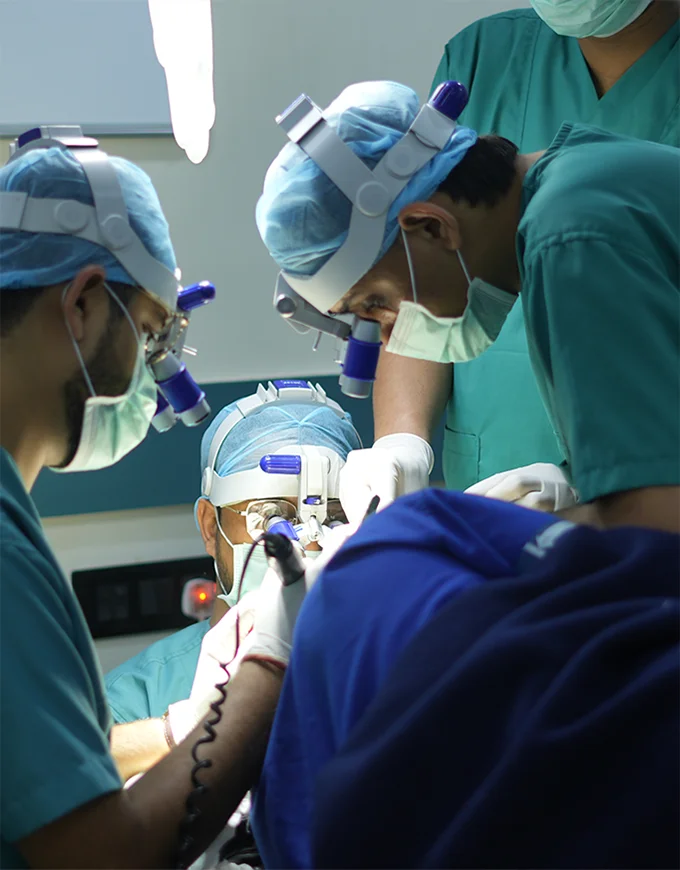
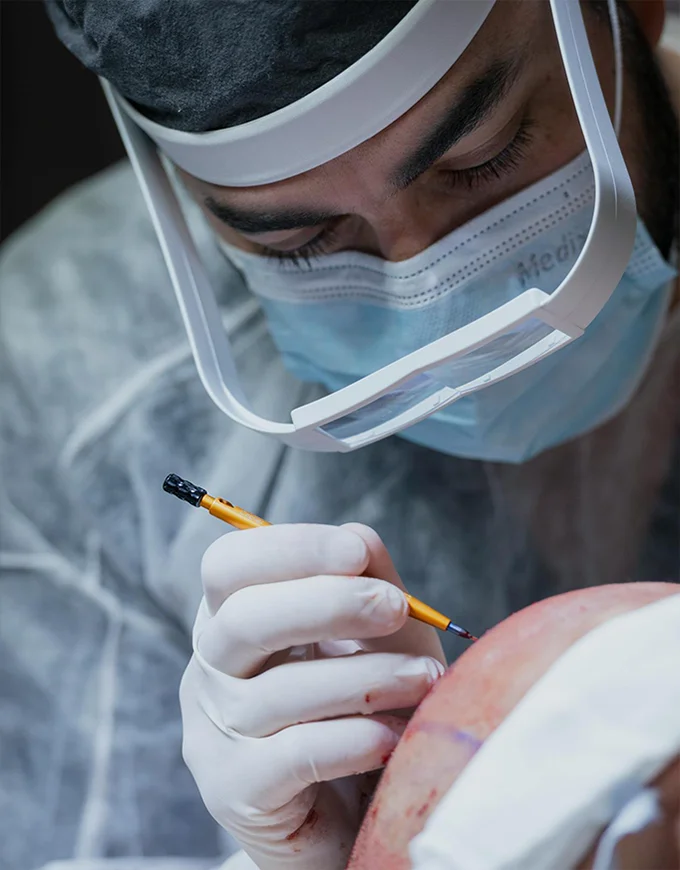
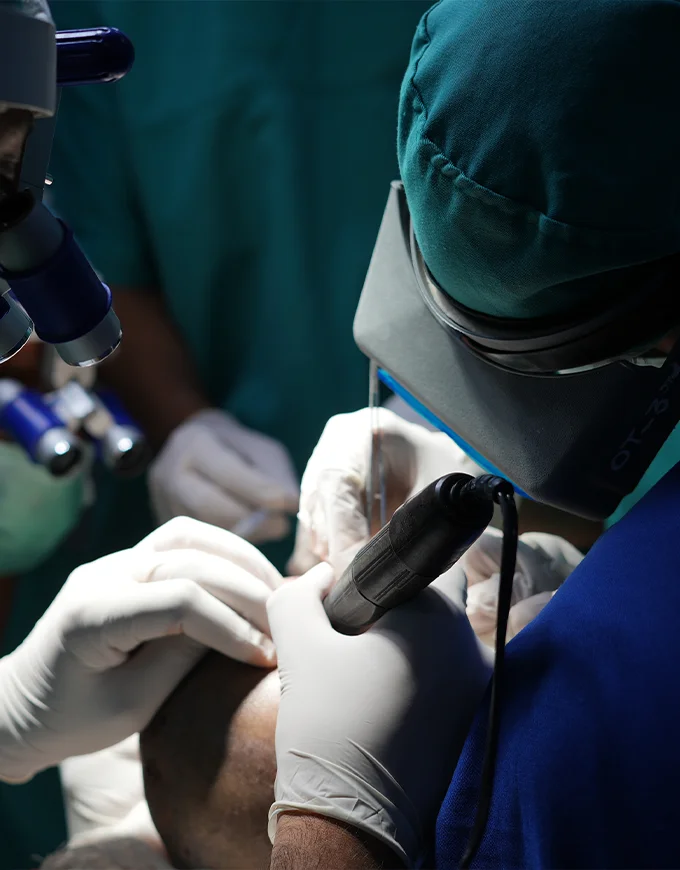
  • Donor Hair Extraction: Hair grafts are taken from the DHT-resistant donor area, the back and sides of the scalp, using the technique selected. QHT and FUE techniques for crown baldness involve the extraction of individual grafts under 10x magnification using motorised micropunches, leaving no linear scar.
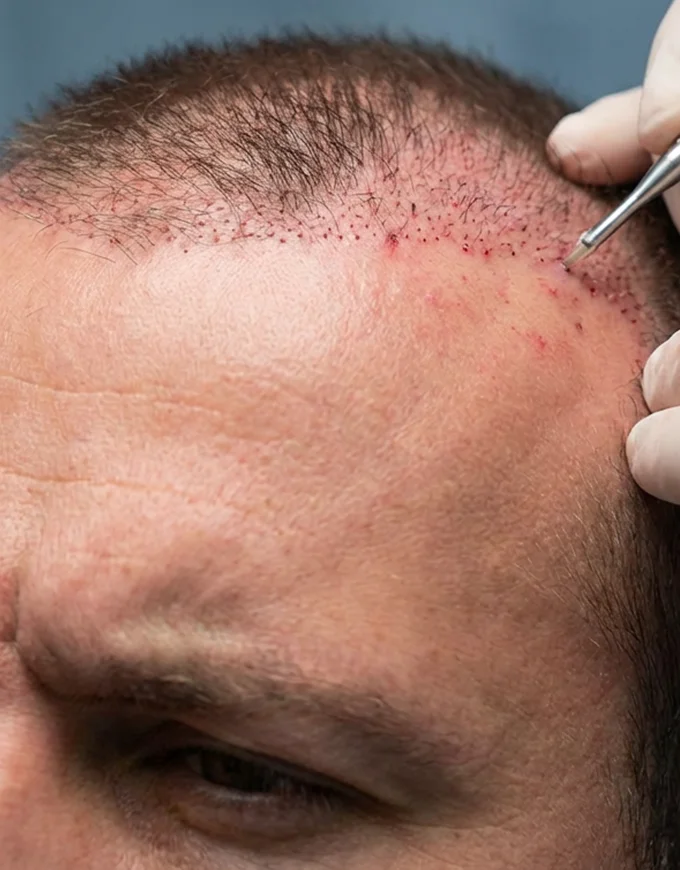
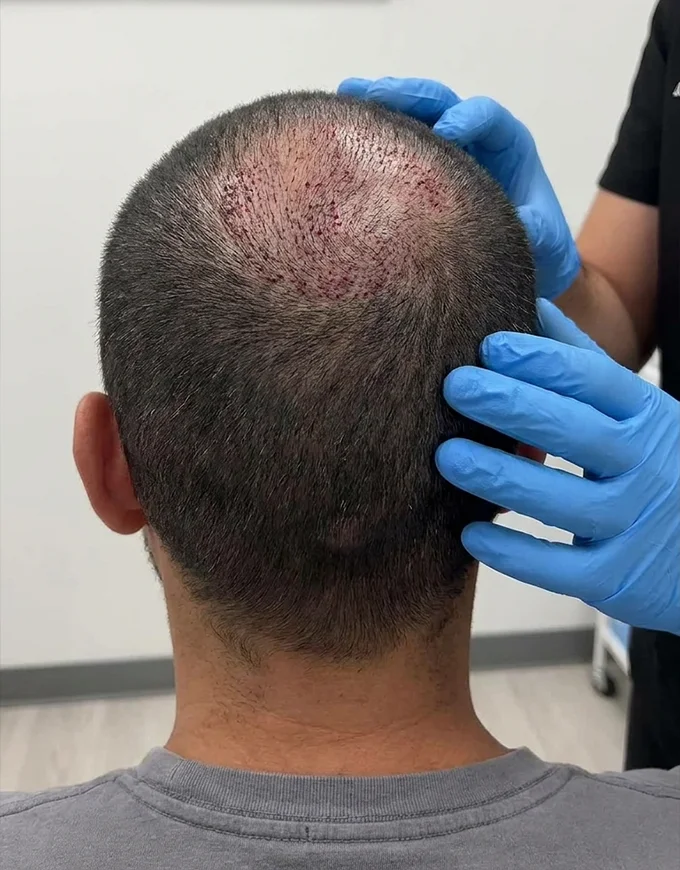
  • Recipient Site Preparation: Tiny slits are made at the crown area in a swirl pattern to ensure that the final density looks natural and blends with the surrounding hair. 
  • Graft Implantation: The grafts are stored in Cold PRP saline storage and then implanted at the correct angle and depth in tiny slits. The proprietary technique QHT reduces the out-of-body time of these grafts to less than 2 hours, improving graft survival rates significantly, up to 95%. 
  • Post-Op Care: A detailed aftercare plan is provided to all of our patients. A dedicated team supports patients throughout the recovery journey and schedules follow-up visits for progress monitoring.
Crown Hair Transplant Cost in Kolkata

Crown Hair Transplant Cost in Kolkata

Crown Hair Transplant Cost in Kolkata

Crown hair transplant cost in Kolkata depends on the number of grafts needed and the technique selected for hair restoration. At QHT Clinic, the per-graft model is followed, and transparent quotes are given before commencing the treatment. Other factors that determine the final cost include the experience of the surgeon, the clinic’s location and post-surgery care. 

The average cost of a hair transplant in Kolkata ranges from ₹40,000 to ₹4,00,000, depending on Norwood Grade. The number of grafts is multiplied by the per-graft price for the technique to calculate the cost of a crown hair transplant in Kolkata.

At QHT, the per-graft rate starts from ₹50.

Technique Starting Cost at QHT Clinic
FUT Starts from ₹50
FUE Starts from ₹70
QHT Starts from ₹100

The final package for crown hair transplant in Kolkata can only be provided after a detailed consultation. Any clinic quoting a price without a thorough scalp assessment is a red flag. 

Recovery After Crown Hair Transplant

Recovery After Crown Hair Transplant

Recovery After Crown Hair Transplant

The crown hair transplant recovery timeline is gradual, and visible density buildup takes longer than the frontal hairline, with full density achieved at around 12-18 months. 

The general pattern for recovery is similar to the rest of the transplanted hair. 

Phase Timeline Expected Events
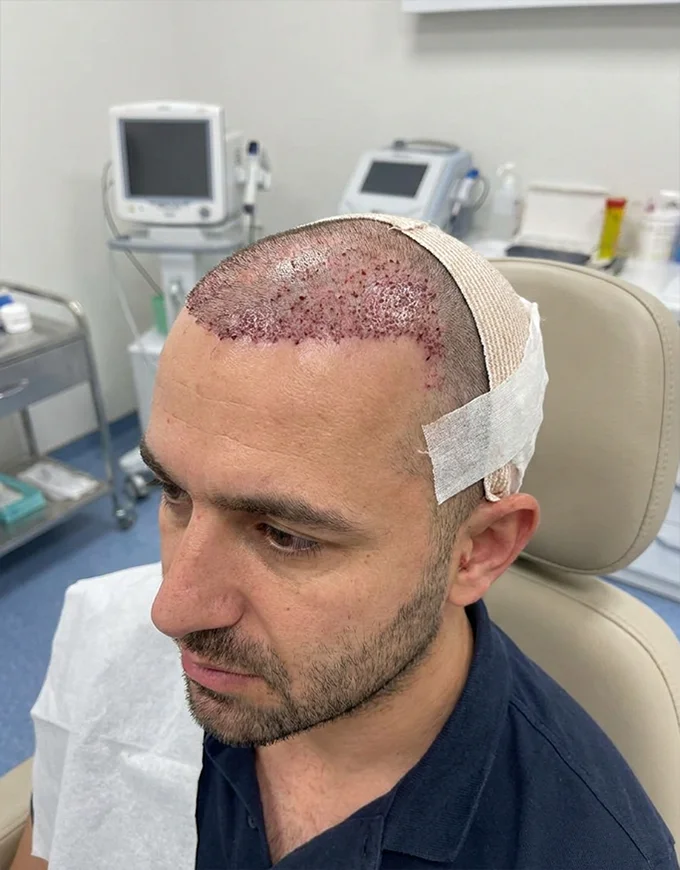
Immediate Post-Op Days 0-3 Mild redness, scalp swelling at the donor and recipient zones, and small scabs form around the transplanted grafts
Early Healing Days 4-10 Scabs dry and fall off, donor area settles, and swelling goes down. Suture removal for FUT patient after 10-14 days.
Shock Loss Week 2-4 Temporary hair shedding that gradually slows down after 4 weeks
Early Regrowth Months 3 to 4 Fine, new hair begins to emerge from the scalp. 
Density Improvement Months 6 to 9 New hair thickens and becomes pigmented with gradual density buildup
Peak Density Months 12-18 Most patients reach their peak density by month 12

 It is important to note that individual recovery timelines vary based on age, general health, scalp condition and compliance with post-operative care instructions. 

Recovery Considerations after Crown Hair Transplant in Kolkata
  • Avoid smoking or consuming alcohol for at least 2-3 weeks before and after hair transplant surgery.
  • Sleep with your head elevated to protect the grafts during initial recovery.
  • Do not scratch or touch the scabs and use prescription medication to relieve symptoms.
  • Due to Kolkata’s humid conditions, keep your scalp clean with a gentle wash as per your surgeon’s instructions. 
  • If you are travelling back to Kolkata after a hair transplant procedure via train or aeroplane, avoid travelling for at least 48-72 hours post-surgery. 
Why Crown Needs Expert Planning – Donor Laxity Explained

Why Crown Needs Expert Planning – Donor Laxity Explained

Why Crown Needs Expert Planning – Donor Laxity Explained

Crown hair transplant requires strategic planning. Donor area laxity assessment becomes a core part of treatment planning, especially for technique selection. It refers to the stretchability of the natural scalp at the donor area that impacts the graft harvesting, especially in the FUT technique. A tighter scalp with minimal laxity adds complexity to the procedure and makes graft extraction difficult. 

Accurate laxity assessment is essential for setting honest expectations about what can be achieved without compromising the donor area. Individuals with poor donor laxity are not ideal candidates for FUT strip harvesting, and in such cases, FUE and QHT methods are recommended for graft extraction. 

It is also important to understand that with age, the disease progresses, and the crown hair loss area also expands. It is therefore recommended to plan the crown transplant either later in life or to plan it in two stages. 

Stage 1: The current bald or visible areas with thinning are treated for density and coverage

Stage 2: A touch-up or second session may be recommended later in life, once the adjacent hair loss is stabilised, often during the late thirties or early forties. 

This phased approach supports long-term crown density without depleting the donor reserve in a single session. 

Why Patients Choose QHT for Crown Restoration in Kolkata

Why Patients Choose QHT for Crown Restoration in Kolkata

Why Patients Choose QHT for Crown Restoration in Kolkata

QHT Clinics are spread across 4 major cities in India: Delhi, Gurgaon, Haridwar, and Hyderabad. All clinics follow consistent surgeon-led clinical standards, with advanced technology, and NABH safety standards. Every plan is curated by experienced surgeons from consultation, planning and procedure. 

With 95% graft survival rate across more than 15,000 procedures, QHT’s proprietary technique, Quick Hair Transplant, has delivered consistent natural results for all patients. Every branch is equipped with modern tools like motorised punches and a SAVA implanter pen for precise graft extraction and placement, which help replicate the precise whorl pattern of crown hair. 

Our surgeons prioritise detailed consultation to ensure that treatment plans are tailored to individual hair loss stage, density requirements and expectations. 

Our surgical team includes highly experienced plastic surgeons, dermatologists, oral and maxillofacial surgeons and anaesthetists, including Dr S. Mishra,  who has 17 years of experience, Dr M. Jangra, Dr N. Mundhra, Dr P. Yadav, Dr A. A. More, and many other specialists across the QHT network. Whichever branch you choose for your treatment, you can rest assured and trust our hair specialists for your crown transplant.

Best and Natural-looking Hair Transplant Results

At QHT Clinic, we use clinically proven hair transplant techniques to give you the results you desire. Our goal at QHT is to deliver precision-executed results that blend seamlessly with your existing hair to create a denser, more natural-looking crown.

Result Vector
Devendra Before Image
Devendra After Image
Harsh Sharma  Before Image
Harsh Sharma  After Image
Probir Das Before Image
Probir Das After Image
Ajay  Before Image
Ajay  After Image
Dheerendra Before Image
Dheerendra After Image
Amit Kumar  Before Image
Amit Kumar  After Image

Hair Transplant Cost in India

7

Factors that Affect the Final Cost

  • The total number of grafts needed
  • The technique chosen
  • Any add-on therapies like PRP or GFC
  • Post-procedure care needs
Type of hair transplant Approximate Cost (INR)
Follicular Unit Extraction Starts from ₹ 70 Per Graft
Quick Hair Transplant Starts from ₹ 100 per graft
Follicular Unit Transplantation Starts from ₹ 50 Per Graft
Factors Affecting the Cost

Some factors that may affect the number of grafts required include:

  • Number of Grafts
    Number of Grafts

    More grafts needed means a higher total cost.

  • Surgeon and Team
    Surgeon and Team

    Skilled, doctor-led care affects the final price.

  • Technique Chosen
    Technique Chosen

    FUT, FUE, and QHT each have a different per-graft rate.

  • Aftercare and Follow Up
    Aftercare and Follow Up

    Post-surgery support and reviews add to the value.

Frequently Asked Questions

Global bodies such as the World Health Organization encourage an evidence-based approach to medicine and following ethical guidelines when discussing the options available to patients for surgical procedures.

01
How much does a crown hair transplant cost?

The cost of a crown hair transplant depends on the extent of baldness, donor area quality, and graft count required. Most crown procedures require between 1,500 and 4,000 grafts. At QHT Clinic, FUT starts from ₹50 per graft, FUE from ₹70 per graft, and the QHT technique from ₹100 per graft.

02
Is a crown hair transplant possible?

Yes. Crown hair transplants are routinely performed for crown thinning and baldness. The success of the procedure depends on donor availability, hair characteristics, and careful graft placement to recreate the natural whorl pattern.

03
Is the procedure painful?

No. Crown hair transplant procedures are performed under local anaesthesia. Patients remain comfortable throughout the procedure and typically experience only mild tenderness during the recovery period, which can be managed with prescription medications.

04
Can crown hair loss continue after the transplant?

Yes. Transplanted hairs are generally resistant to DHT and remain permanent. However, existing native hairs around the transplanted area may continue to thin over time, which is why long-term planning and medical management are important. For a crown transplant, generally a phased approach is recommended to preserve donor hair and accommodate future hair loss progression.

05
Can the crown and frontal hairline be treated in a single session?

In some cases, both zones can be addressed in one session. This depends on the total graft count required, your donor reserve, and overall health. Your surgeon will advise whether a combined session is appropriate or whether phased treatment is a better fit.

Book a Crown Assessment at QHT Kolkata

A crown hair transplant requires strategic planning, and the precision required to achieve natural density can only be delivered through a surgeon-led procedure. At QHT Clinic, crown hair transplants are planned with care and clinical precision. Initial assessment covers crown thinning pattern, predicted future loss, personalised graft count and donor reserve. Our team will walk you through the process, including what to expect and how to plan your visit around your schedule.

Book a crown assessment at your nearest QHT Branch