Hair Transplant Results in Kolkata: Real Before & After Patient Outcomes

See real before-and-after hair transplant results from QHT's Kolkata and West Bengal patients - consented, unedited, and sorted by Norwood grade and treated area. Consultation and scalp evaluation start online from Kolkata; the procedure is done at our nearest centre in Hyderabad or Delhi. Individual results vary and are assessed by the doctor.

Start an online consultation
Hair Transplant Results in Kolkata
Genuine, consented patient photos only
Results sorted by Norwood grade
Typical 95%+ graft survival
Aftercare Followup
Genuine, consented patient photos only
Results sorted by Norwood grade
Typical 95%+ graft survival
Aftercare Followup
Before & After Gallery

Genuine patient transformations

Before & After Gallery
Growth Timeline

Month 1 to month 12

Growth Timeline
Results by Grade

Filtered by Norwood grade, area

Results by Grade
Online Consultation

Begin your assessment from Kolkata

Online Consultation
Hair Transplant Results in Kolkata

Hair Transplant Results in Kolkata

Hair Transplant Results in Kolkata

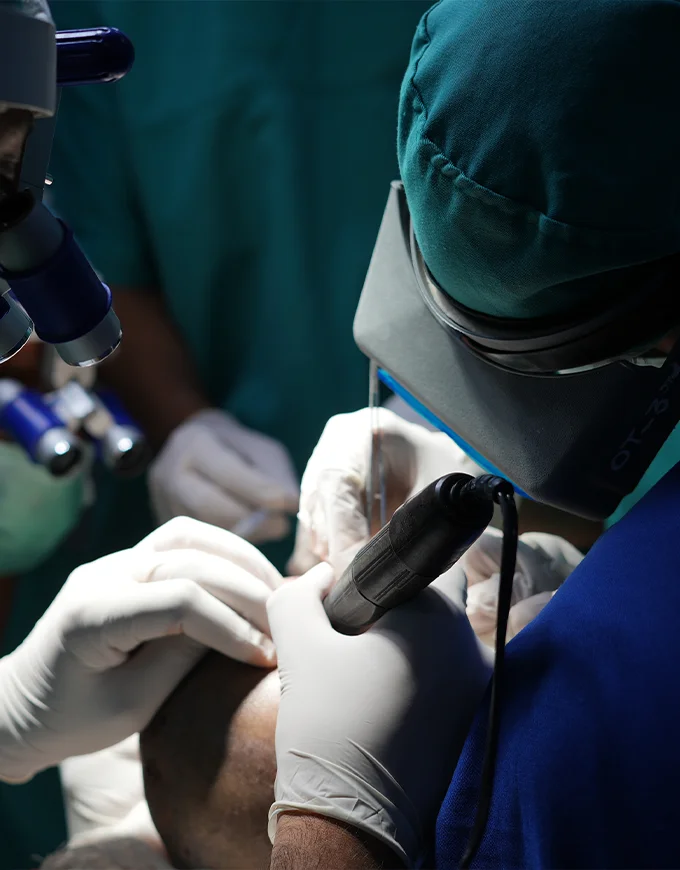
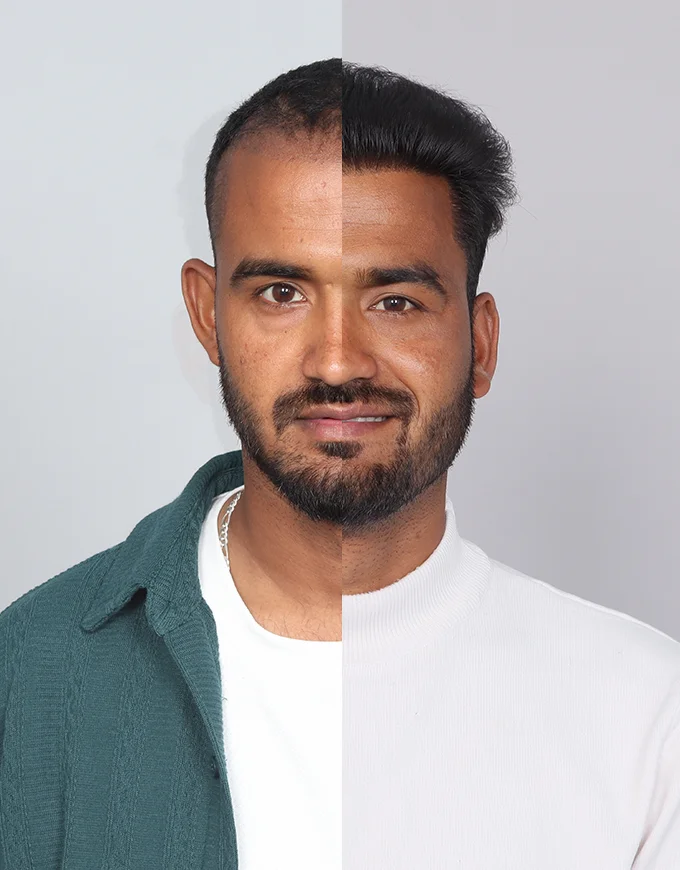
The hair transplant results in Kolkata shown on this page belong to real patients who were treated at QHT Clinic. Most of them are from Kolkata, and a few have come from other parts of West Bengal. Each case was treated with the technique that suited it best, such as FUE, FUT, or the clinic’s own QHT method. The photos were taken before the procedure and again as the hair grew back, so you can see the actual change at each stage.

QHT does not have a clinic in Kolkata. Our nearest centres are in Hyderabad and Delhi, which is where the patients in these photos had their procedure done. Your first step does not need any travel. The consultation and scalp evaluation can begin online from your home in Kolkata, and only the procedure is carried out at the centre closest to you.

It also helps to know how hair growth works after a transplant. The result is never complete in the first few weeks. New hair grows in slowly, and the final outcome usually takes around 12 months to appear fully. 

Your own hair transplant outcome will depend on your donor area and the stage of your hair loss. At QHT Clinic, a doctor assesses each patient first and then explains what is realistic for that individual.

Month-by-Month Hair Growth Timeline After a Transplant

Month-by-Month Hair Growth Timeline After a Transplant

Month-by-Month Hair Growth Timeline After a Transplant

Hair growth after a transplant follows a slow and steady path. The change does not happen overnight, and knowing what to expect at each stage helps you stay patient through the process. Here is how the months usually unfold for most patients.

Week 1: Healing Stage

The scalp is still recovering during the first week. Small scabs form around the transplanted grafts, and the area may look red or slightly swollen. This is normal and part of healing. Most patients return to their routine within 7 to 10 days.

Month 1: Shock Loss

Around this time, the transplanted hairs often start to fall out. This worries many people, but it is completely expected and has a name: shock loss. The follicle stays safe under the skin. Only the hair shaft sheds, and new growth begins from the same root later.

Month 3 to 4: Early Regrowth

This is when fresh hair starts to push through. The new hairs are thin and soft at first, almost like baby hair. Growth can look patchy and uneven at this stage, which is normal, because not every follicle wakes up at the same time.

Month 6: Visible Change

By the sixth month, the difference becomes clear. The new hair grows thicker and starts to cover the treated area. Most patients notice a real improvement in density when they look at their hair transplant 6 month result and compare it with their earlier photos.

Month 9: Continued Growth

Growth keeps improving through the ninth month. The hair gains more length and strength, and the earlier patchy look begins to even out. The hairline starts to settle into a more natural shape around this point.

Month 12: Final Result

The full outcome usually appears at around 12 months. The transplanted hair now matches the rest in thickness and can be cut, combed, and styled like normal hair. Your hair transplant 1 year result is the fair point to judge the success of the procedure.

For cases that need very high density, and for many female patients who keep their hair long, the final result can take a little longer. In these situations, the complete growth may show between 12 and 18 months.


How We Measure a Successful Result: Graft Survival & Success Rate

How We Measure a Successful Result: Graft Survival & Success Rate

How We Measure a Successful Result: Graft Survival & Success Rate

A successful result is not judged by one single number. There are three things that matter, and each one tells you something different about the outcome.

The first is graft survival. This is the percentage of transplanted follicles that settle in the new area and start growing hair. The second is density, which means how thick and full the hair looks once it has grown. The third is naturalness. A result can have good survival and good density, but it still has to look natural, with a hairline that suits the patient’s face and age.

At QHT Clinic, the graft survival rate is 95% or higher. This means that out of every 100 grafts placed, around 95 or more are expected to grow. Across the wider field, a well-performed hair transplant generally has a success rate of about 90% to 95%. These numbers depend on the skill of the surgeon, the quality of the donor hair, and how well the patient follows the aftercare.

According to the International Society of Hair Restoration Surgery (ISHRS), close to 10% of hair transplant cases worldwide need some form of corrective work later. This usually happens when the first procedure is done at a low-quality clinic or by an untrained team. It is one of the main reasons why choosing an experienced surgeon matters so much.

These figures are averages, and individual results vary from person to person. Your own outcome depends on your scalp condition, the stage of your hair loss, and your donor area. 

Results by Baldness Grade (Norwood Scale)

Results by Baldness Grade (Norwood Scale)

Results by Baldness Grade (Norwood Scale)

Hair loss is measured using the Norwood scale, which ranks male pattern baldness from the early stages to the most advanced. The grade matters because it decides how many grafts are needed and what kind of result is possible.

Grade 2 to 3

This is the early stage, where the hairline starts to recede at the temples. The bald area is small, so coverage is easier to achieve. Most of these cases need around 1,500 to 2,500 grafts to rebuild the hairline.

Grade 4

At this stage, the recession is deeper and the gap on the front of the scalp becomes more noticeable. Some thinning may also begin at the crown. These cases usually require about 2,500 to 3,500 grafts.

Grade 5

The bald area is now larger, and the bridge of hair between the front and crown becomes thinner. More grafts are needed to give proper density. The typical range here is around 3,500 to 4,500 grafts.

Grade 6 to 7

These are the most advanced stages, where a large part of the scalp has lost hair. The donor area has to be used carefully to cover as much as possible. Such cases often need 4,500 grafts or more, and in some patients the work is planned over more than one session.

Diffuse Pattern

In diffuse thinning, the hair loss is spread across the scalp rather than following the usual receding shape. This pattern needs careful planning, because the donor area itself may be thin. The graft count depends on how widespread the thinning is and is decided after a proper scalp check.

Crown vs Frontal Hairline Results at QHT

Crown vs Frontal Hairline Results at QHT

Crown vs Frontal Hairline Results at QHT

Every part of the scalp responds is not done in the same way to a transplant. The front of the head and the crown behave differently, and the results can look different too. Understanding this helps you set the right expectation before the procedure.

Frontal Hairline Results

The front of the scalp is the area that frames the face, so it has the biggest effect on appearance. Results here are usually strong and visible early, because the area takes grafts well and a good surgeon can design a hairline that looks natural. The natural hairline results in Kolkata patients often show clear improvement, with a soft and even front line that suits the face and age.

Crown Results

The crown, or the area at the back top of the head, is harder to treat. It is a rounded surface, so the hair has to be placed in a swirl pattern to look natural. It also needs more grafts to give the same fullness, and the growth can take a little longer to show. The crown transplant results in Kolkata patients improve steadily, but patience is needed, since the final density at the crown often appears closer to the 12-month mark.

FUE Results: Side-by-Side Comparisons

FUE Results: Side-by-Side Comparisons

FUE Results: Side-by-Side Comparisons

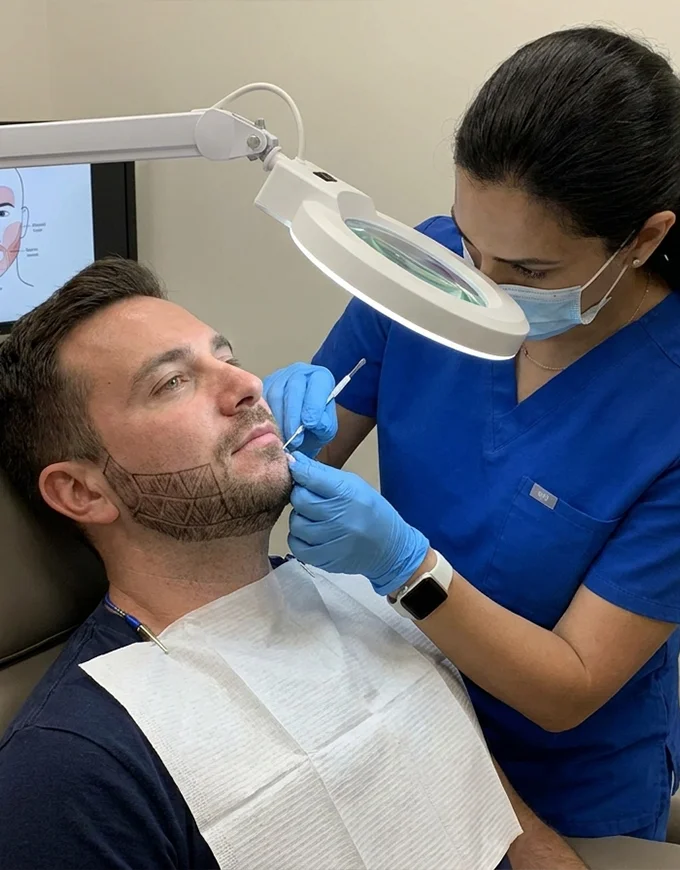
FUE is one of the most common techniques used today, mainly because it leaves no long scar and recovery is faster. In this method, each follicle is removed one by one from the donor area and placed in the thinning region. The FUE before and after cases in Kolkata patients show how this method restores coverage while keeping the donor area looking normal.

To help you understand your options, here is a simple comparison of the three techniques offered at QHT Clinic.

Feature FUT FUE QHT Method
How grafts are taken Removed as a strip of skin Removed one follicle at a time Removed and placed at the same time
Scarring A thin line scar at the back No line scar, tiny dot marks only No line scar, minimal marks
Recovery Slightly longer Around 7 to 10 days Around 7 to 10 days
Best suited for Advanced grades needing many grafts Most patients, scalp and facial hair High density, natural-looking results

Each technique has its own strength, and the right choice depends on your hair loss grade, your budget, and the result you want.

How Patients from Kolkata Travel to QHT

How Patients from Kolkata Travel to QHT

How Patients from Kolkata Travel to QHT

QHT does not have a clinic in Kolkata. Our nearest centres are in Hyderabad and Delhi (locations are shown at end of page), and this is where patients from Kolkata come for their procedure. This may sound like a drawback at first, but the process is planned so that travel is needed only once, and only when it is truly required.

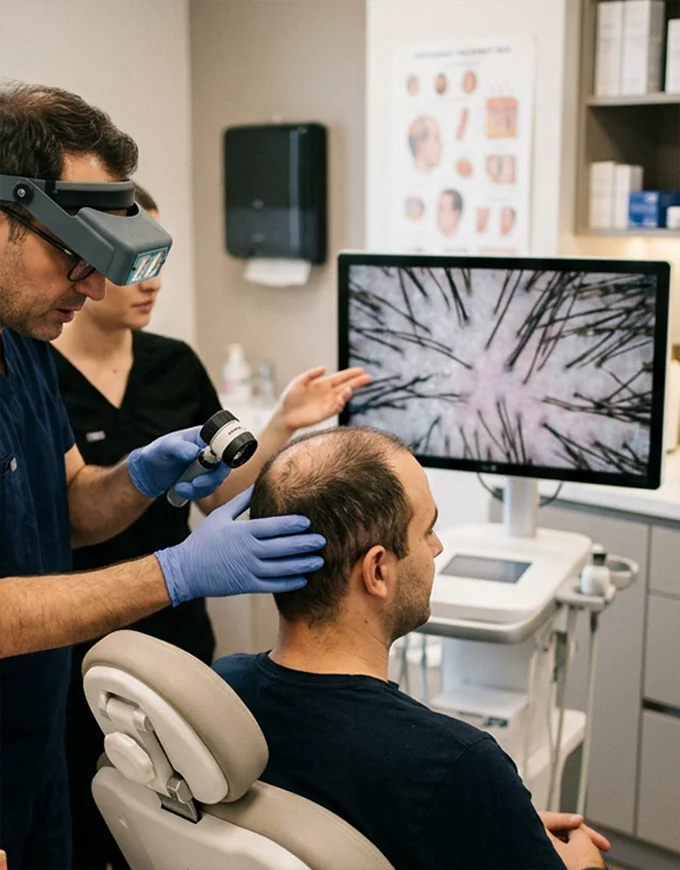
Everything starts with an online consultation, so there is no need to travel for the first step. During this consultation, the doctor asks about your hair loss history, how long it has been going on, any family history of baldness, and your general health. You can also share photos of your scalp for a closer look. This helps the doctor understand your case before suggesting anything.

A transplant is not always the first answer. If the doctor feels your hair loss can be controlled with medicine or other non-surgical treatment, that option is suggested before surgery. A transplant is recommended only when it is the right solution for your stage of hair loss. This honest approach saves you from a procedure you may not need.

When a transplant is the correct choice, the whole procedure is planned as a single trip. You travel to the centre closest to you, have the surgery, and rest for a short while. Most patients recover within 7 to 10 days (it may vary from person to person). After you return home to Kolkata, the follow-up care continues online, so you do not have to travel again for routine check-ins.

What Factors Affect Your Final Result?

What Factors Affect Your Final Result?

What Factors Affect Your Final Result?

Two patients didn’t get the exact same outcome from a hair transplant. The final result depends on several factors, and some of them are in your control while others are not. 

  • Donor density: The hair at the back and sides of your head is the donor supply. If this area is thick and healthy, the surgeon has more grafts to work with, which usually means better coverage. A weak donor area limits how much can be achieved.
  • Norwood grade: The stage of your hair loss decides how large the bald area is. A higher grade needs more grafts to fill, and very advanced cases may not reach the same density as early-stage ones.
  • Technique used: The method chosen for your case, whether FUE, FUT, or the QHT method, affects how the grafts are placed and how natural the result looks.
  • Surgeon skill: This is one of the most important factors. The angle, direction, and placement of each graft decide how natural the hairline looks. An experienced surgeon makes a clear difference here.
  • Aftercare: How well you follow the instructions in the first few weeks affects graft survival. Poor aftercare can damage new grafts before they settle.
  • Age and ongoing hair loss: Hair loss does not stop after a transplant. Your natural hair can keep thinning with age, so the result has to be planned with your future hair loss in mind.
  • The Kolkata environment: Daily conditions in Kolkata can also play a small role. The city stays hot and humid for most of the year, and heavy sweating on the scalp can cause irritation during the healing weeks. Dust and pollution may add to scalp build-up if the scalp is not kept clean. None of this changes the success of a well-done transplant, but it does affect comfort and scalp health during the recovery period.
Realistic Expectations: What You Can and Cannot Expect

Realistic Expectations: What You Can and Cannot Expect

Realistic Expectations: What You Can and Cannot Expect

It is important to know what is possible and what is not, so you can make a clear decision. Honest expectations also help you feel satisfied with your result.

What you can expect:

  • Natural-looking coverage that suits your face and age
  • A hairline designed to match your features
  • Permanent hair in the treated area, since the transplanted follicles keep growing
  • Hair that can be cut, washed, and styled like your normal hair
  • A clear improvement that becomes fully visible by around 12 months

What you cannot expect:

  • The thick, full density of teenage hair across the entire scalp
  • A result that hides every sign of hair loss in very advanced cases
  • Full growth right after the procedure, since it takes months to appear
  • A guarantee that your natural hair will never thin again
  • The same outcome as another patient, because every case is different

The aim of a good transplant is a result that looks natural and holds up over time. It is not about chasing a perfect head of hair that the donor supply cannot support.

How to Maintain Your Results Long-Term

How to Maintain Your Results Long-Term

How to Maintain Your Results Long-Term

The transplanted hair is permanent, but your natural hair is not. Male pattern baldness can continue even after a successful transplant, and the hair you were born with may keep thinning with age. This is why long-term care matters, so your result stays full and even for years.

Medicines play a useful role here. Treatments such as Minoxidil and Finasteride help slow down further hair loss and keep your existing hair healthy. These act only on hair that is still alive, so starting early gives better protection. Your doctor will advise what suits your case.

Non-surgical treatments can support the result as well. GFC therapy and PRP therapy use growth factors from your own blood to strengthen the follicles and improve hair quality over a few sessions. Many patients use these as a maintenance step after a transplant. 

The Kolkata weather also needs a little attention during recovery. Since the city stays hot and humid, keep your scalp clean and wash it exactly as the doctor advises, so sweat and dust do not build up on the healing area. Stay out of direct sun for the first few weeks, and use any scalp products that have been prescribed to you. These simple steps protect the new grafts while they settle in.

Regular follow-ups are part of good care. Since QHT handles follow-ups online, you can stay in touch from Kolkata without travelling again. A simple and steady routine of clean scalp care, prescribed medicines, and a healthy lifestyle goes a long way in protecting your hair transplant result over the long term.

Real Before & After Gallery

The photos below show real hair transplant results of patients who were treated at QHT Clinic. With the patient’s Norwood grade, graft count, the technique used, and the number of months after the procedure. This way, you can see how the hair looked before, and how it grew back over time. Take your time to go through them and notice the change at each stage.

Result Vector
Devendra Before Image
Devendra After Image
Harsh Sharma  Before Image
Harsh Sharma  After Image
Probir Das Before Image
Probir Das After Image
Ajay  Before Image
Ajay  After Image
Dheerendra Before Image
Dheerendra After Image
Amit Kumar  Before Image
Amit Kumar  After Image

Hair Transplant Cost in India

7

Factors that Affect the Final Cost

  • The total number of grafts needed
  • The technique chosen
  • Any add-on therapies like PRP or GFC
  • Post-procedure care needs
Type of hair transplant Approximate Cost (INR)
Follicular Unit Extraction Starts from ₹ 70 Per Graft
Quick Hair Transplant Starts from ₹ 100 per graft
Follicular Unit Transplantation Starts from ₹ 50 Per Graft
Factors Affecting the Cost

Some factors that may affect the number of grafts required include:

  • Number of Grafts
    Number of Grafts

    More grafts needed means a higher total cost.

  • Surgeon and Team
    Surgeon and Team

    Skilled, doctor-led care affects the final price.

  • Technique Chosen
    Technique Chosen

    FUT, FUE, and QHT each have a different per-graft rate.

  • Aftercare and Follow Up
    Aftercare and Follow Up

    Post-surgery support and reviews add to the value.

Frequently Asked Questions

Global bodies such as the World Health Organization encourage an evidence-based approach to medicine and following ethical guidelines when discussing the options available to patients for surgical procedures.

01
When will I see the final results of my hair transplant?

The full result usually takes around 12 months to show. New hair starts coming in by the third or fourth month, and a clear change is visible by month six. In cases that need high density, and for many female patients, the final result can take 12 to 18 months.
02
Why does the transplanted hair fall out after surgery?

This happens around the first month and is completely normal. It is called shock loss. Only the hair strand sheds, while the root stays safe under the skin. New hair grows back from the same follicle in the months that follow.

03
Are hair transplant results permanent?

The transplanted hair is taken from the back and sides of the scalp, which are resistant to balding. This hair keeps growing for life. Your natural hair, however, can still thin with age, so the result is planned with that in mind.

04
Do hair transplant results look natural?

Yes, when the procedure is done by a skilled surgeon. A natural result depends on the angle, direction, and placement of each graft, along with a hairline designed to suit your face and age. The before and after cases on this page show how natural the outcome can look.

05
What is the success rate of a hair transplant?

A well-performed hair transplant generally has a success rate of about 90% to 95%. At QHT Clinic, the reported graft survival is 95% or higher. These are averages, and your own result depends on your donor area, scalp condition, and aftercare.

06
Can I get a hair transplant in Kolkata, or do I need to travel?

QHT does not have a clinic in Kolkata. Our nearest centres are in Hyderabad and Delhi, where patients from Kolkata travel for the procedure. The first step does not need any travel, since your consultation and scalp evaluation begin online from home.

07
Will I need more than one session to get full results?

Most patients get their result in a single session. Very advanced cases, such as Grade 6 or 7, may be planned over more than one session because a large area needs to be covered. The doctor decides this after checking your donor area.

08
How long does recovery take after the procedure?

Most patients recover within 7 to 10 days. Since QHT handles follow-ups online, you can continue your recovery check-ins from Kolkata without travelling again.

Book a Free Consultation: See If You Qualify

Not everyone needs a hair transplant, and the only way to know what suits you is a proper assessment. At QHT Clinic, a doctor reviews your hair loss history, checks your scalp, and explains whether a transplant is the right step or if a non-surgical option would work better for your stage of hair loss. Kolkata patients first step is free and fully online. You do not have to travel anywhere to get started. Share a few details and some photos of your scalp, and our team will guide you on what is realistic in your case.

Start Online Consultation