



How Sleep Affects Hair Growth and Hair Loss
You ran on five hours of sleep for weeks. Late work, late scrolling, a busy mind. Now your comb holds more hair than it used to, and you start to wonder if the two are connected. It is a fair question.
The short answer is yes, sleep and hair are linked. But here is the part most blogs skip: in most cases, this kind of shedding is temporary, not lasting baldness.
Poor sleep is also more common than people think. According to CDC data, the share of adults not getting enough sleep ranged from about 30% to 46%, depending on the state.
This article is medically reviewed and based on current dermatology research, including a 2026 review that analysed 29 studies on sleep and hair loss. You will learn how sleep affects hair growth at each stage, what pushes hair toward shedding, and the simple steps that help it recover.
If you are experiencing hair loss combined with a history of poor sleep, it is worth a proper check. The team at QHT Clinic can examine your scalp, identify the root cause, and clearly explain your options.
Quick Answer
Does Sleep Affect Hair Growth?Yes, sleep has a direct effect on hair growth. During deep sleep, melatonin rises and cortisol falls, which helps support the hair’s growth (anagen) phase. Long-term poor sleep raises cortisol and upsets your body clock, pushing hairs into the shedding (telogen) phase. This is usually reversible once sleep improves.
|
Table of Contents
- How Sleep Affects Hair Growth (The Science)
- Does Lack of Sleep Cause Hair Loss?
- How to Stop Sleep-Related Hair Fall
- Myths About Sleep and Hair Loss
- Frequently Asked Questions
How Sleep Affects Hair Growth (The Science)
Your hair grows in a cycle. Sleep helps that cycle run well. During deep sleep, your body repairs tissue and supports your immune system. Your hair follicles rely on this nightly repair time too. Let us look at the main parts.
The Hair Growth Cycle
A follicle is the tiny pocket in your skin that grows a hair. Each hair goes through three main stages.
First is anagen, the growth stage. This is when the hair grows longer. A follicle can stay in the anagen stage for up to four years, and around 80% to 90% of your hair is in this stage at any time.
Next is catagen, a short change stage. The hair stops growing. Only about 5% of hair is in this stage at any given time.
Last is telogen, the shedding stage. Old hairs fall out, and new hairs begin to grow in their place.
Good sleep helps keep more hair in the growth stage for longer. Poor sleep can push more hairs into the shedding stage too soon.
Melatonin: Your Follicle’s Growth Signal
Melatonin is a hormone your body makes when it gets dark. It helps you feel sleepy. It also plays a role in your hair.
Hair follicles have melatonin receptors. This means they can respond to melatonin. Melatonin may help keep follicles in the growth phase.
When you sleep poorly, your melatonin can drop. Less melatonin may mean less support for healthy growth. This is one clear example of how sleep affects hair growth at the hormone level.
Cortisol and the Stress Connection
Cortisol is your main stress hormone. It is meant to rise and fall throughout the day. Good sleep helps keep it in balance.
When you do not sleep well, cortisol can stay high. High cortisol over a long time is linked with more hair shedding. Stress and poor sleep also feed each other.
The more stressed you feel, the harder it is to sleep. The less you sleep, the more stressed you feel. This loop can show up in your hair over time.
Your Circadian Rhythm and Follicle Stem Cells
Your body has an inner clock called the circadian rhythm. It tells your body when to sleep and when to wake. Studies suggest your hair follicles follow this clock as well.
Special cells in the follicle, called stem cells, help grow new hair. These cells work best when your body clock is steady. Late nights, shift work, and frequent travel can upset this clock. Over time, this may affect how well your follicles work.
Does Lack of Sleep Cause Hair Loss?
So, does lack of sleep cause hair loss on its own? In most cases, sleep is one part of a bigger picture. But the link is real, and the research keeps growing.
Sleep Deprivation and Hair Loss: What the Research Shows
A systematic review looked at how sleep problems connect to hair loss. The reviewers studied 29 papers. Alopecia areata was the most studied type, with 14 studies. Androgenetic alopecia, which is a common pattern of hair loss, came next with 11 studies. Telogen effluvium had 3 studies.
The review was honest about its limits. It noted that the overall quality of evidence was low to moderate. In plain words, the link between sleep deprivation and hair loss is real, but stronger studies are still needed. Sleep is a factor. It is not always the only cause.
Telogen Effluvium: The Main Type of Sleep-Related Shedding
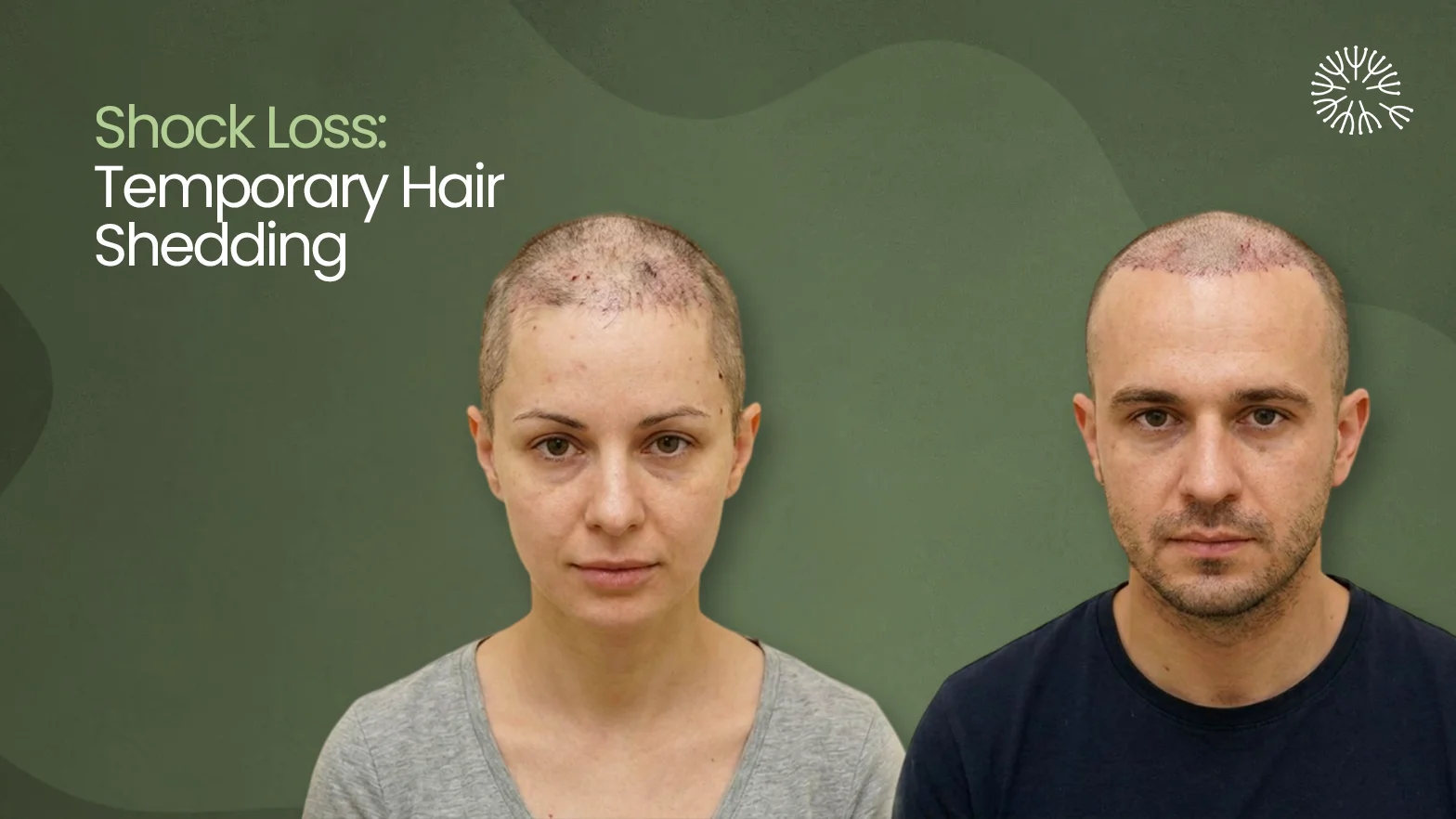
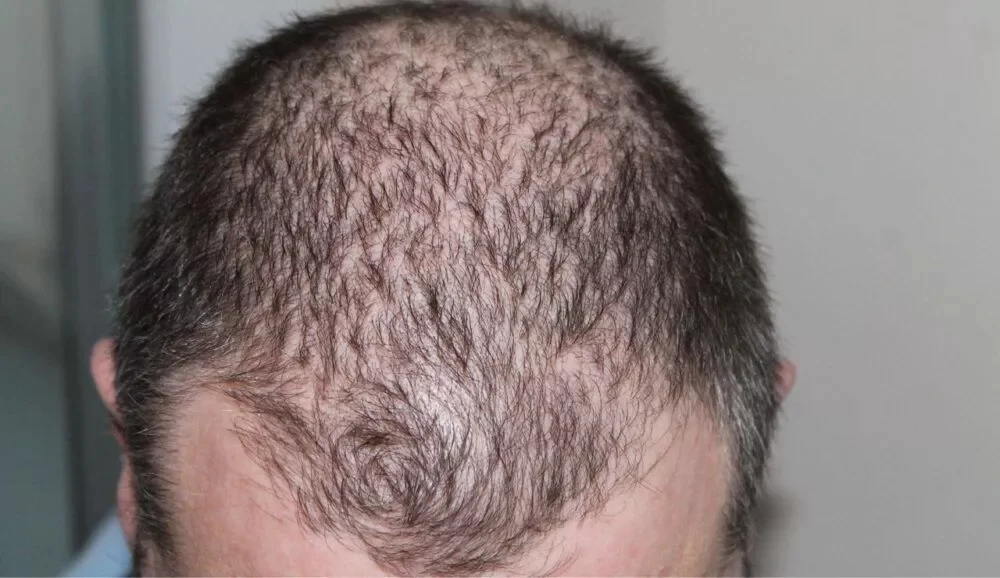
Telogen effluvium is the most common type of stress-related shedding. It happens when many hairs move into the shedding phase at the same time. You may notice more hair in your brush or your shower drain.
It is usually temporary. Hair often grows back within three to six months, even without treatment, once the trigger is managed. Better sleep and lower stress can help your hair return to its normal cycle.
Sleep Disorders and Alopecia Areata
Some people have sleep disorders that make it hard to get rest. Here are common ones, such as insomnia (trouble falling or staying asleep), sleep apnea (pauses in breathing during sleep), and restless legs syndrome.
These conditions can lower both the amount and the quality of your sleep. Poor, broken sleep adds stress to the body. Research has also linked sleep problems with a higher chance of alopecia areata, which is an autoimmune type of hair loss. If you snore loudly or feel very tired during the day, it is worth speaking to a doctor.
Signs your shedding is sleep-related
How can you tell if your sleep is part of the problem? Watch for these signs:
- You sleep less than 7 hours most nights.
- Your shedding started a few weeks after a stressful or sleepless period.
- You feel tired, low, or foggy during the day.
- Your hair looks thinner all over, not just in one small patch.
These signs do not confirm the cause on their own. But together, they are a useful clue.
If everyday stress is affecting your sleep, URoots Calm Mind, a daily wellness supplement developed by QHT Clinic experts, is designed to support mind-body balance.
How to Stop Sleep-Related Hair Fall
Once you see how sleep affects hair growth, the fixes feel simple. Most steps are easy to start at home.
Fix the Root Cause: Sleep Hygiene that Protects Hair
Good sleep habits are the first step. Aim for 7 to 9 hours of quality sleep each night. The amount can vary from person to person, based on age, health, and genes.
Simple habits that help:
- Go to bed and wake up at the same time every day, including weekends.
- Keep your bedroom quiet, relaxing, and at a cool temperature, around 18 to 21 degrees C.
- Turn off phones, TVs, and other screens at least 30 minutes before bed.
- Avoid large meals, alcohol, and evening caffeine close to bedtime.
These habits help lower cortisol and steady your body clock. Both are good for your hair.
Diet and Nutrition for Sleep and Hair
What you eat affects both your sleep and your hair. Your hair needs protein to grow. It also needs key nutrients like iron, zinc, and magnesium.
In India, many people follow a vegetarian diet. This can be very healthy, but it is sometimes low in iron, zinc, or vitamin B12. Low levels of these can add to hair shedding. Good plant sources include lentils, beans, paneer, nuts, seeds, and leafy greens. Foods rich in magnesium, like nuts and whole grains, may also support better sleep.
If you are unsure about your levels, a simple blood test can help. A doctor can guide you on safe supplements if you need them. Please do not start high-dose supplements on your own.
Reduce Friction While You Sleep
Small changes at night can protect your hair. A silk or satin pillowcase causes less friction than cotton. This can mean less breakage and frizz, mainly for curly or dry hair.
Be gentle with wet hair, since it breaks more easily. Try to avoid very tight buns or ponytails at night. These habits will not regrow lost hair, but they help protect the hair you already have.
When Lifestyle is Not Enough: Clinical Options
If your hair shedding lasts more than three months despite improved sleep and diet, or if you notice other symptoms such as bald patches or rapid hair loss, see a dermatologist or hair specialist.
A specialist can check for other causes, such as thyroid problems, low iron, or pattern hair loss. They may also suggest treatment options. Common options include minoxidil, PRP (platelet-rich plasma), and GFC therapy. The right plan depends on your cause, so a proper check matters.
Myths About Sleep and Hair Loss
There is a lot of mixed advice online. Here are four common myths, made clear.
Myth: Sleeping more regrows lost hair overnight.
Fact: Sleep helps your hair cycle work well. But hair grows slowly. Regrowth takes months, not a single night.
Myth: Only stress matters, not sleep.
Fact: Stress and sleep are closely linked. Poor sleep raises stress hormones, and stress harms sleep. Both play a role in hair health.
Myth: Sleep-related hair loss is permanent.
Fact: In most cases, it is temporary. Telogen effluvium often improves within three to six months once the trigger is fixed.
Myth: Eight hours fix everything, no matter what.
Fact: Sleep is important, but it is not the only factor. Diet, health, genes, and stress all matter too.
Now you know how sleep affects hair growth, and what you can do to protect it. Start with steady sleep, a balanced diet, and gentle hair care. If your shedding does not improve in a few months, reach out to the QHT Clinic for a proper check.
Conclusion
Sleep and hair are more connected than most people realise. When you sleep well, your body keeps cortisol low and melatonin steady. This helps your hair stay in the growth phase longer. When sleep is poor over a long time, the balance shifts, and shedding can follow.
The good news is that this type of hair loss is usually temporary. Most people see improvement within a few months once their sleep and stress levels get better.
Start with the basics. Try to sleep 7 to 9 hours each night. Keep a regular bedtime. Eat a balanced diet with enough protein, iron, and zinc. These small, consistent steps make a real difference over time.
If your hair is still shedding after three months, it is a good idea to speak to a specialist. There may be another cause, such as a thyroid issue or a nutritional gap, that needs attention.
If stress is part of what is affecting your hair, speaking to the right experts can help. QHT Clinic offers personalised consultations to find the real cause of your hair fall, backed by over 3,000 positive reviews and a 4.8-star rating from patients across India.
Frequently Asked Questions
How many hours of sleep do you need for hair growth?
Most adults need 7 to 9 hours of sleep each night. During deep sleep, your body repairs itself and supports healthy hair growth. Consistently sleeping less than 7 hours can raise cortisol levels, which may push more hairs into the shedding phase over time.
Can lack of sleep cause permanent hair loss? Is it reversible?
In most cases, sleep-related hair loss is not permanent. It is usually a condition called telogen effluvium, which is temporary. Once your sleep improves and stress levels come down, hair often grows back within three to six months. Persistent shedding should be checked by a specialist.
Will my hair grow back after I improve my sleep?
Yes, in most cases it will. Hair grows slowly, so do not expect overnight results. Most people notice less shedding within a few weeks of better sleep. Visible regrowth usually takes three to six months. A balanced diet and lower stress levels support the recovery process, too.
Does melatonin help hair growth?
Melatonin is a natural hormone that rises during sleep. Hair follicles have melatonin receptors, and research suggests it may help support the growth phase of the hair cycle. Getting quality sleep is the most natural way to keep melatonin levels steady. Always consult a doctor before taking melatonin supplements.
When should I consult a hair specialist?
If your hair is shedding heavily for more than three months, it is time to see a specialist. You should also consult if you notice patchy loss, a receding hairline, or thinning that does not improve with better sleep and diet. A proper check helps find the real cause.
Book a Consultation Today
Latest Videos
-

Rajpal Yadav | Bollywood Actor Hair Transplant Journey at QHT Regrow Clinic Haridwar
Click to Watch
-

FUE Hair Transplant Results | DAYA's FUE Hair Transplant Results
Click to Watch
-

Best Hair Transplant Result 2021 || NW Grade VI A || 3,422 Grafts
Click to Watch
-

Best Hair Transplant Result 2022 | Grade 4
Click to Watch
-

YouTuber Mehtab Saifi Hair Transplant
Click to Watch
-

ACP Pradyuman Hair Transplant - Actor's Hair Transplant
Click to Watch