



How to Choose the Best Hair Transplant Clinic Near You
Searching for the best “hair clinic near me” and feeling overwhelmed by the number of options that show up on your screen? Narrowing down the right one takes considerably more time and energy, especially if you are unfamiliar with the factors that make a clinic trustworthy and an ideal choice for the treatment.
The number of transplant clinics is growing faster than the number of genuinely qualified surgeons. The market is saturated with identical ads, five-star ratings, and websites that look almost the same. Knowing how to see past the sponsored results is the most important step you can take before committing to any treatment.
This guide will help you to identify the most important factors that actually matter while making the decision. Proximity and cost should not be the priority over quality.
At QHT Clinic, we have seen patients who struggle with the poor outcomes of making the wrong choice. We value your time and money, and prioritise guidance over selling treatments. Our experts believe in thorough evaluation before any recommendation.
No sugarcoating, only truth and results. Book a free consultation to connect with our experts.
Quick Answer Box
What Should You Actually Look For in a Hair Clinic?The right clinic is defined by surgeon credentials, technique quality, safety standards, pricing transparency, and post-operative support. When evaluating your choice for a hair clinic near you, check for:
|
Table of contents
- Why ‘Hair Clinic Near Me’ Is the Wrong Approach for Choosing a Hair Clinic
- Know Your Hair Loss Before You Walk Into Any Clinic
- Checkboxes to Tick Before Finalising a Hair Transplant Clinic
- Red Flags to Watch Out For
- Why QHT Clinic Is the Ideal Choice When You Search ‘Hair Clinic Near Me’
- Common Myths About Choosing a Hair Clinic (Busted)
- Frequently Asked Questions
Why ‘Hair Clinic Near Me’ Is the Wrong Approach for Choosing a Hair Clinic
An accessible clinic closer to your home is a convenience, but it should not be the deciding factor. The hair loss treatment, especially a hair transplant, is a permanent surgical procedure. The results stay with you for life. A clinic farther away from your location that offers surgeon-led procedures and consistent natural, long-lasting results, is significantly a better choice than the ones closer to your location but lack the basic requirements.
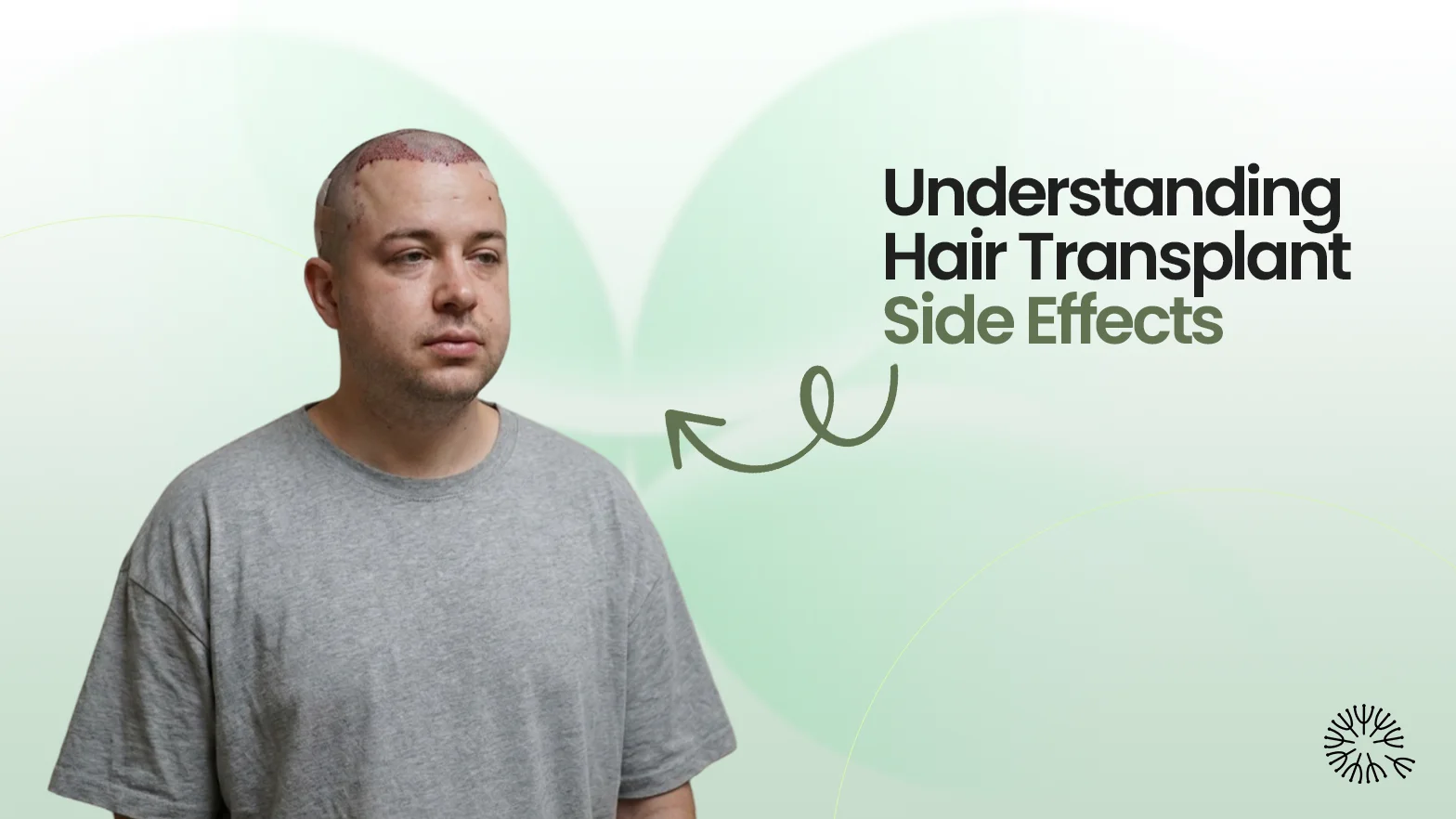
Any error in judgment or technique can lead to consequences that are difficult and expensive to correct. A failed transplant is not just financially draining, but it also takes a serious toll on confidence and mental well-being.
The desired results can only be achieved after a thorough scalp evaluation, consultation and personalised treatment planning. The surgeon’s training and aesthetic judgement, the technique chosen, graft handling during surgery, and post-operative care, all of these factors together determine the quality of your final result.
Know Your Hair Loss Before You Walk Into the Nearby Hair Transplant Clinic
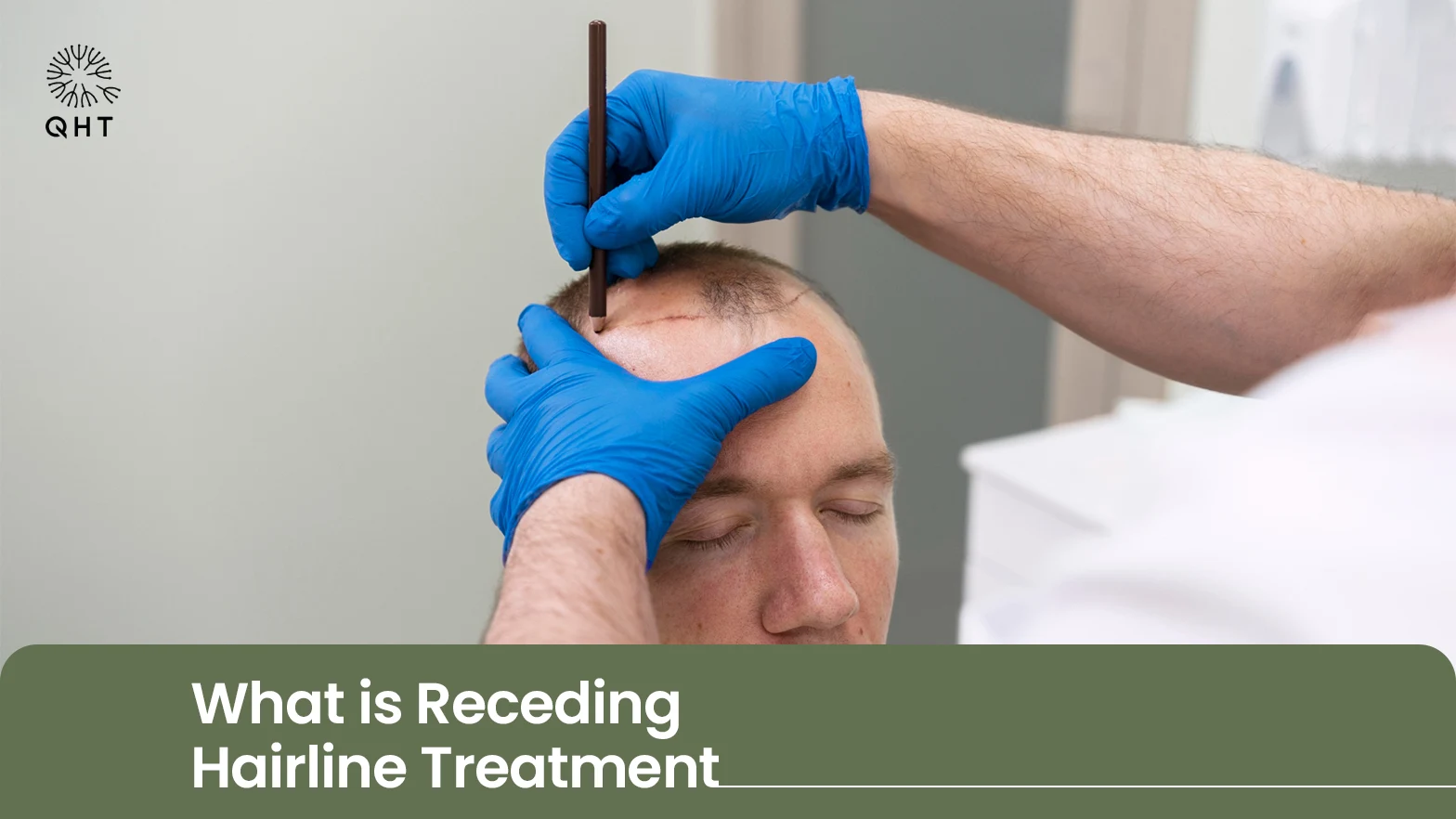
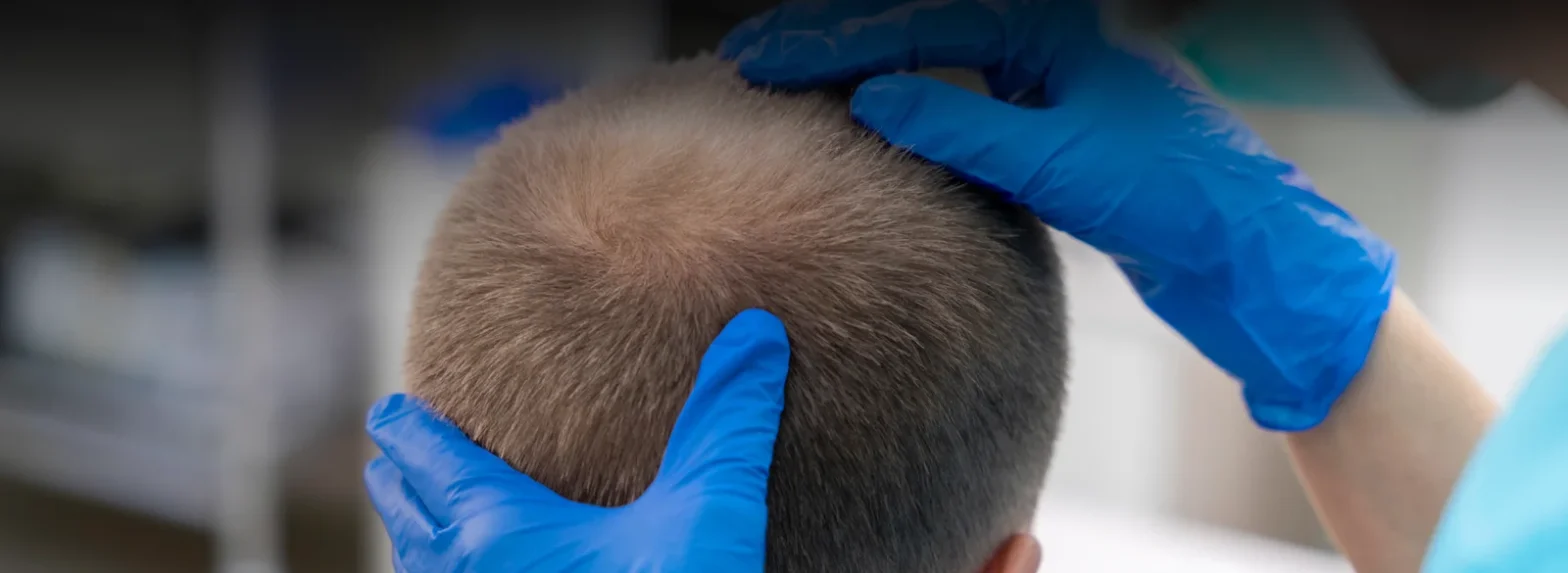
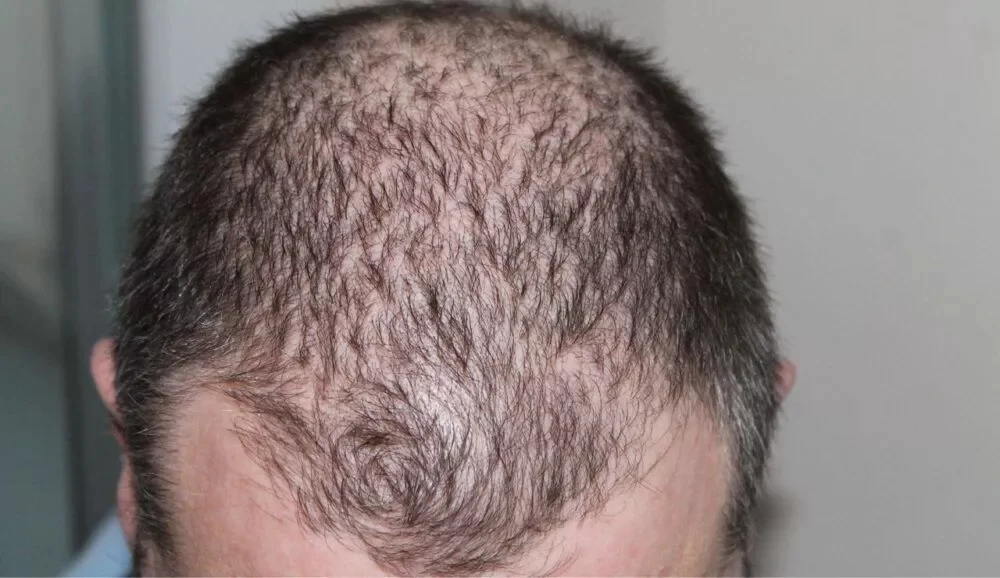
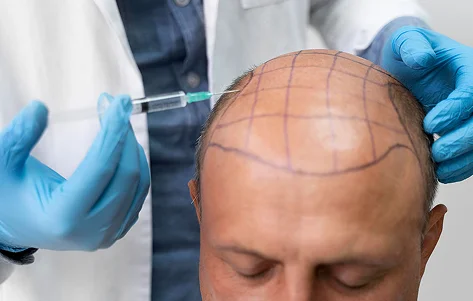
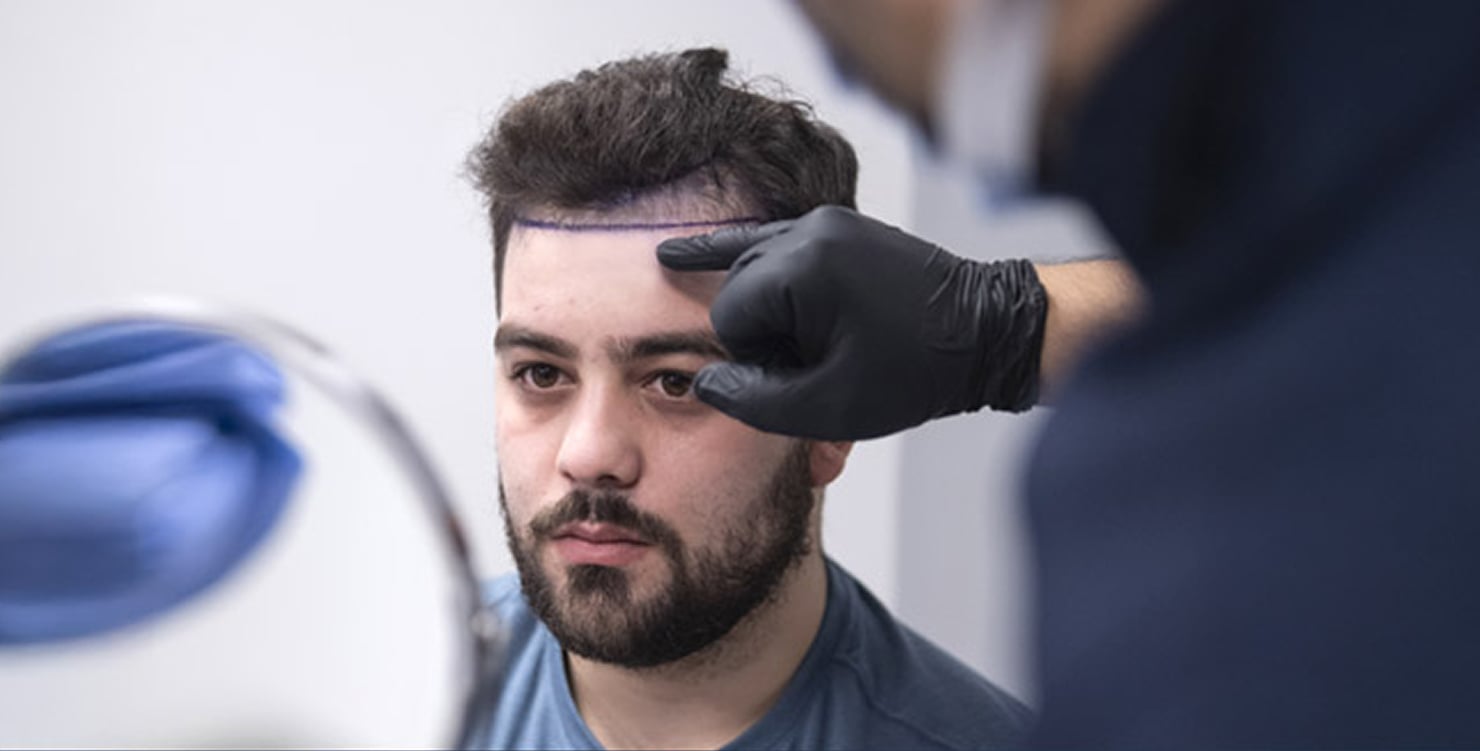
One of the most important and most overlooked steps in the hair restoration journey is understanding your hair loss before booking anything. A clinic that quotes prices without evaluating your scalp first is a huge red flag. The right treatment is determined by the cause of hair loss, whether it is still actively progressing, and your current grade on the Norwood scale.
Here is what a proper pre-treatment evaluation looks like:
The Cause of Your Hair Loss Matters
Not all hair loss is the same, and not all of it responds well to conventional treatments. Androgenetic alopecia is the most common cause of hair loss, affecting about 50% of men by age 50 and nearly 80% by age 70. In women, female pattern hair loss accounts for approximately 50% of cases between ages 25-40, with prevalence increasing post-menopause. This condition is addressed through permanent surgical restoration due to its genetic and hormonal nature.
Other causes that result in hair loss are related to hormonal changes, nutritional deficiencies, thyroid disorders, medication or treatment-related hair loss and localised damage from physical injuries, trauma or burns.
A qualified trichologist or hair restoration surgeon will determine the cause through scalp evaluation and medical history before recommending any procedure.
Is Your Hair Loss Still Active?
If your hair loss is still active and progressing rapidly, the hair transplant cannot be performed right away; the condition needs to be stabilised first with medications like finasteride or minoxidil, or additional treatments like PRP (platelet-rich plasma therapy), and LLLT (low-level laser therapy) for at least 6-12 months before surgery is considered.
Your Norwood Grade
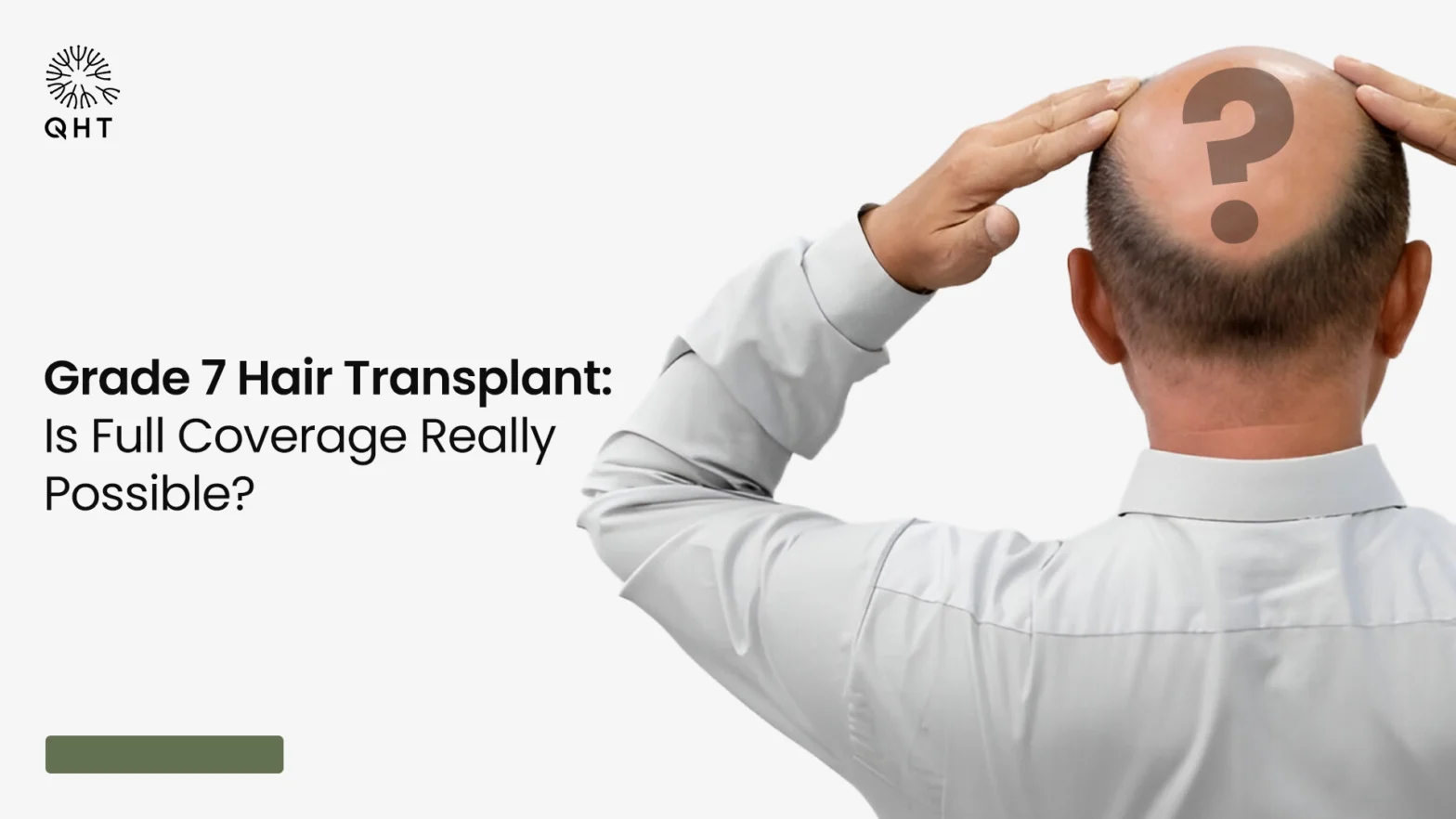
The Norwood Hamilton scale classifies male pattern baldness from grade 1 to 7, which determines the number of grafts needed to cover the thinning or bald areas. It also determines the suitable technique and the realistic outcome. The number of grafts adds to the cost, and without clinical assessment, no clinic can accurately quote a graft count or a final price.
Checkboxes to Tick Before Finalising a Hair Transplant Clinic
When comparing clinics near you, run each one through the following checkpoints.
Surgeon-Led Procedure
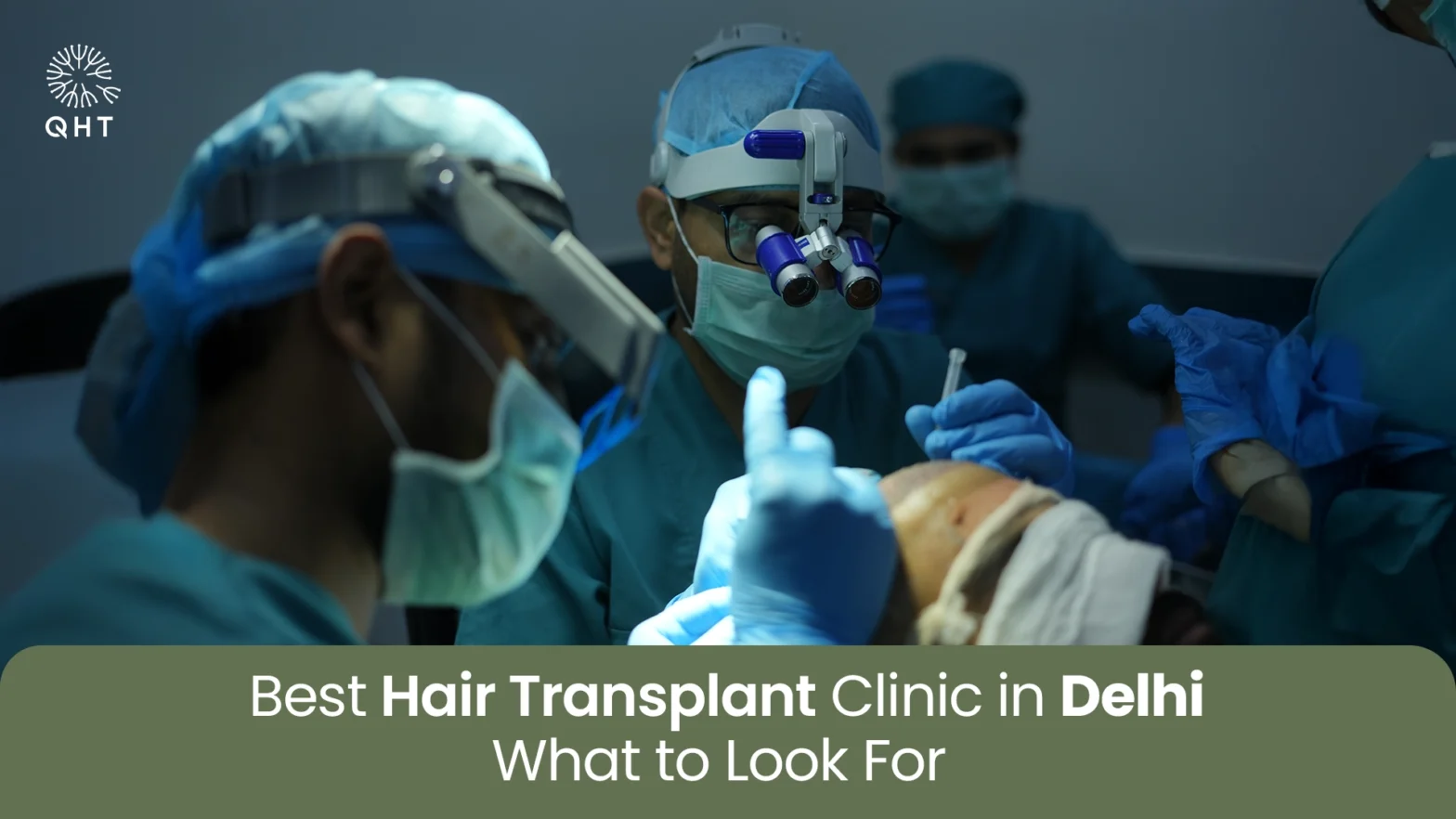
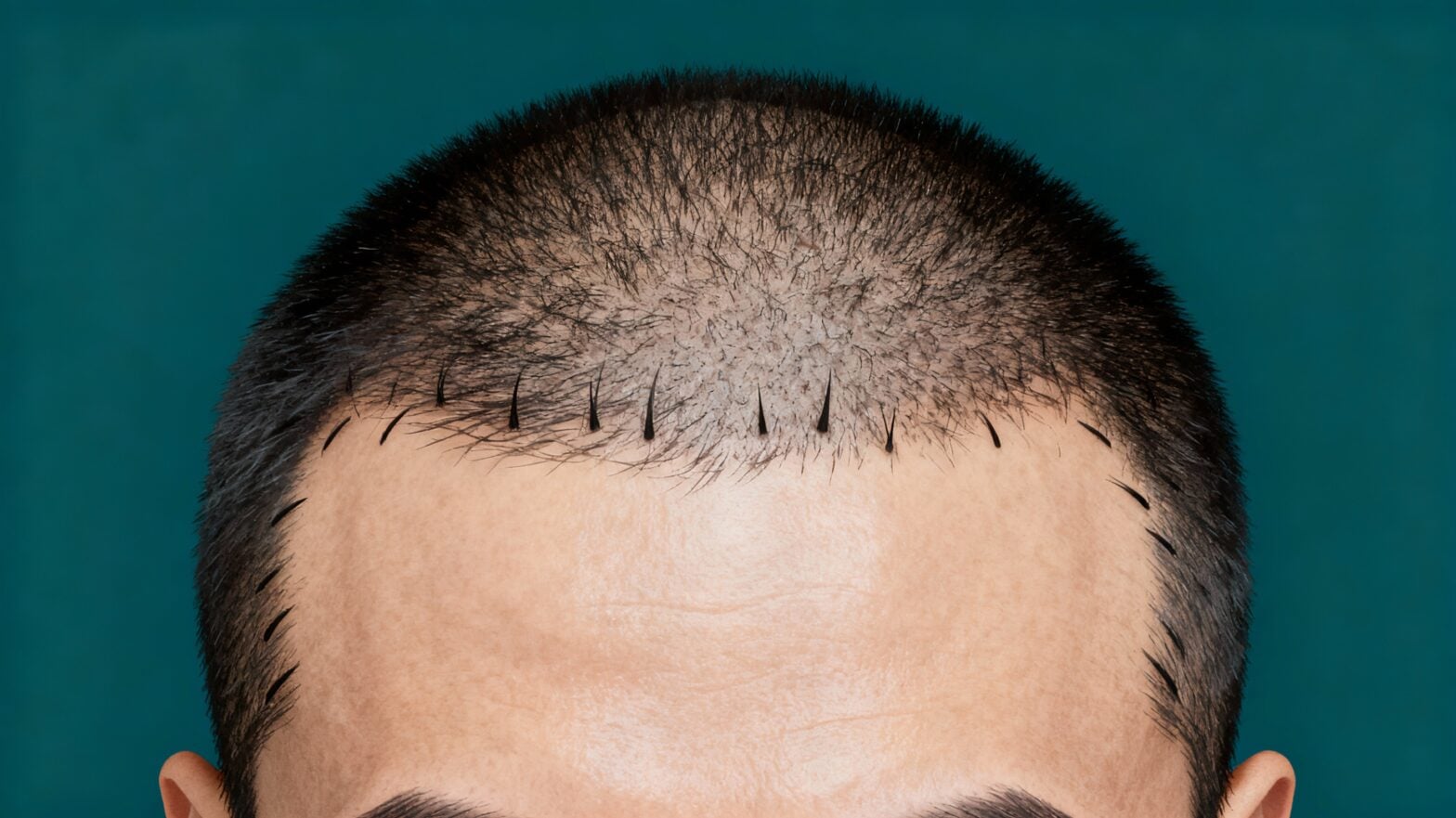
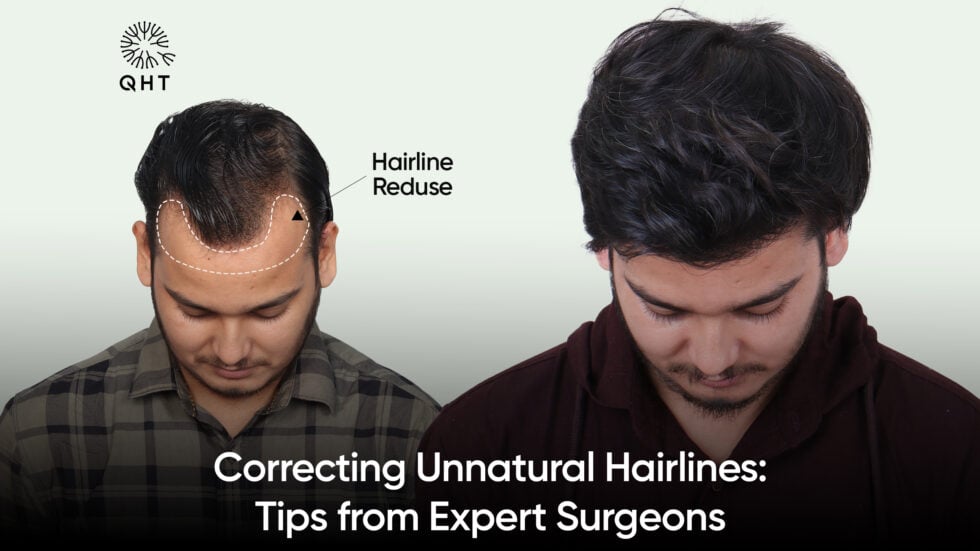
This is the single most crucial factor. Hair transplant, when led by technicians or unlicensed, inexperienced professionals, produces unsatisfactory results and correcting them requires further surgery. Surgeons are rigorously trained to perform the procedures with the aesthetic precision that the procedure demands. The key distinction lies in the thorough evaluation of the scalp and the determination of the cause of hair loss. The natural and long-lasting results depend on hairline design, precise graft extraction and placement at correct angles and depth, graft handling, and appropriate technique selection. If a clinic has a surgeon performing the procedure, you are in safe hands. You can ask the clinic directly to ensure that a surgeon is present for consultations and surgical restoration.
The Techniques Used
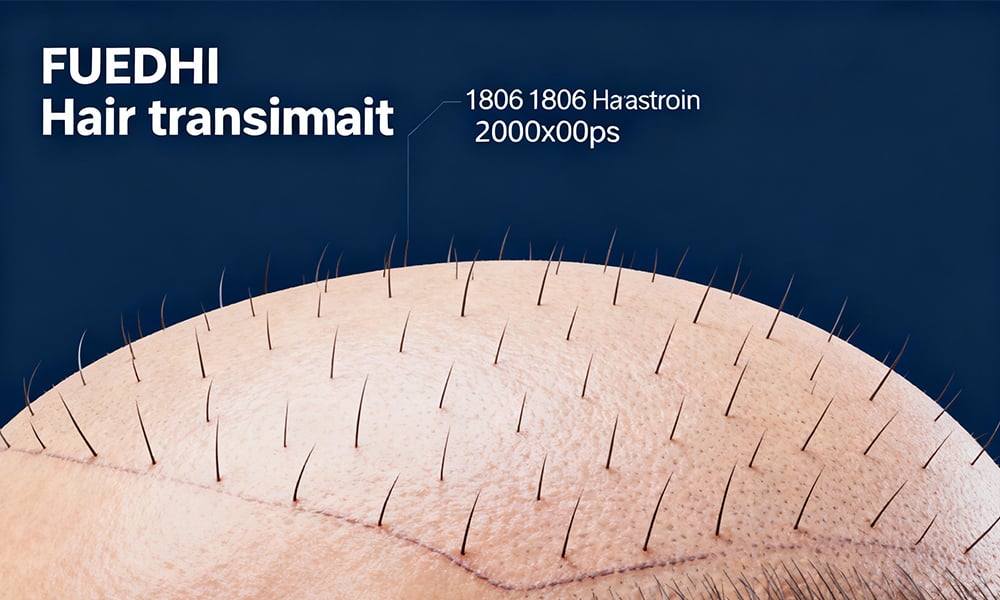
The techniques such as FUE, FUT and QHT have specific indications. The selection is based on baldness grade, donor density, and treatment goals. The advanced techniques like FUE and QHT deliver superior results with minimal downtime. A clinic recommending the same technique to all its patients regardless of their condition is not doing justice to patients’ time and money. Each technique should be recommended based on individual needs and diagnosis.
The right clinic will explain which technique is being recommended for your specific case, and why
Dedicated Operating Theatres and Standard Safety Protocols.
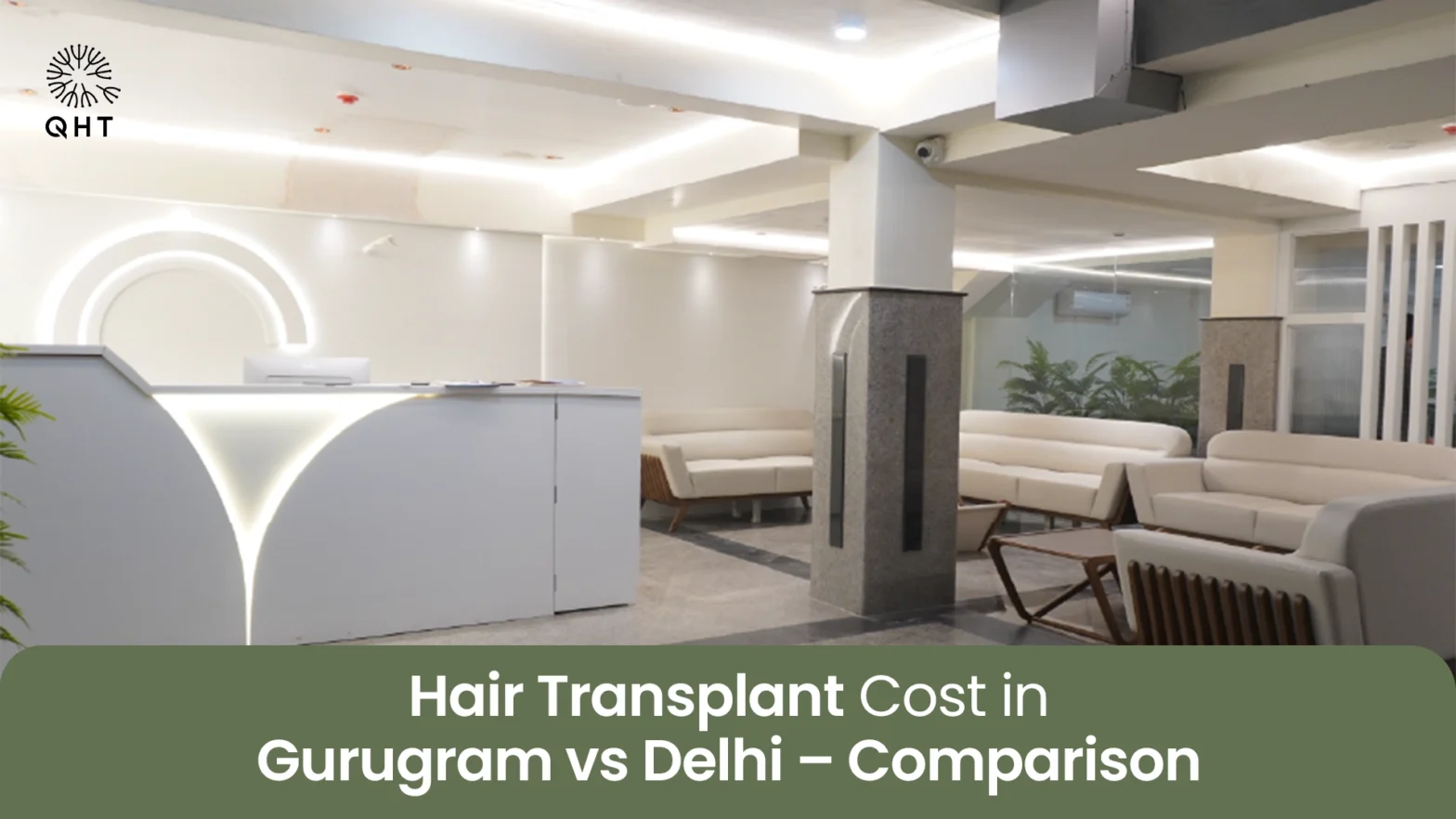
A surgical procedure requires a sterile and clean operating theatre. The OT should be physically separate from common areas, with proper anaesthetic support, emergency protocols in place, and single-use instruments throughout. This is the baseline standard for safe, clinical-grade surgery.
A clinic should follow strict safety protocols to prevent complications and reduce the risk of contamination.
Transparent Pricing
The hair transplant procedures are typically priced on a per-graft basis, and the final cost can only be determined after a clinical assessment. Quoting a price without giving the details about the services included is not a good sign. Ask for the proper breakdown, cost per graft, estimated graft count, and what is included in the package (medications, post op follow ups etc).
At QHT, we believe in transparent prices; you pay what’s quoted with no hidden costs. Our package includes medications and 12 months of post-surgery follow-up at no additional cost.
Structured Postoperative Care
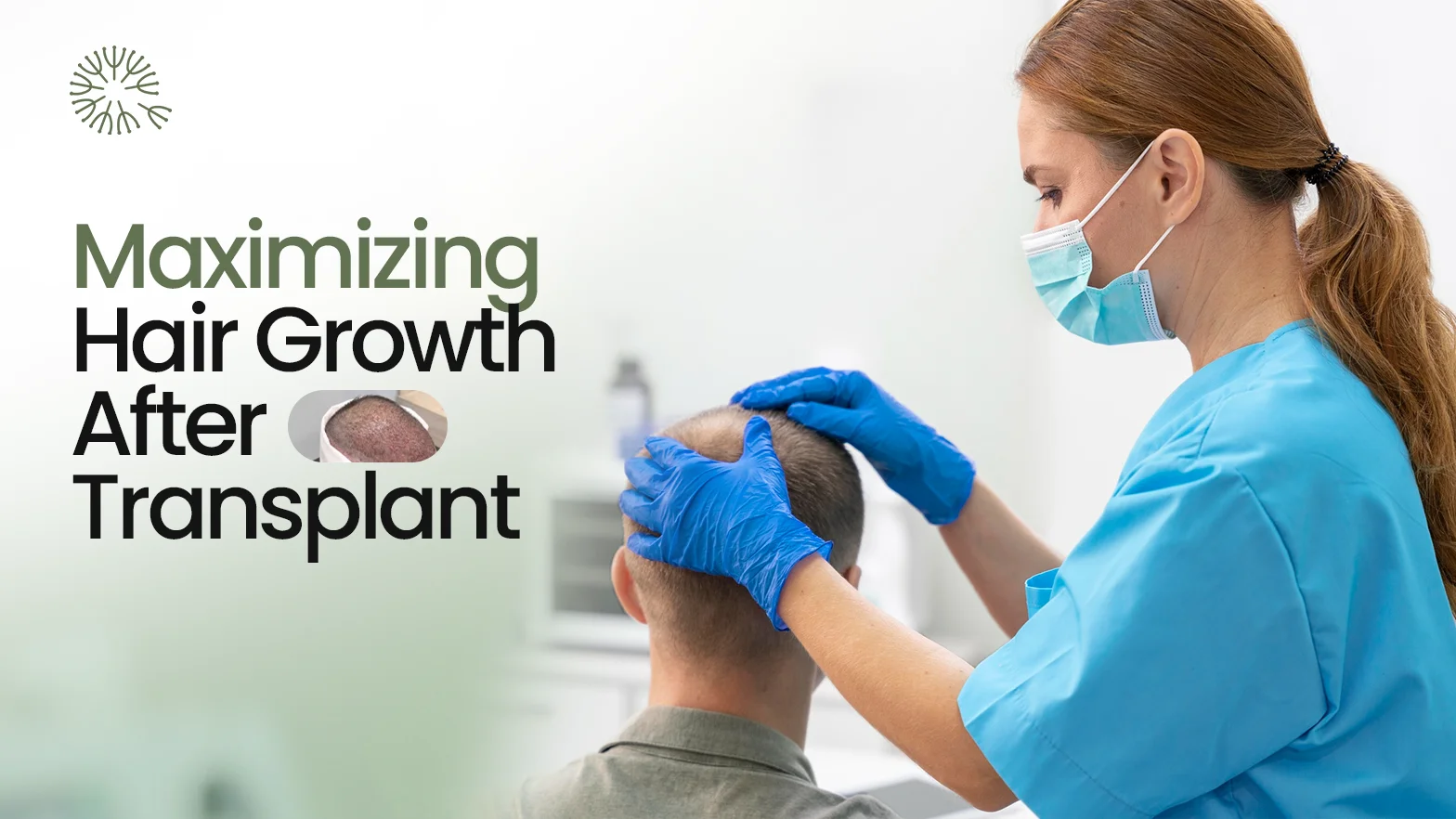
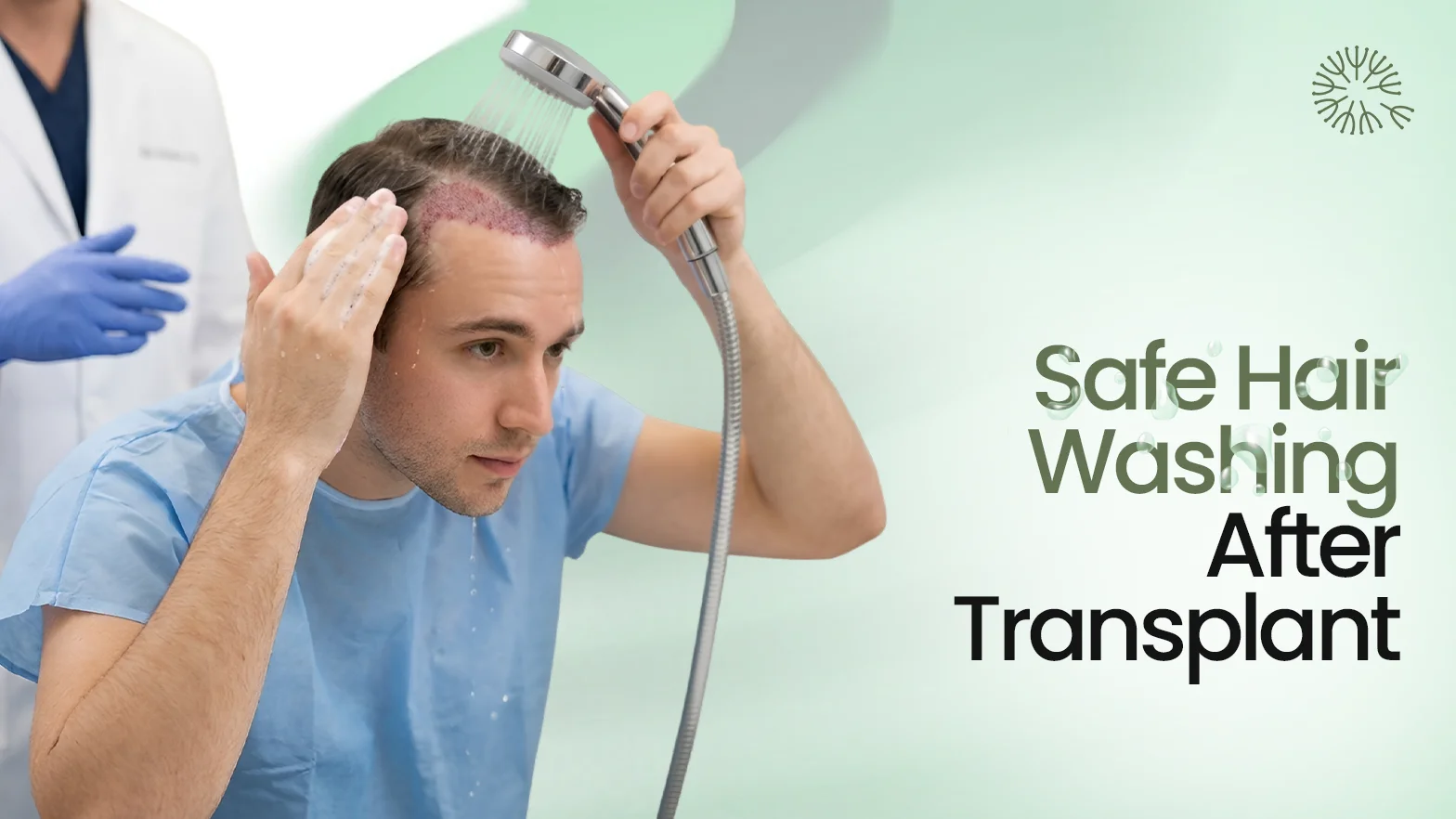
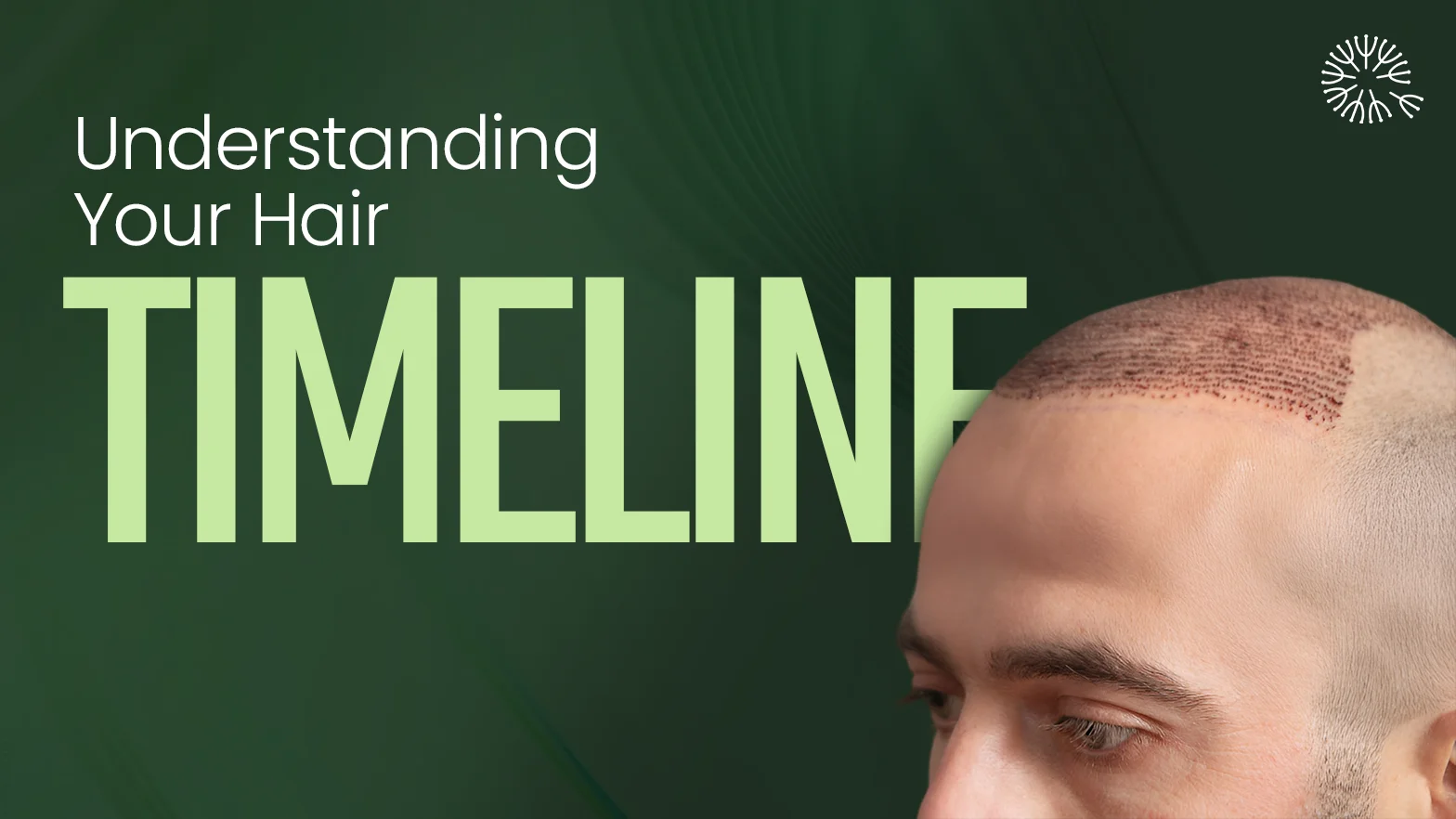
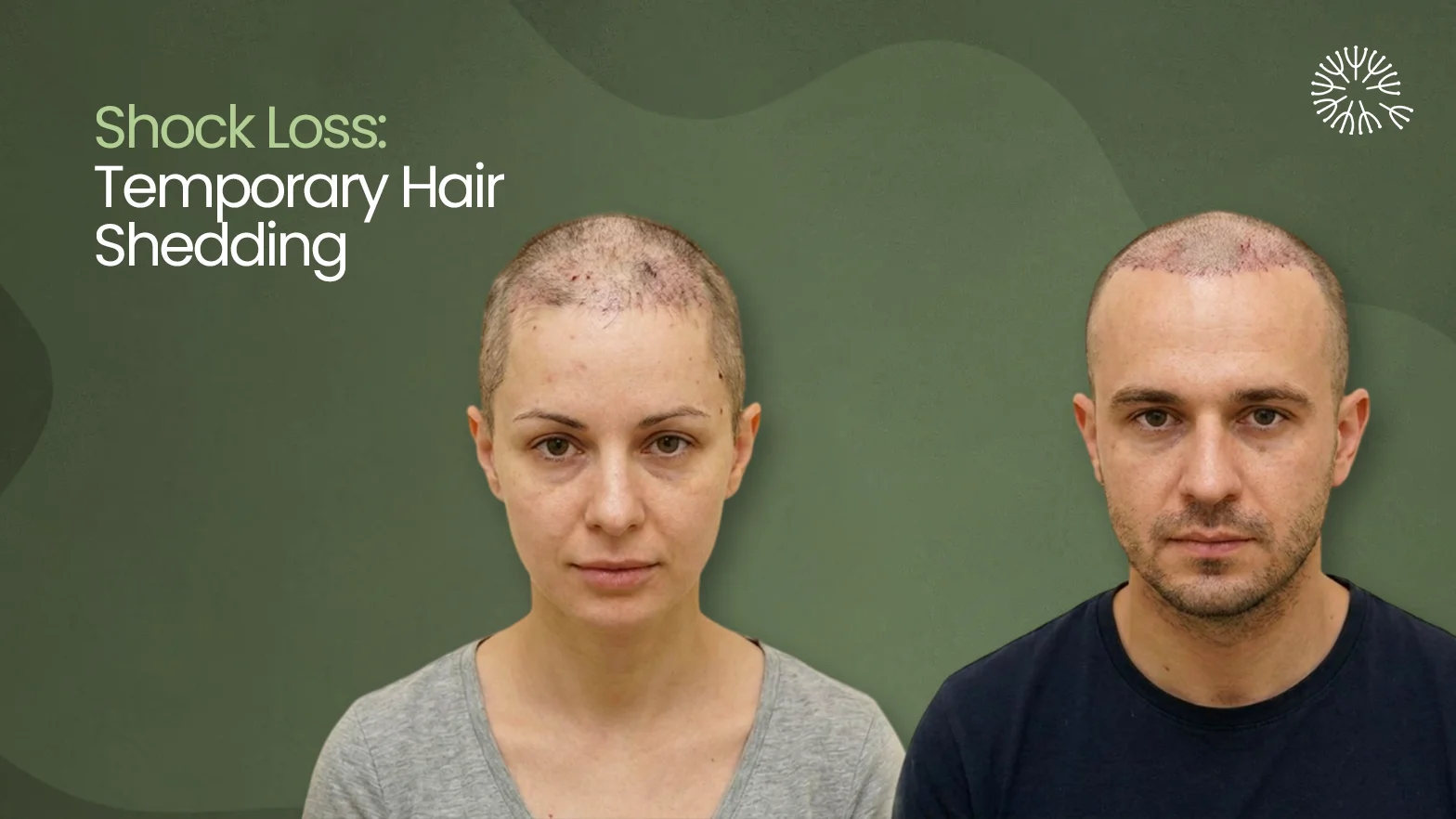
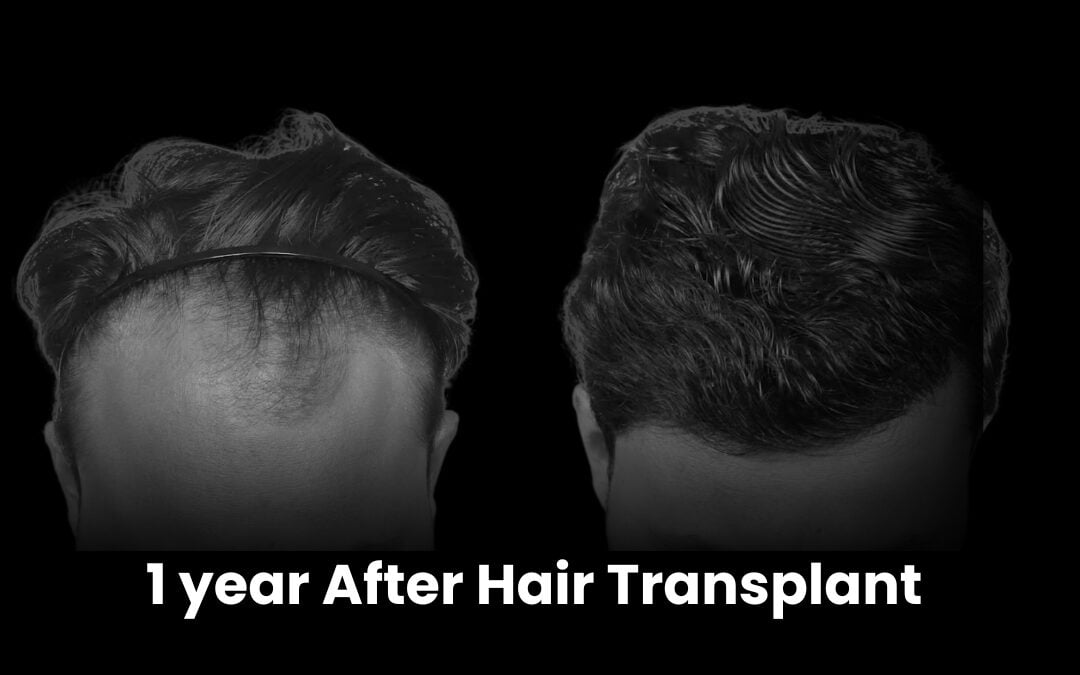
The surgery contributes to only half of the journey; the quality of postoperative care shapes the final result. The recovery takes time, with full results of the transplant appreciable at 9-12 months. The recovery process includes phases like shock loss after 2 weeks, a regrowth phase that takes 3–4 months, and full density by 9–12 months.
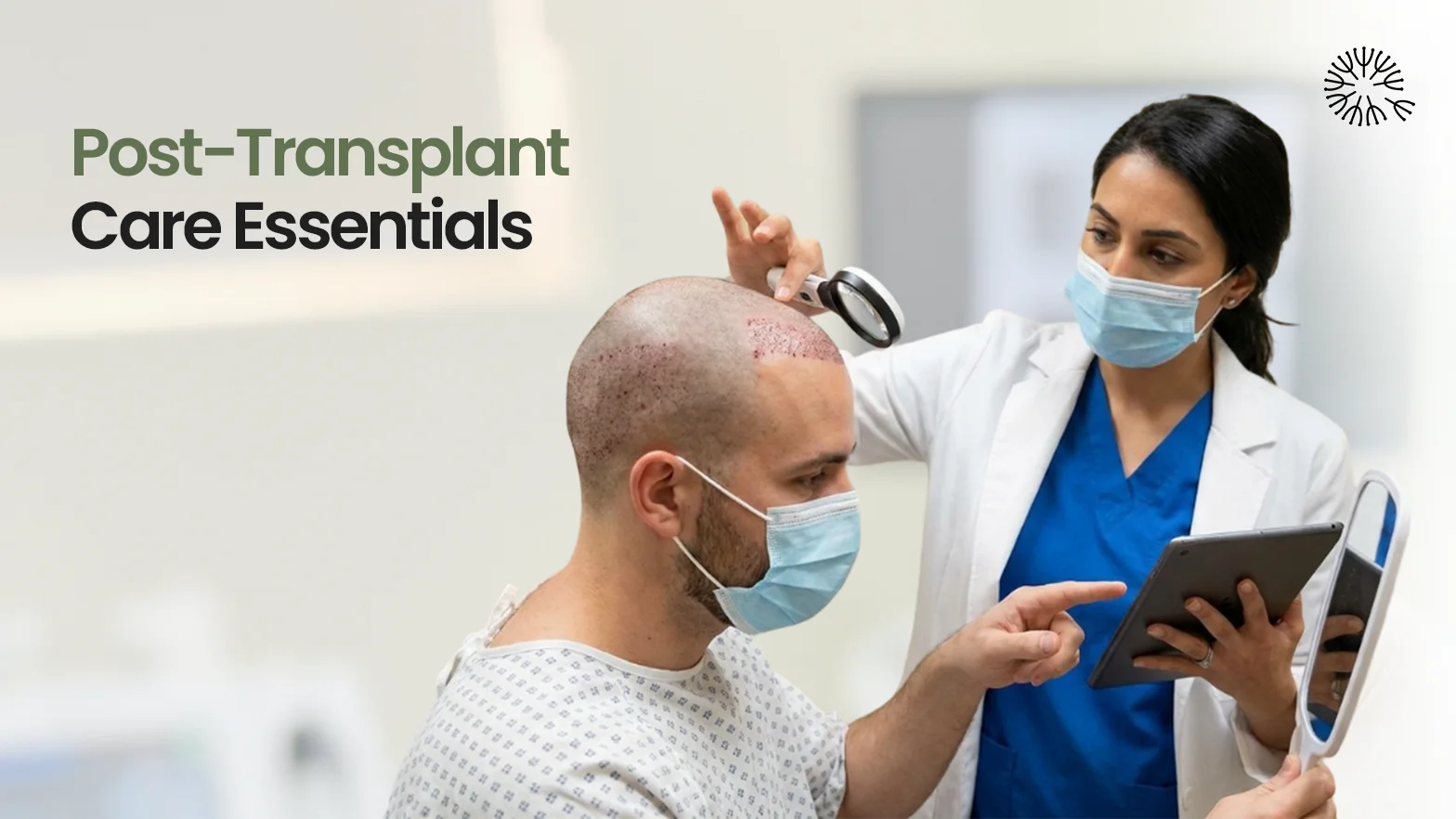
Without proper guidance, patients can panic during the shock loss phase or misinterpret normal recovery as failure. A clinic with a structured post-operative care system, a dedicated follow-up schedule, a care team available for queries, and documented progress tracking removes that uncertainty. A clinic that usually lacks in this aspect is not a great choice.
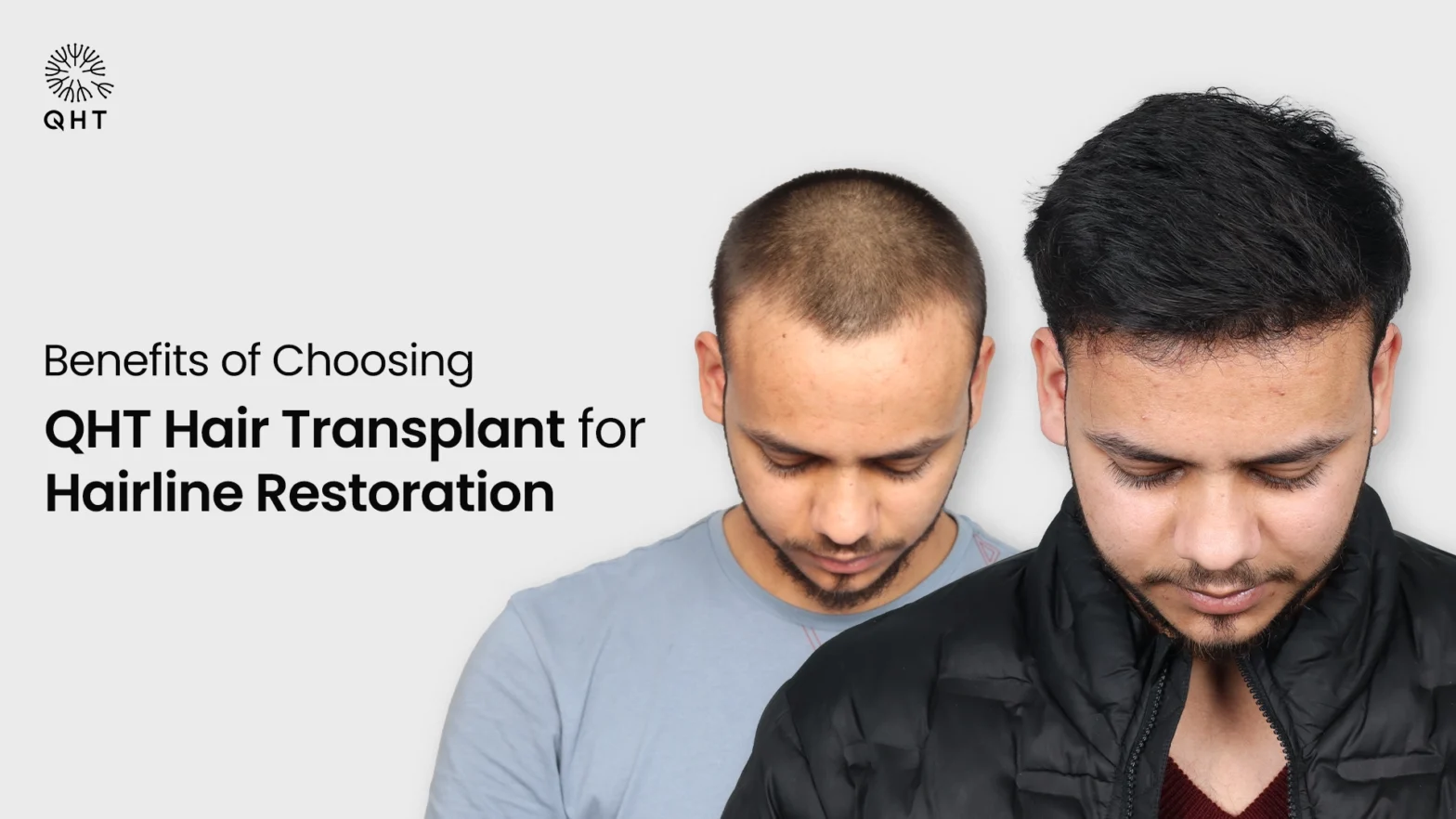
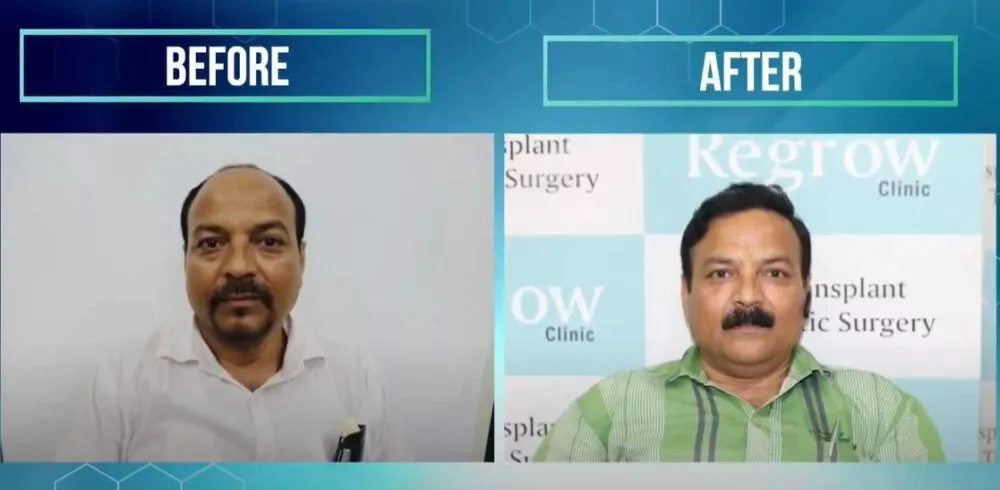
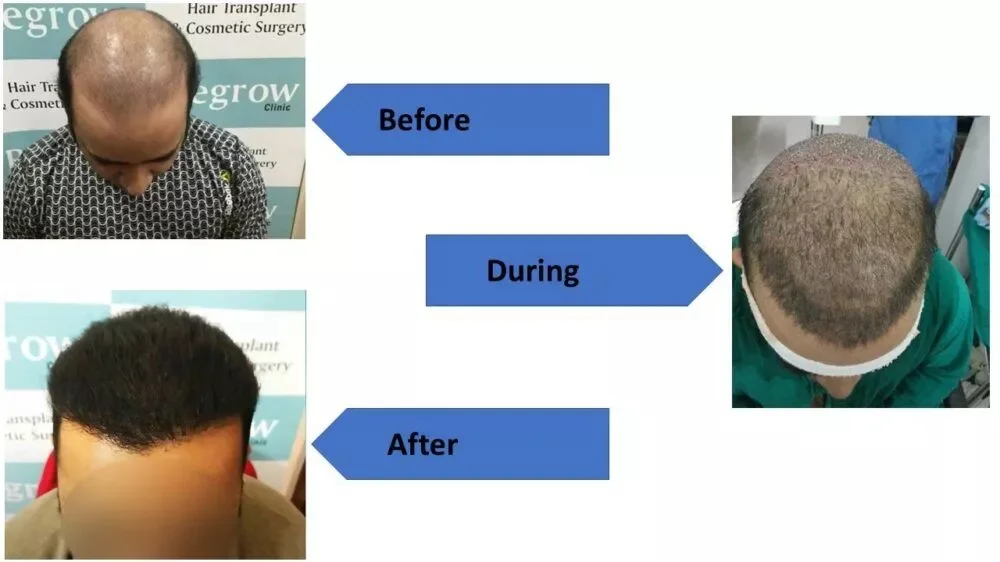
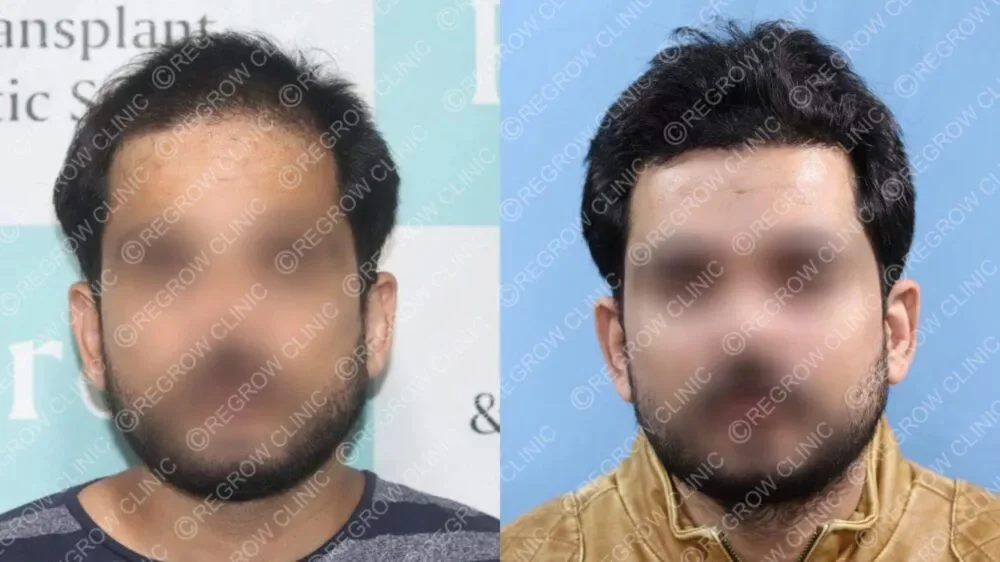
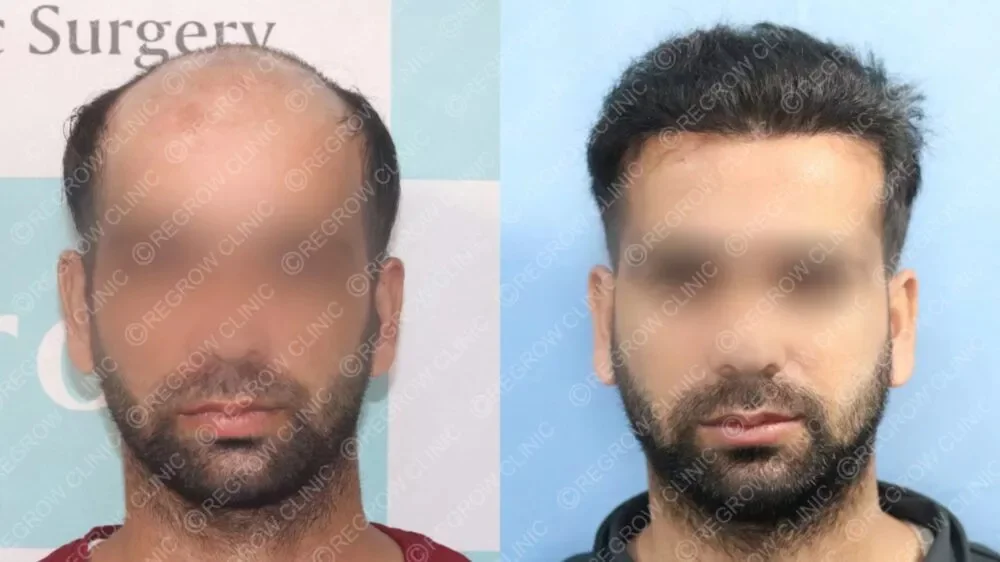
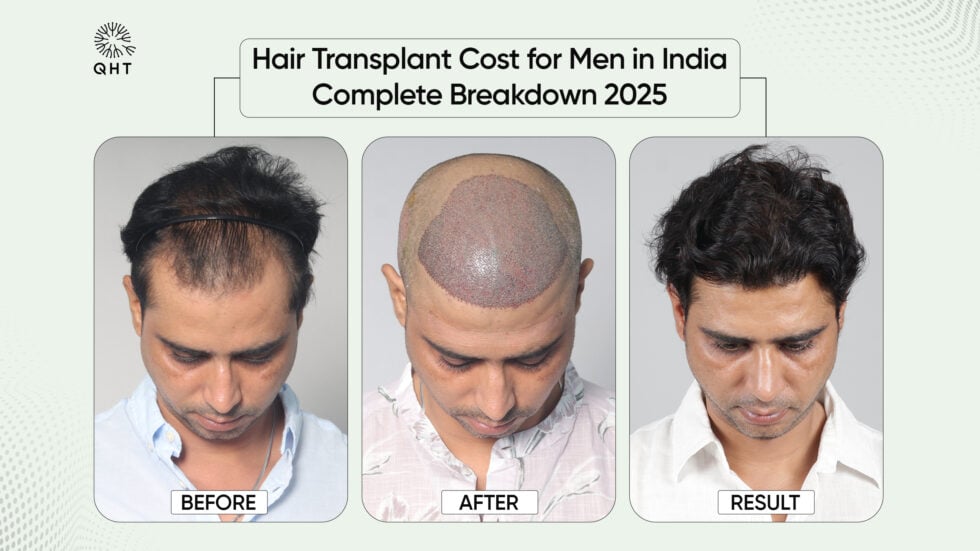
Real Verified Before and After Results
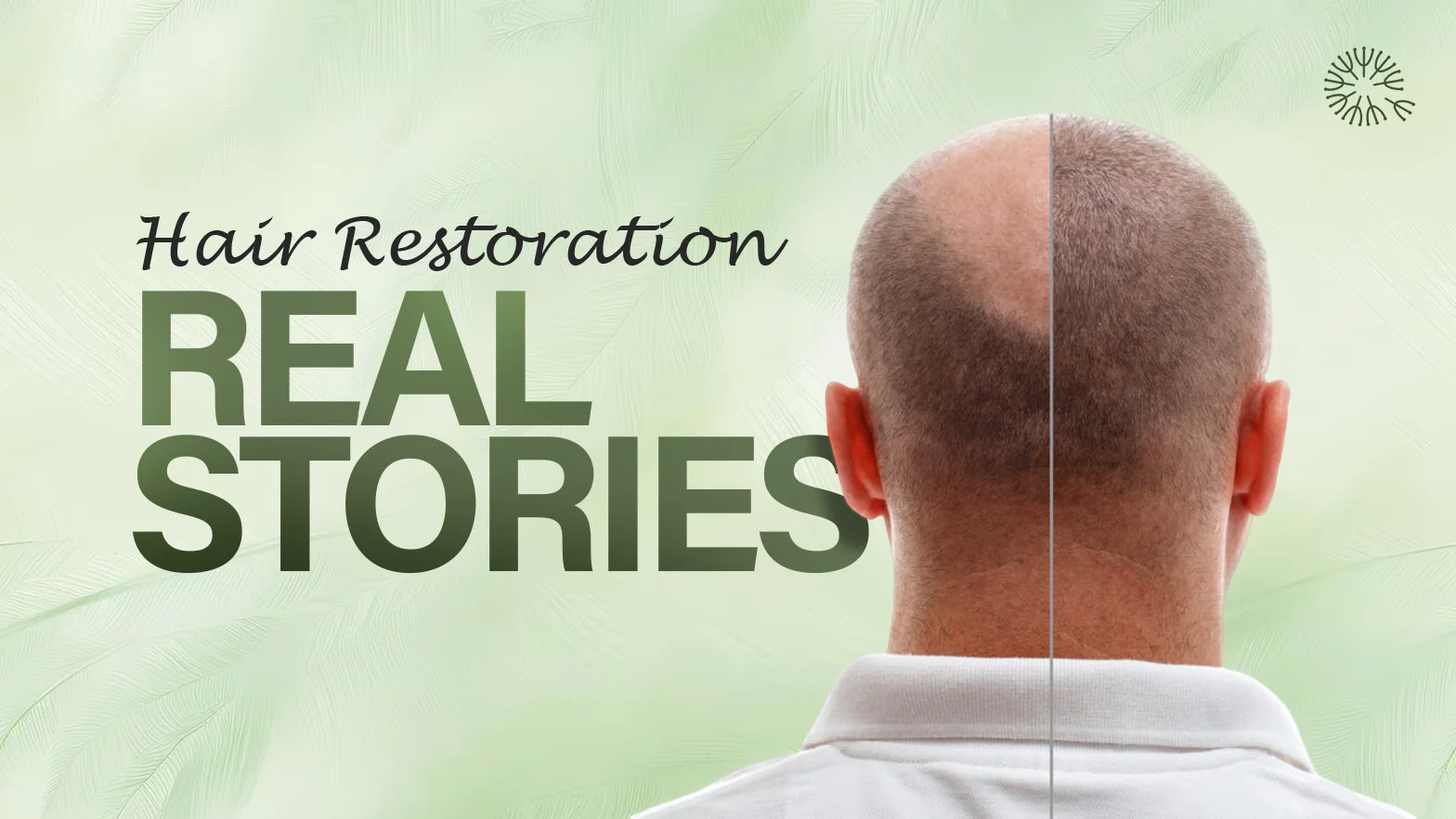
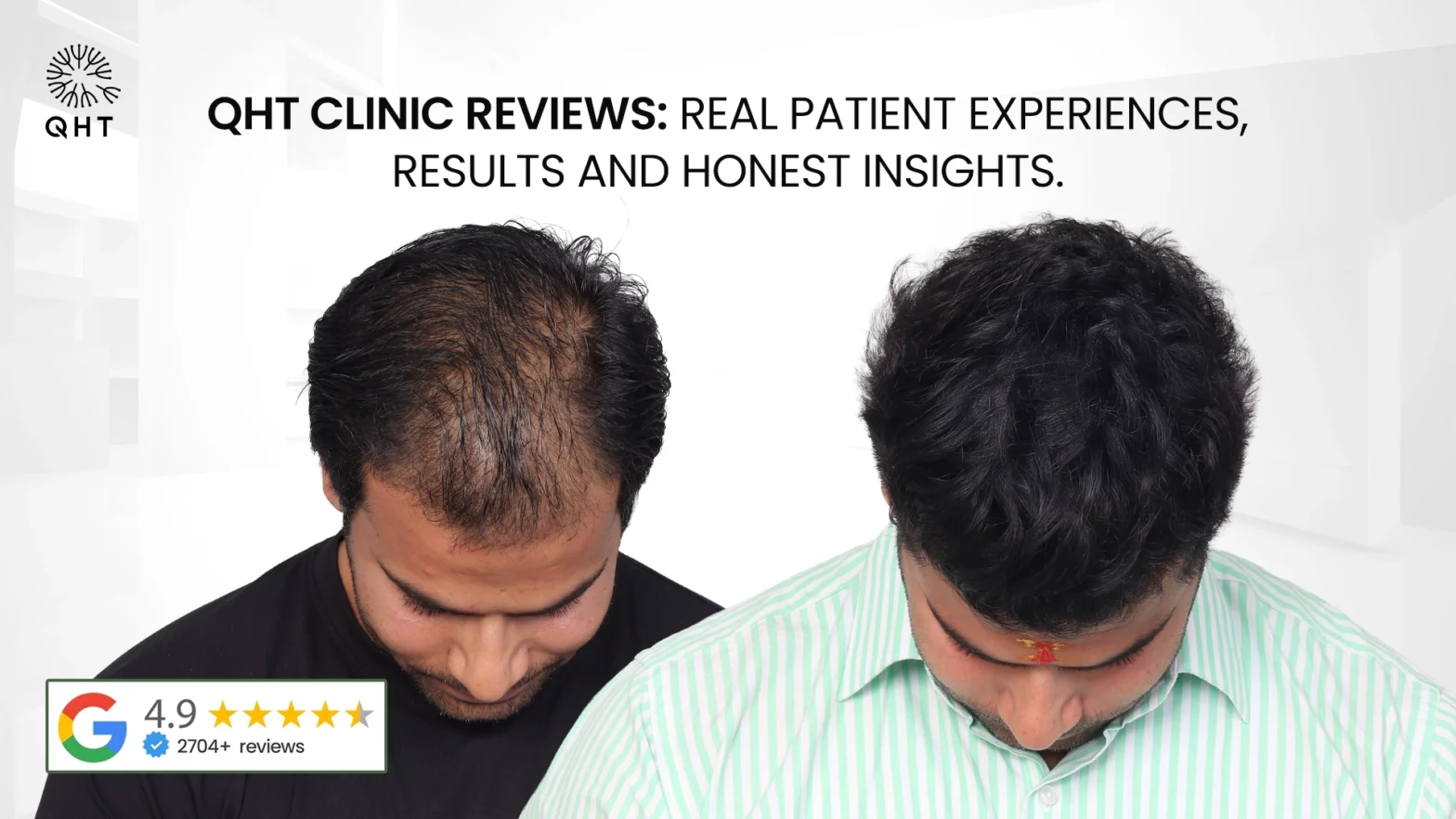
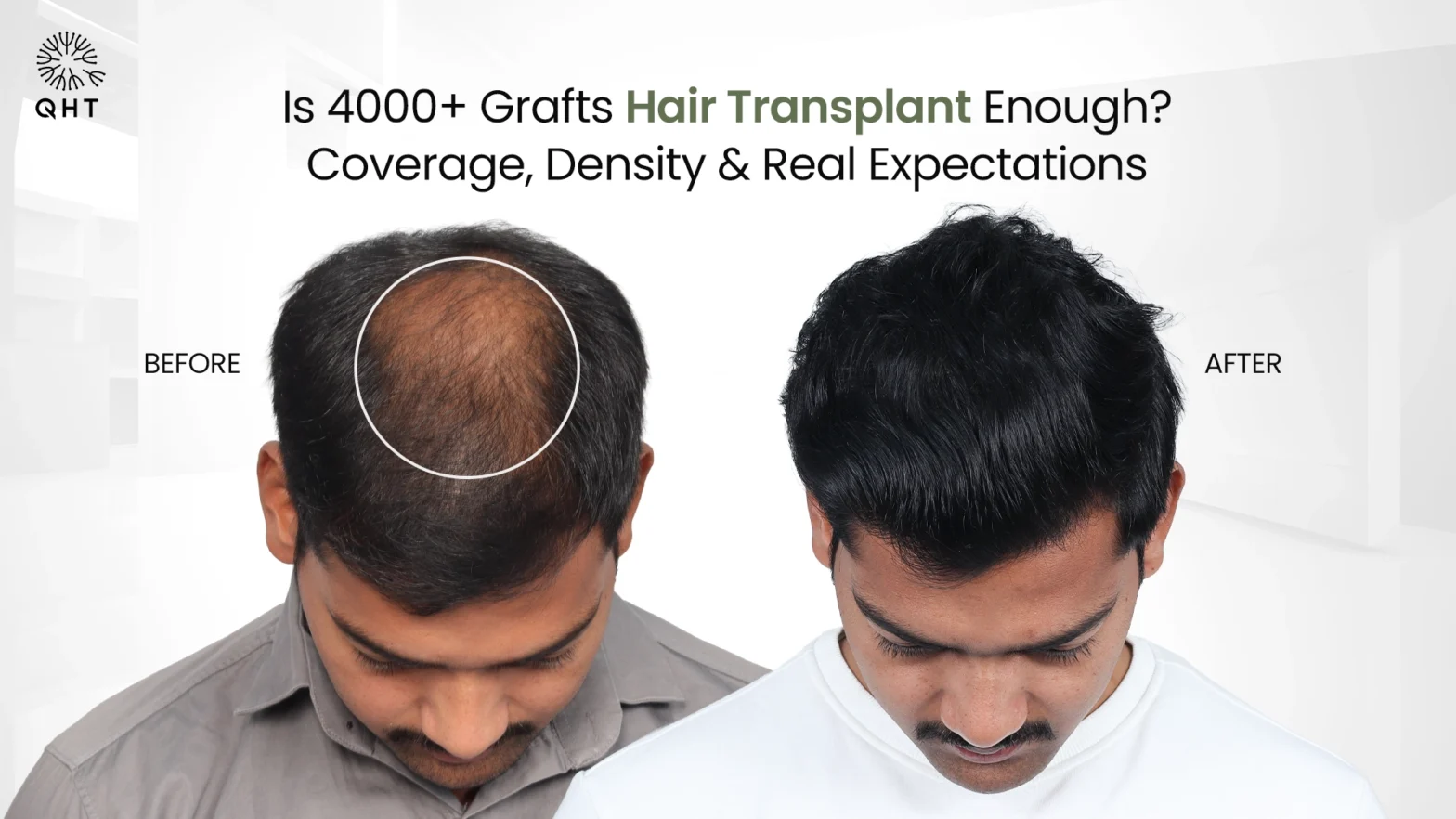
Before and after results are the direct evidence of the clinic’s ability to deliver. But galleries with sponsored cases can be deceiving. Google reviews, video testimonials, and word of the mouth are valuable signals. You can also reach out to the previous patients and verify if the results posted are genuine. Look for reviews that provide details about the process, mentions surgeons name and show results over time.
Go through the clinic’s website, Instagram, and YouTube to see documented patient journeys, from pre op to 12-month full-density results. The well-documented patient journeys are the strongest trust signal a clinic can offer.
Red Flags to Watch Out For
Certain red flags should not be ignored. Every detail should be meticulously investigated before making a decision.
- Final prices given before assessment or without examining the scalp.
- Procedures delegated to technicians or any other unlicensed professionals. The credentials of surgeons matter the most.
- No dedicated post-operative care team for support throughout the recovery.
- Before and after results without patient details or context.
- Offering a lower price upfront, such clinics usually cut on quality or might add additional costs after the surgery.
- Do not have any information on graft survival rates, which directly impacts your results.
- Pressure to book during the first consultation.
Why QHT Clinic Is the Ideal Choice When You Search ‘Hair Clinic Near Me’
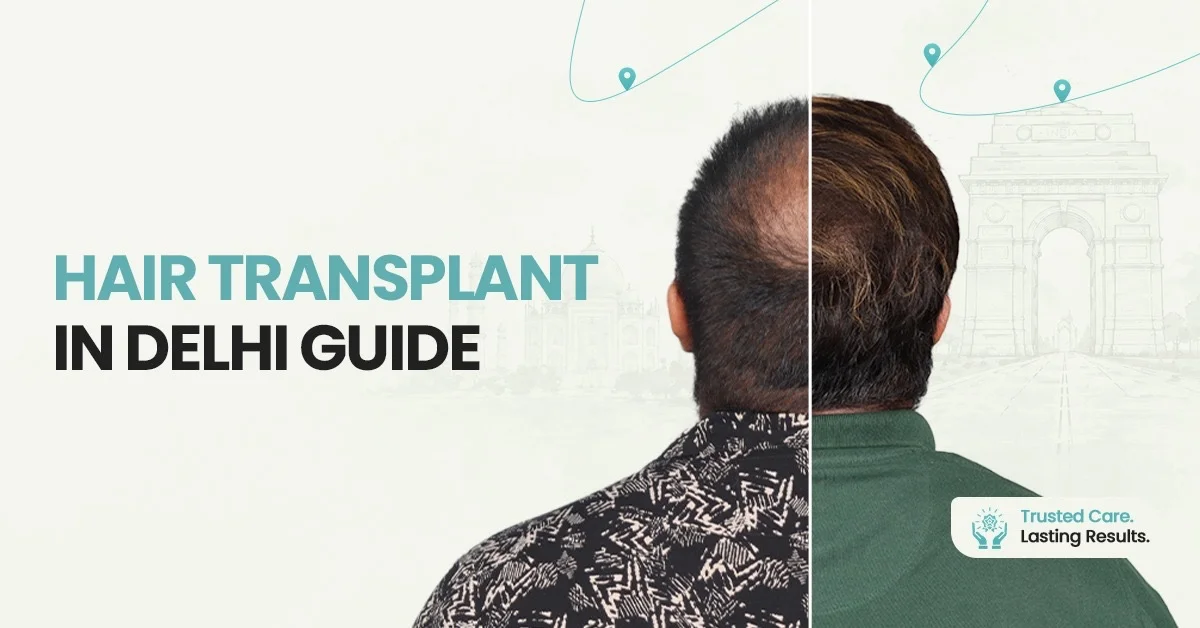
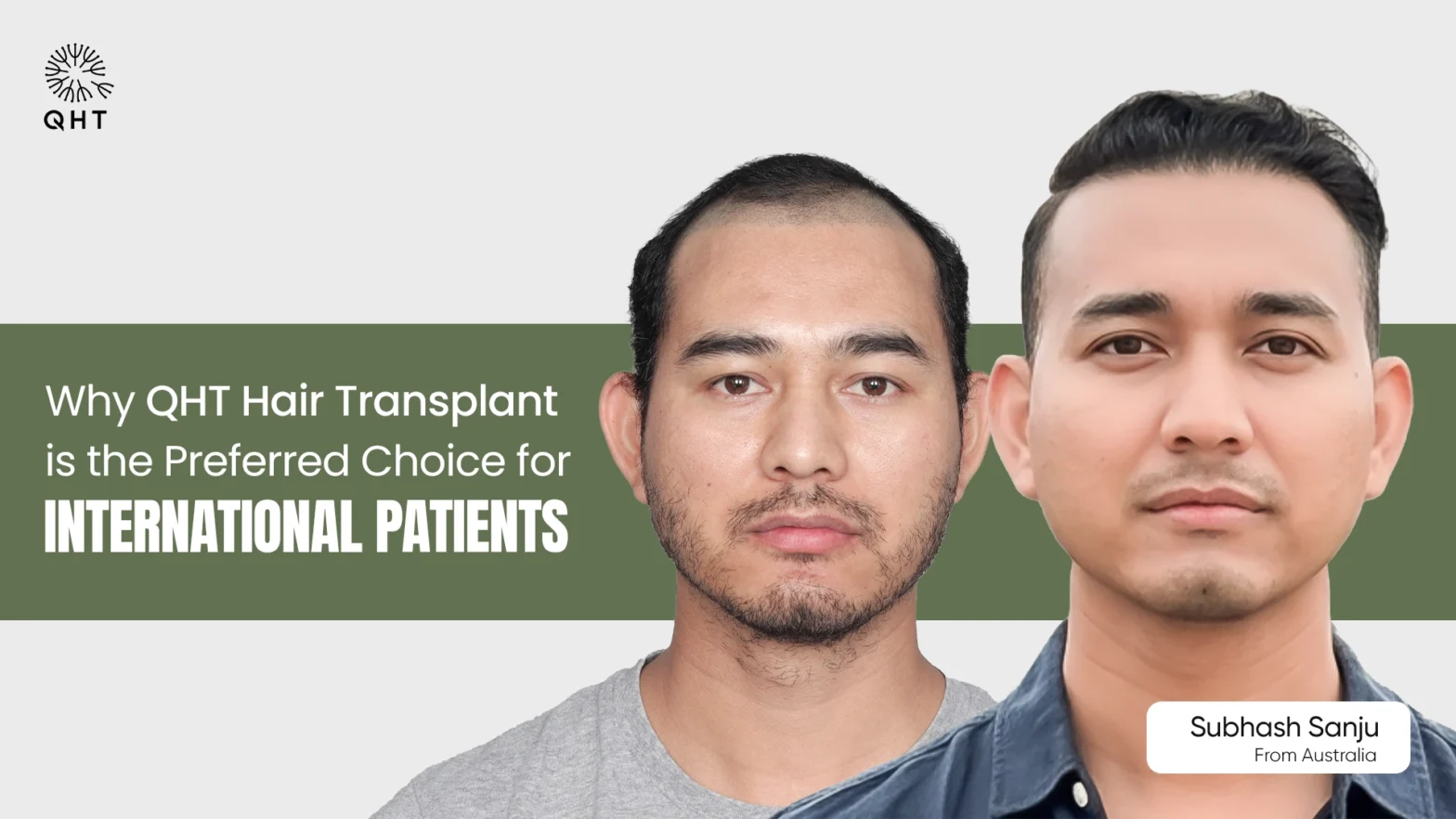
QHT Clinic has become a preferred choice for many international and national patients over the years. From consultation to post-surgery recovery, our team supports patients every step of the way. QHT Clinics are currently located in Delhi, Gurgaon, Haridwar, and Hyderabad, serving patients from across India and internationally.
Here is what sets QHT apart:
- Surgeon-led procedures: Every procedure is performed by highly experienced surgeons with over 15,000 surgeries completed and a documented track record of natural, long-lasting results.
- Proprietary QHT technique: This technique is developed by our surgeons to maximise graft survival rate and minimise out-of-body time. Simultaneous extraction and implantation, using specialised tools like the SAVA implanter, ensures 95%+ graft survival, less scalp trauma, and a faster recovery.
- 10x magnification scalp analysis: Every consultation begins with a detailed scalp analysis to address the root cause before recommending any treatment.
- Customised hairline design: To suit patients’ facial structure and age.
- Structured post-operative care for 12 months: Included in the package with a dedicated support team, tracking follow-up appointments and providing support throughout your healing.
- Transparent per graft pricing: Finalised after clinical assessment, with a complete package breakdown. No hidden costs and flexible payment options to reduce financial strain.
- 15000+ documented results with real patients and verified outcomes.
QHT Clinic has built its reputation on consistent, real, verified results, not pricing or sponsored ads. Start with a consultation with QHT and get connected with experienced surgeons today to understand the right approach for your case.
Common Myths About Choosing a Hair Clinic – Busted
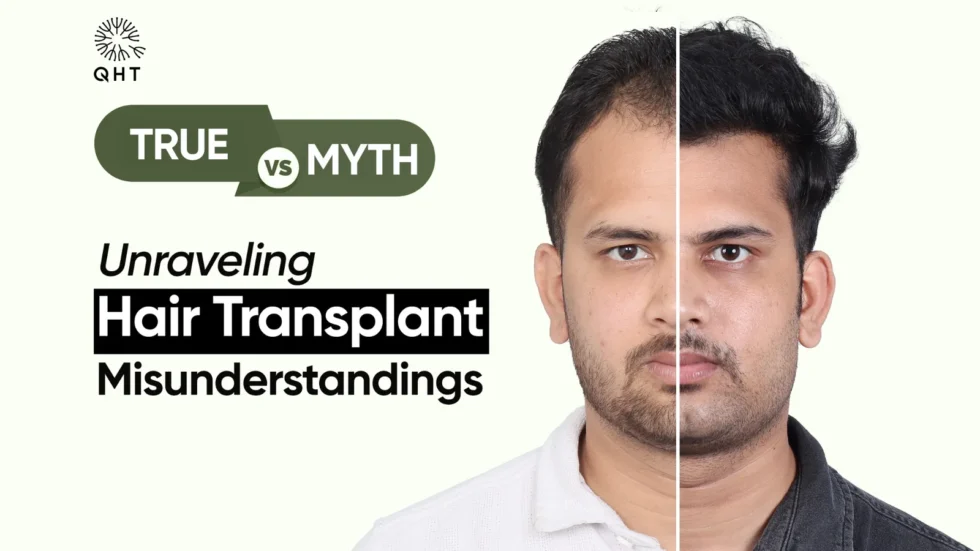
Myth 1: A Clinic With More Awards Must Deliver Better Results
Reality: Awards and certifications do not always reflect surgical outcomes. The most reliable credential is documented patient results across a range of hair loss grades. Ask to see case files. That is the only benchmark worth trusting.
Myth 2: A Chain With More Locations Is More Reliable
Reality: Scale does not guarantee consistency. A multi-city franchise may vary significantly in surgeon quality and infrastructure across locations. Always evaluate the specific centre and surgeon you will be treated by, not the brand’s national presence.
Myth 3: Hundreds of Five-Star Reviews Mean a Clinic Is Trustworthy
Reality: Review volume can be managed. What is harder to manufacture is a YouTube channel of documented patient journeys with progress tracked from pre-op through month twelve. Look for depth of evidence, not just quantity. One genuine 12-month result video is worth more than fifty generic reviews.
Myth 4: Cheaper Clinics Use the Same Technique; They Just Charge Less
Reality: Technique names can be identical; execution varies dramatically. The cost difference between a ₹35/graft and a ₹70/graft FUE procedure is absorbed somewhere, usually in surgeon calibre, graft handling protocols, OT standards, or post-operative support. Low-cost procedures are disproportionately represented in repair surgery cases.
Myth 5: A Free Consultation Means the Clinic Is Transparent
Reality: A free consultation is a marketing entry point as often as it is a clinical service. The question is not whether it is free, but whether it ends with a scalp analysis and an honest grade assessment, or with a brochure and a booking incentive.
Frequently Asked Questions
Q1. How do I find a genuine hair transplant clinic near me?
Start with Google Maps to shortlist clinics within a reasonable distance. Then use the checkpoints in this guide to evaluate each one. Prioritise surgeon credentials, verified results, OT infrastructure, and post-operative support. Eliminate any clinic that cannot answer direct questions about their technique or graft survival rate. Book a consultation at your top two or three options before making a final decision.
Q2. Is it worth travelling further for a better hair transplant clinic?
Almost always, yes. A hair transplant is permanent. A clinic an hour further that delivers surgeon-led, technique-driven results is significantly better value over a lifetime than one nearby transplant clinic that compromises on clinical standards.
Q3. Can I book a consultation online before visiting the clinic?
Yes, and for most patients, it is the most efficient first step. QHT Clinic offers structured virtual consultations where our team reviews scalp photographs, assesses your hair loss grade, and provides a preliminary graft estimate. This means your in-person visit focuses entirely on surgical planning rather than starting from the beginning.
Q4. What is the difference between a hair clinic and a hair transplant clinic?
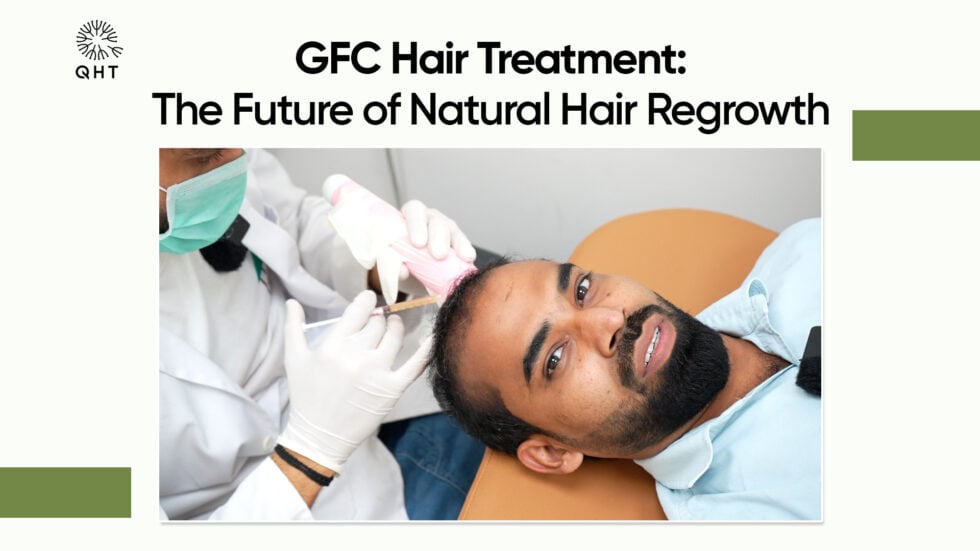
A hair clinic broadly covers non-surgical treatments, PRP, GFC, mesotherapy, scalp treatments, and nutritional support for hair fall. A hair transplant clinic specialises in surgical hair restoration.
Q5. How do I know if I need a transplant or if a medical treatment is enough?
A scalp evaluation by a qualified trichologist will determine this. In general, early-stage hair loss (Grade 1–2) with actively responsive follicles may benefit from medical management first. Established pattern hair loss (Grade 3 and above) with permanently dormant follicles typically requires surgical intervention.
Book a Consultation Today
Latest Videos
-

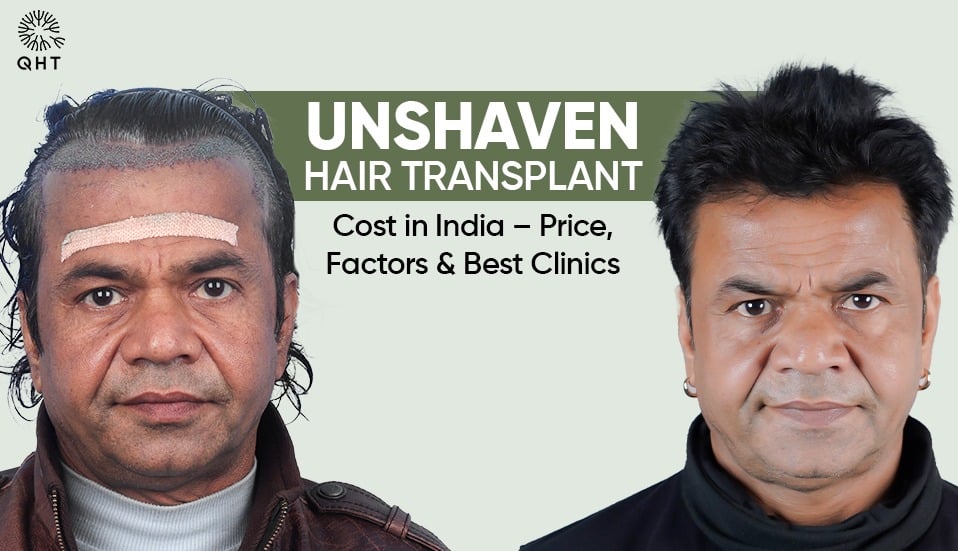
Rajpal Yadav | Bollywood Actor Hair Transplant Journey at QHT Regrow Clinic Haridwar
Click to Watch
-

FUE Hair Transplant Results | DAYA's FUE Hair Transplant Results
Click to Watch
-

Best Hair Transplant Result 2021 || NW Grade VI A || 3,422 Grafts
Click to Watch
-

Best Hair Transplant Result 2022 | Grade 4
Click to Watch
-

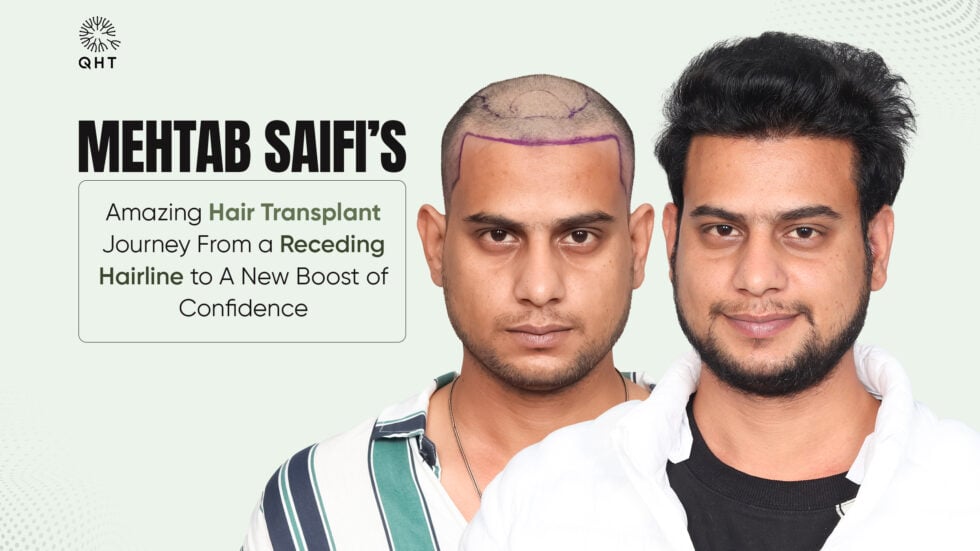
YouTuber Mehtab Saifi Hair Transplant
Click to Watch
-

ACP Pradyuman Hair Transplant - Actor's Hair Transplant
Click to Watch