



How to Calculate Your Hair Transplant Budget?
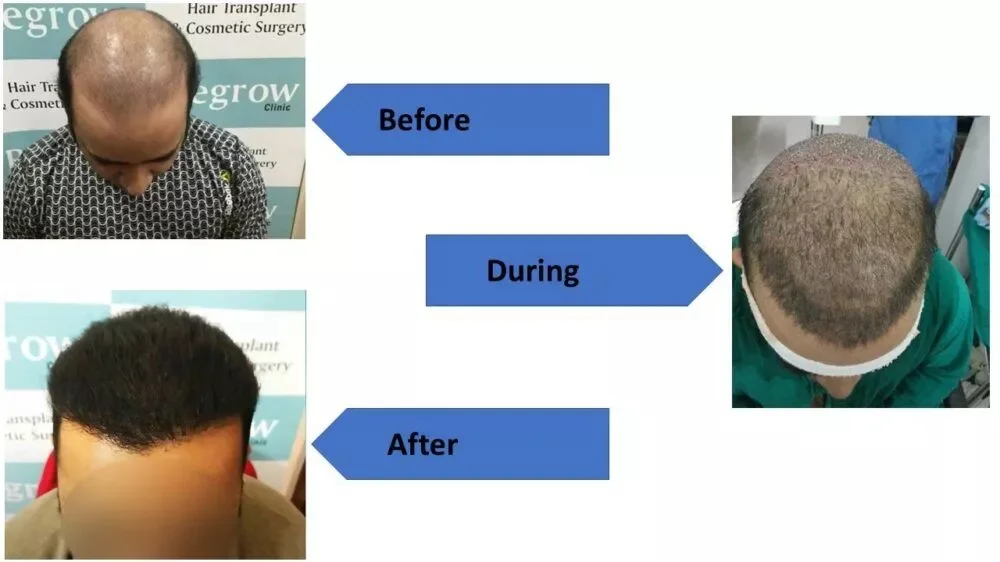
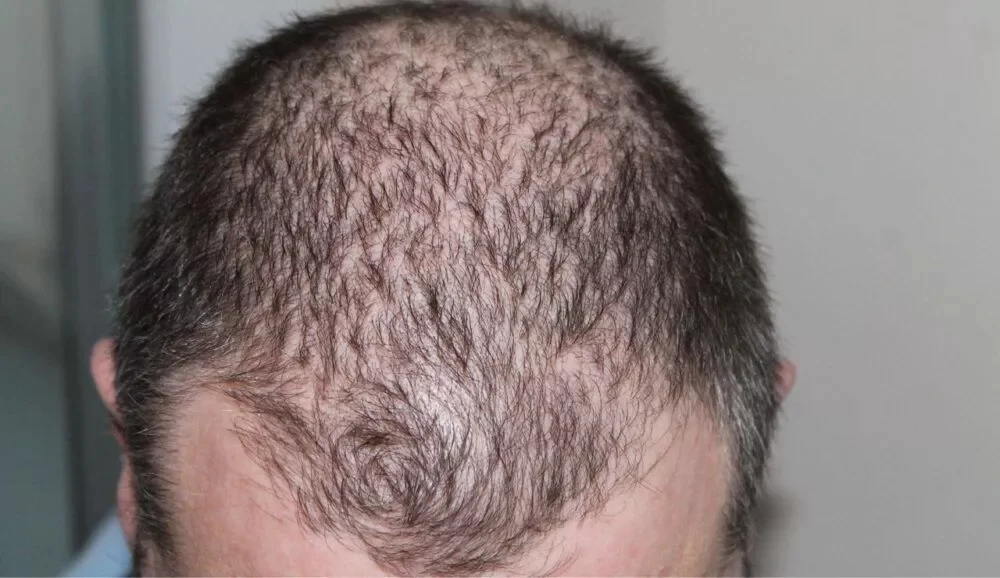
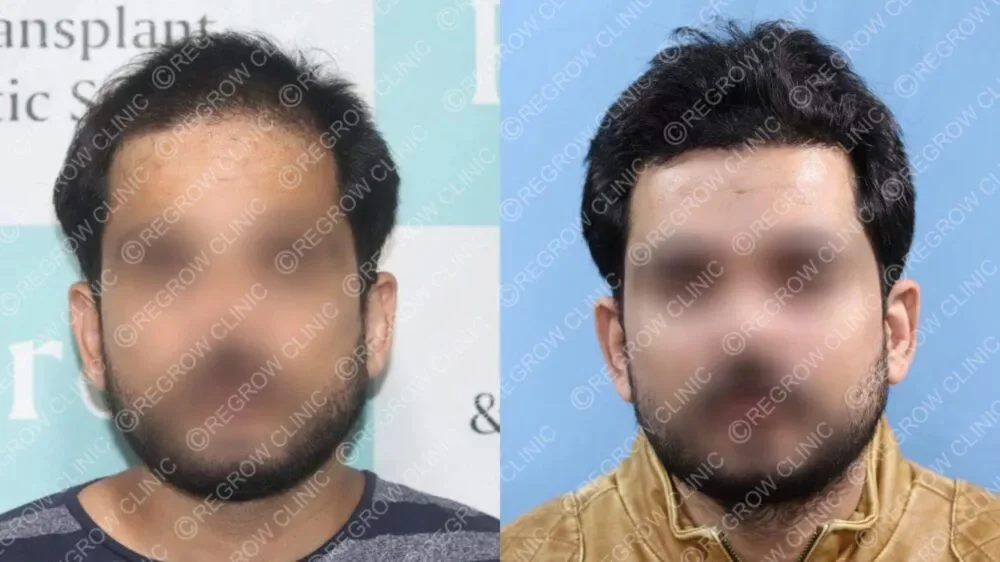
Are you planning to permanently restore your thinning hair or a receding hairline? While searching for options, you have likely realized that calculating a precise, realistic hair transplant budget involves much more than clicking on an online advertisement.
At QHT Clinic, we advocate for absolute financial clarity and clinical transparency. A successful hair restoration procedure is a lifelong investment in your personal confidence. To help you navigate this process without encountering hidden fees or compromising on patient safety, this clinical guide outlines exactly how a medical hair transplant budget is structured, how graft math works, and how to identify potential hidden operational costs.
Step 1: Master the Graft Math
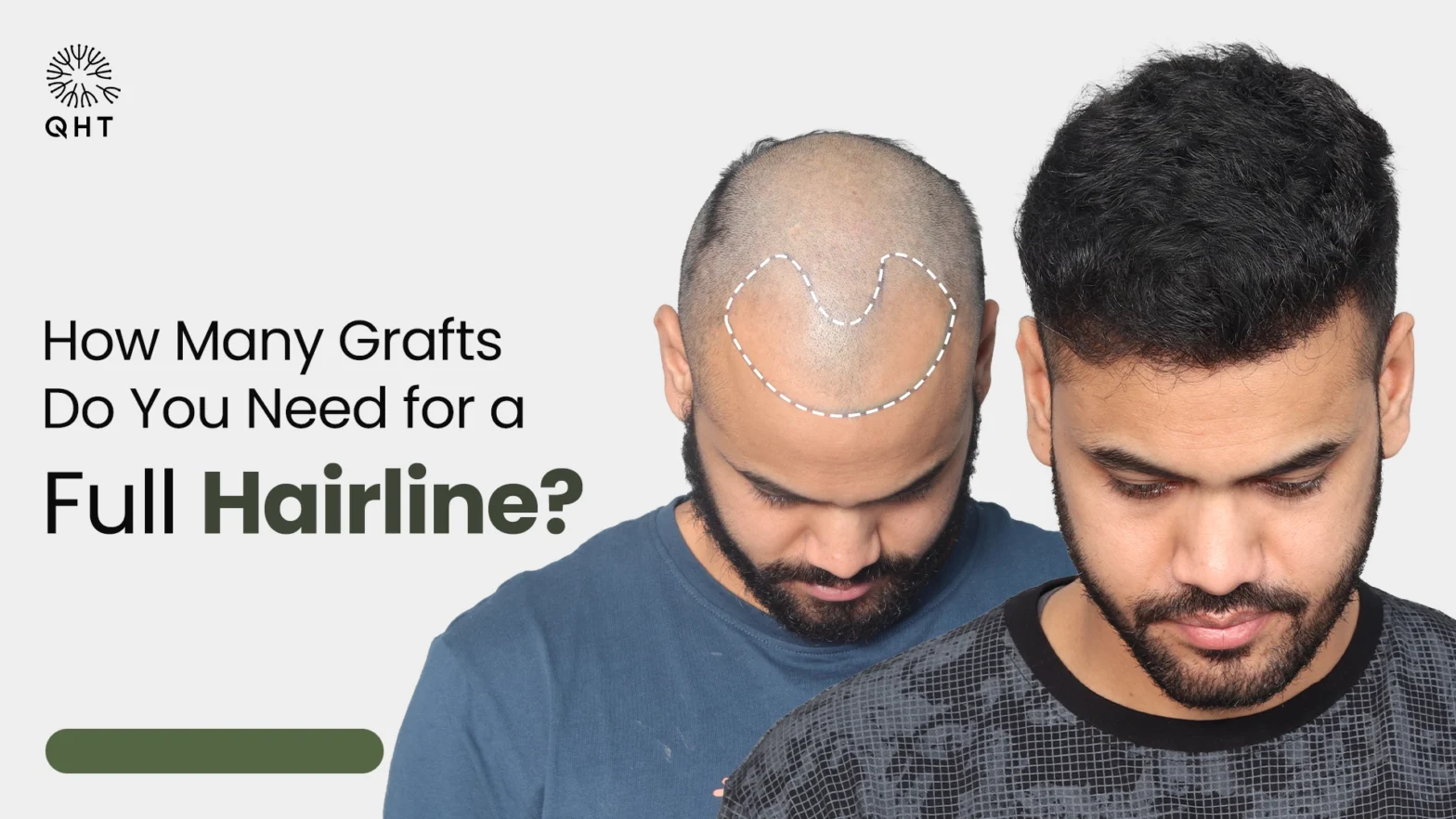
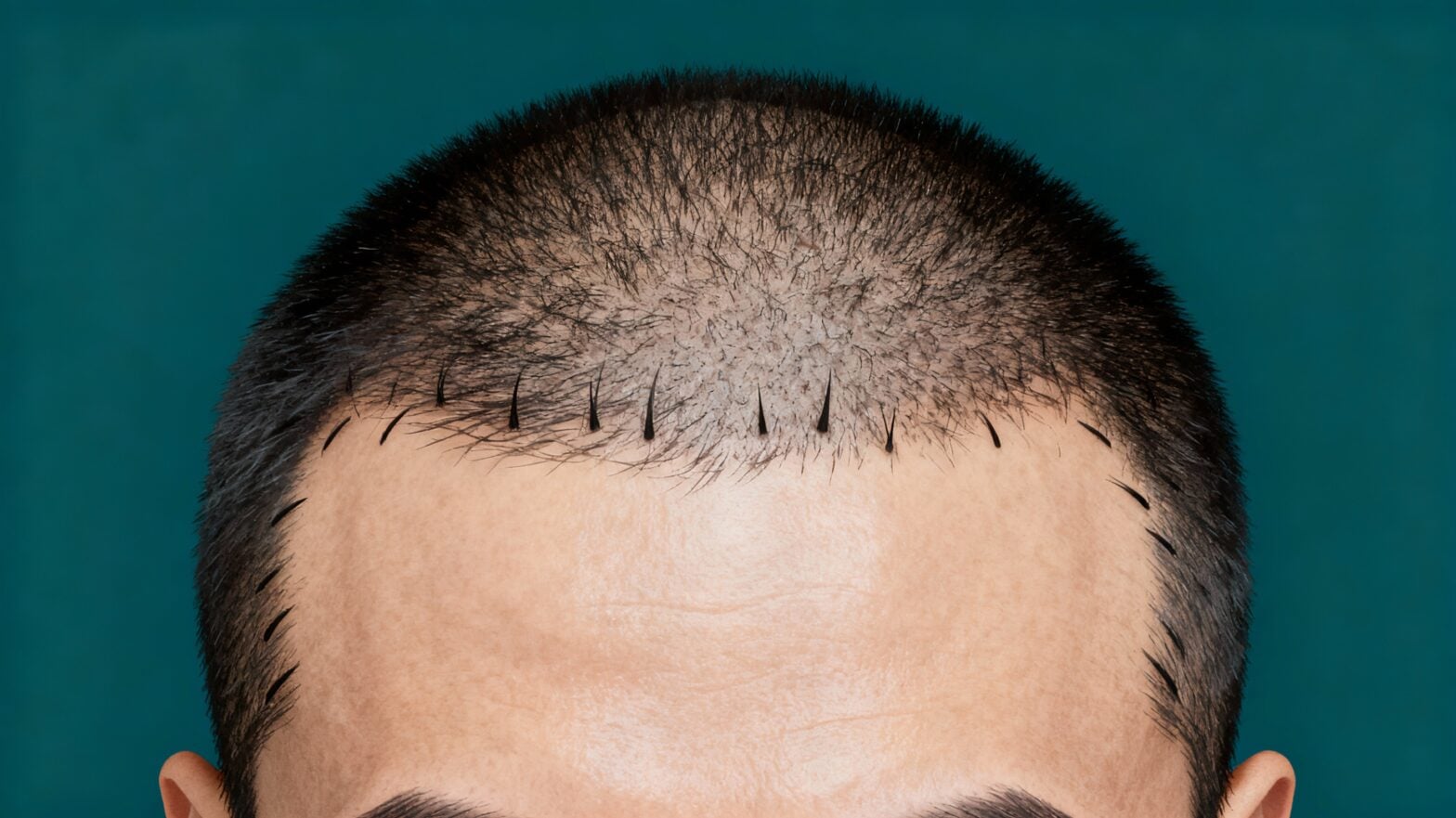
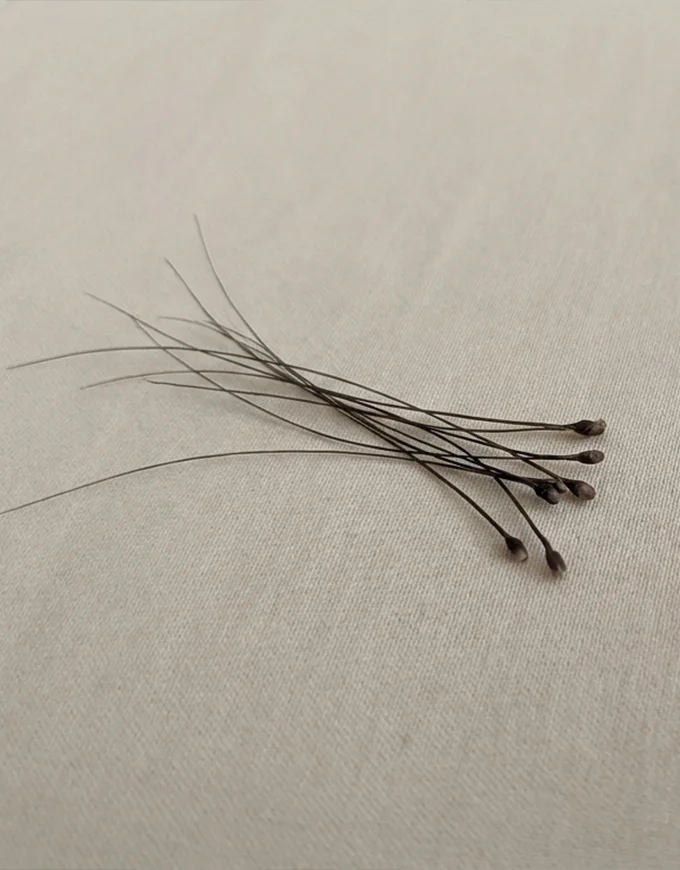
The single most influential component of your surgical budget is the number of hair grafts required to achieve your cosmetic goals. It is vital to understand that a hair graft is not an individual hair strand. A single graft is a follicular unit containing a natural grouping of one to four hair follicles.
To map out your coverage needs, hair transplant surgeons rely on the Norwood Scale, which is the universal medical standard used to classify male pattern baldness. As the stages of hair loss advance, the number of required grafts scales upward, which impacts your total financial outline.
Budgetary Estimates by Norwood Classification
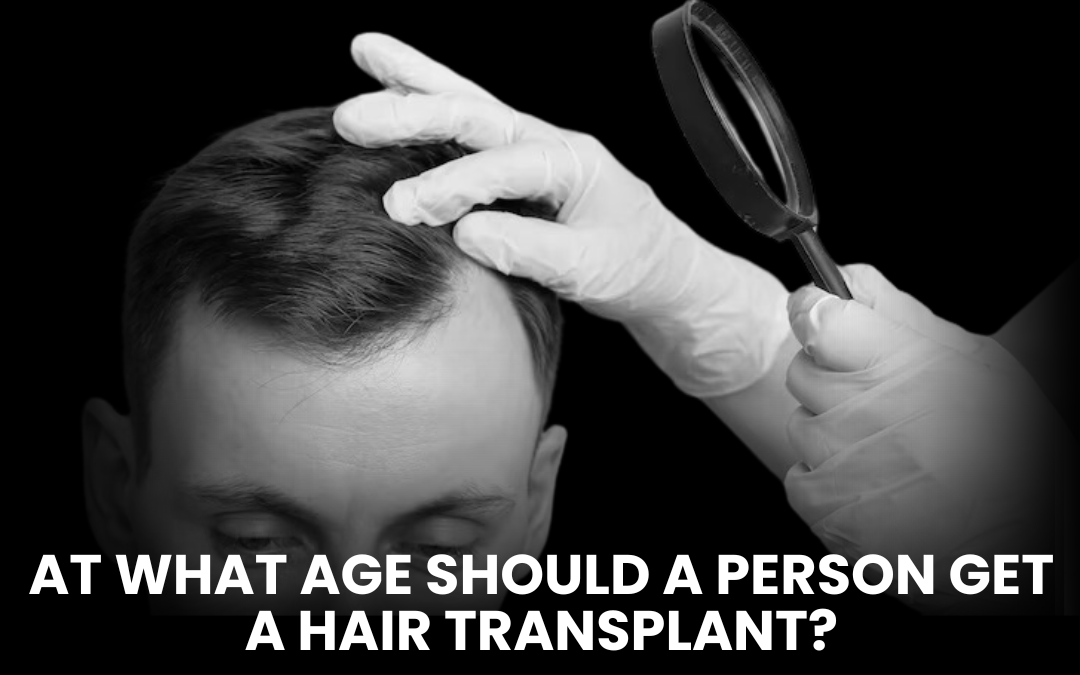
An accurate configuration of your total graft requirement can only be determined through a clinical trichoscopic scalp examination. However, the following guide outlines the approximate ranges typically required across different stages of hair loss:
-
Norwood Grade 2 (Early Receding Hairline): This stage typically requires 800 to 1,200 grafts to cleanly lower and define the frontotemporal recession zones.
-
Norwood Grade 3 (Deep Frontal Temporal Recession): This stage generally requires 1,200 to 1,800 grafts to recreate a stable frontal frame and reinforce the temple borders.
-
Norwood Grade 4 (Hairline Recession with Vertex Thinning): This stage involves multi-zonal work, usually requiring 1,800 to 2,500 grafts to treat both the front hairline and the opening crown patch.
-
Norwood Grade 5 (Merged Bald Zones): As the bridge between the front and back thinning begins to break down, the scalp requires 2,500 to 3,200 grafts to construct balanced, visible density across a larger area.
-
Norwood Grade 6 (Advanced Open Baldness): This stage demands extensive coverage, requiring 3,200 to 4,500 grafts. Achieving this often necessitates combining scalp hair with body hair extraction, such as beard grafts.
-
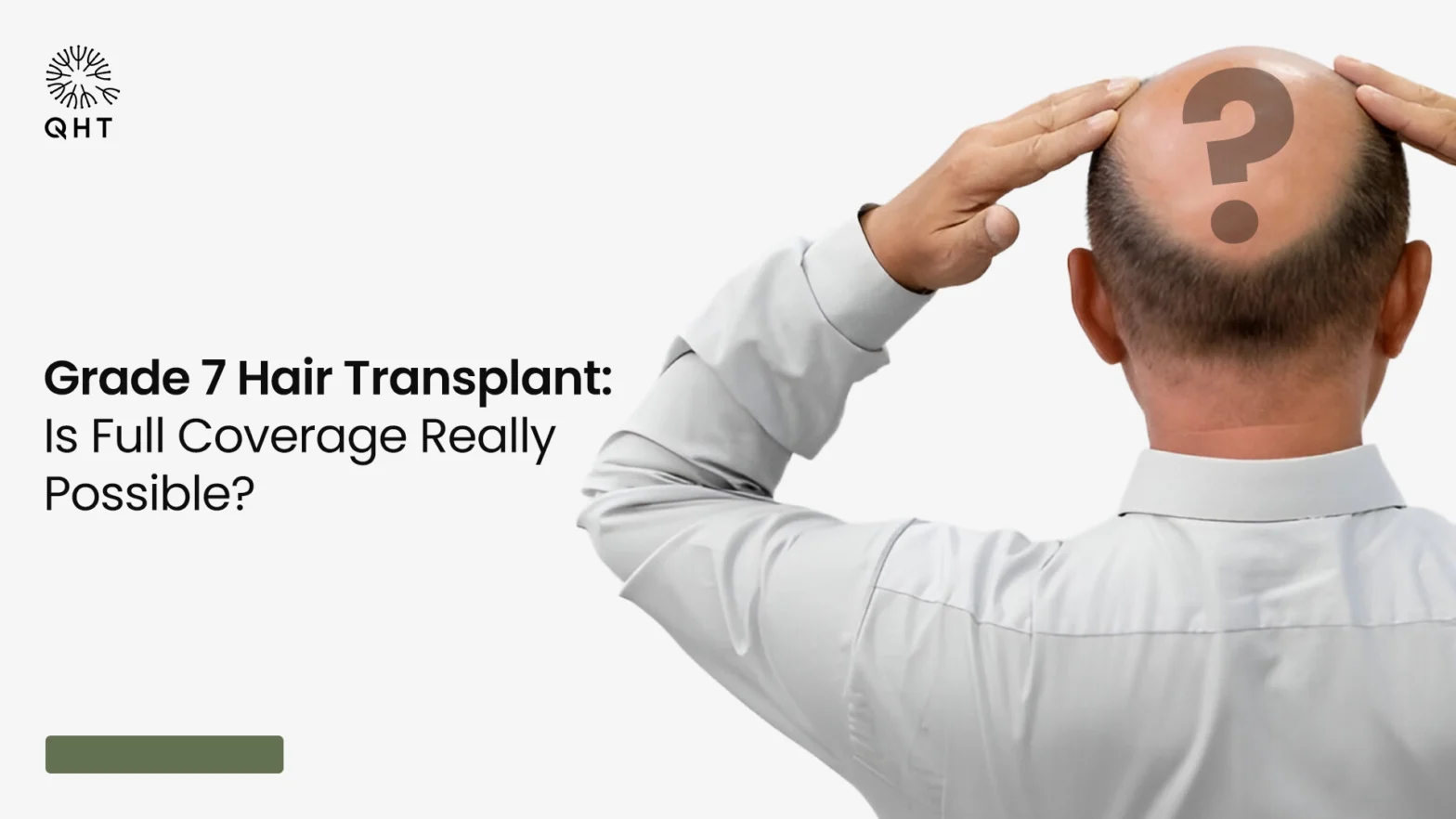
Norwood Grade 7 (Severe Hair Loss): The most advanced stage, leaving only a narrow horseshoe band of donor hair. It requires 5,000 to 6,000+ grafts, which are often administered across multiple staged surgeries to prevent permanent donor depletion.
Total Base Surgical Cost = Number of Grafts Required × Per-Graft Rate of Selected Technique
Step 2: Choose Your Extraction and Implantation Technique
The second variable controlling your budget structure is the specific surgical technique chosen for the procedure. Different methods require varying degrees of surgeon time, specialized single-use instruments, and technical difficulty.
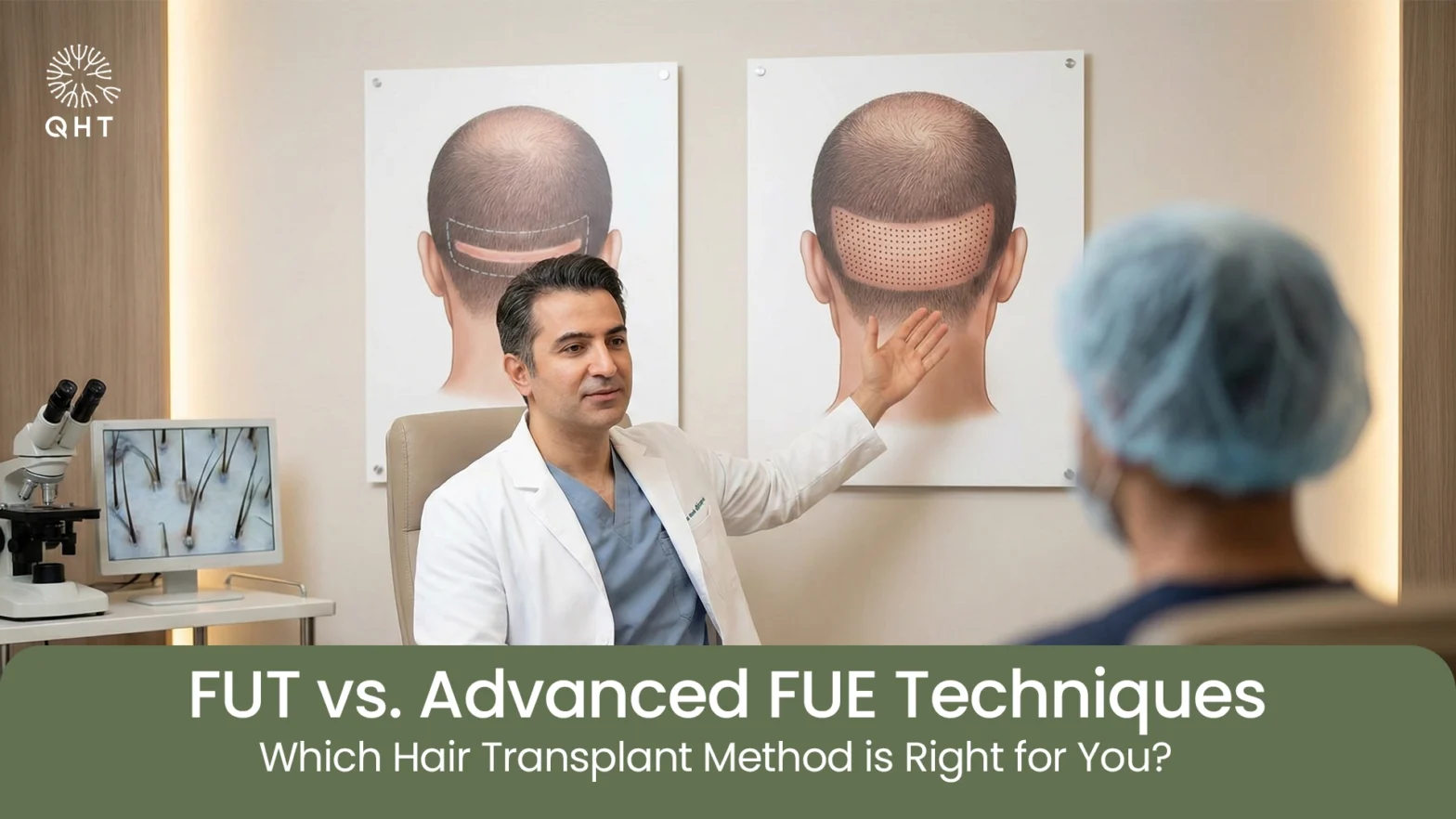
Follicular Unit Transplantation (FUT)
Commonly known as the strip harvest method, this technique involves removing a small strip of tissue from the permanent donor zone at the back of the head. Individual units are then separated under a high-power microscope. FUT is highly effective for advanced hair loss because it preserves the maximum lifetime donor tissue. Because it allows for rapid collective extraction, it has a more economical starting rate of approximately ₹50 per graft.
Follicular Unit Extraction (FUE)
The global baseline standard for modern hair restoration. Each follicular unit is extracted individually using an advanced micro-punch tool ranging from 0.7mm to 0.9mm. This method eliminates linear scarring and allows for a rapid recovery. Due to the precision and manual stamina required from the surgeon, FUE rates typically start from ₹70 per graft.
Patented Quick Hair Transplant (QHT) Technique
Our premium, proprietary protocol designed to solve the primary issue with traditional FUE: the time a graft spends outside the human body. In standard procedures, extracted hair roots sit in static holding fluids for hours, which can compromise their survival rate.
The QHT method uses simultaneous extraction and specialized SAVA implanter pens to complete placement within two hours. This maximizes graft survival rates and yields exceptional density. Because it requires advanced instrumentation and highly specialized team coordination, QHT pricing starts from ₹100 per graft.
Step 3: Account for Hidden Costs and Ancillary Medical Fees
When comparing itemized financial quotes from different centers, many prospective patients overlook ancillary medical services. A low base price can sometimes be offset by unexpected line-item fees added later. When planning your budget, ensure your chosen clinic clearly defines the following elements:
-
Pre-Surgery Diagnostics: Mandatory evaluations, including full trichoscopic scalp mapping and standard viral blood panels, can add unexpected fees if not included upfront.
-
Operation Theater Sterilization Fees: Maintaining proper surgical field cleanliness requires strict infection control protocols and single-use disposables.
-
Anesthesia and Local Consumables: The cost of local sedatives, emergency monitoring devices, and specialized saline handling solutions should be covered within the base quote.
-
Post-Operative Care Support Kits: Essential aftercare supplies—including specialized pH-balanced shampoos, sterile saline sprays, and initial courses of anti-inflammatory medications—are necessary for proper healing.
-
Follow-Up Consultations: Evaluating graft growth at intervals like month one, three, and six is an integral part of the process and should not incur individual appointment fees.
At QHT Clinic, we maintain a transparent billing policy with no hidden charges. All baseline quotes explicitly account for these medical inputs to ensure there are no surprises during your recovery.
Step 4: Evaluate the Cost of Complications vs. Upfront Value
A common financial miscalculation is choosing a clinic based solely on the lowest available price. Hair restoration is a permanent surgical procedure; it is far more than a simple cosmetic styling service. Selecting a low-cost, technician-only center can expose you to long-term financial and physical risks, such as:
-
Permanent Donor Area Depletion: Unregulated punch extractions can over-harvest and scar the donor zone, leaving the back of your head look patchy and limiting options for any future procedures.
-
Poor Graft Survival Rates: If delicate hair roots are crushed or dehydrated due to poor handling, the transplanted hair will fail to grow, wasting your financial investment.
-
Unnatural Hairline Designs: Hairs placed at incorrect angles or in straight, unnatural patterns often require complex, expensive revision surgery to fix.
Investing in a surgeon-led medical team from the start protects your natural donor hair and avoids the need for costly corrective procedures later.
Step 5: Explore Flexible Payment and Financing Options
A quality hair transplant requires an upfront financial commitment, but it should not cause undue economic strain. To make advanced hair restoration more accessible, reputable clinics offer structured financing options.
QHT Clinic provides zero-cost EMI plans and flexible medical financing options. These structures allow you to break down your customized surgical package into manageable monthly installments, helping you focus on choosing a safe, qualified medical team rather than settling for a low-cost alternative.
Frequently Asked Questions
What is the most accurate way to find out how many hair grafts I need?
The only reliable method is an in-person or digital trichoscopic scalp analysis performed by a qualified surgeon. The doctor will measure your specific areas of thinning, evaluate your hair shaft diameter, check your current donor area density, and review your genetic hair loss patterns to calculate a precise graft count.
Why do hair transplant costs vary so much between different clinics?
Pricing differences generally reflect the level of medical expertise, the quality of the technology used, and the clinic’s safety standards. High-tier centers feature board-certified surgeons who personally lead the procedure, use advanced tools like the SAVA implanter pen, and maintain strict surgical sterilization protocols. Low-cost clinics often cut corners by relying on uncertified technicians and using basic tools, which increases patient risk.
Are non-surgical treatments like PRP or GFC factored into a hair transplant budget?
Standalone hair transplant quotes typically cover the surgical procedure itself. However, adjunctive therapies like Platelet-Rich Plasma (PRP) or Growth Factor Concentrate (GFC) are often recommended before or after surgery to help strengthen your existing native hair. It is wise to ask your clinical team during your initial consultation if these sessions are recommended for your plan.
Can I use my standard medical health insurance to pay for a hair transplant?
In most cases, no. Because hair transplantation is classified as an elective cosmetic procedure, standard commercial health insurance policies typically do not cover it. However, you can use specialized medical finance options, such as zero-cost EMIs, to help manage out-of-pocket costs.
What should I check before accepting a flat-rate hair transplant package?
Always request a written, itemized breakdown of what the package covers. Confirm the exact number of grafts being promised, find out whether a certified surgeon or a technician will perform the extraction and placement, and check if post-operative medications and follow-up visits are included or if they will be billed as extra charges later.
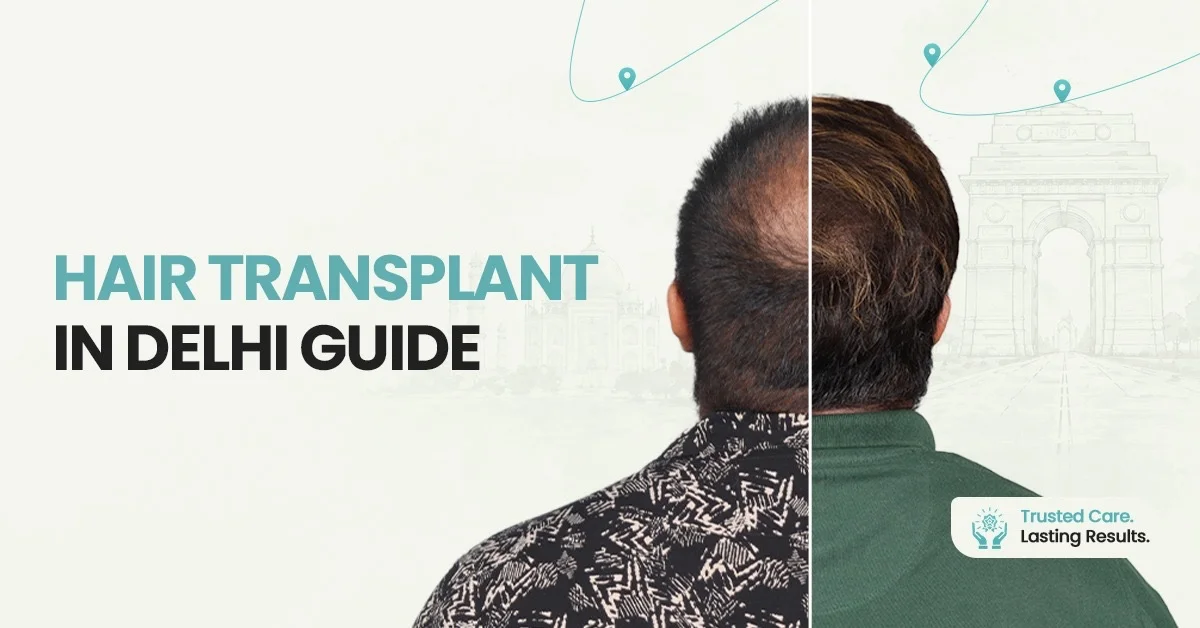
To see detailed, location-specific pricing metrics and view authentic case studies from our surgical teams, check out our comprehensive guide to our main Hair Transplant in Delhi center, or schedule your clinical scalp assessment with our medical board today.
Book a Consultation Today
Latest Videos
-

Rajpal Yadav | Bollywood Actor Hair Transplant Journey at QHT Regrow Clinic Haridwar
Click to Watch
-

FUE Hair Transplant Results | DAYA's FUE Hair Transplant Results
Click to Watch
-

Best Hair Transplant Result 2021 || NW Grade VI A || 3,422 Grafts
Click to Watch
-

Best Hair Transplant Result 2022 | Grade 4
Click to Watch
-

YouTuber Mehtab Saifi Hair Transplant
Click to Watch
-

ACP Pradyuman Hair Transplant - Actor's Hair Transplant
Click to Watch